


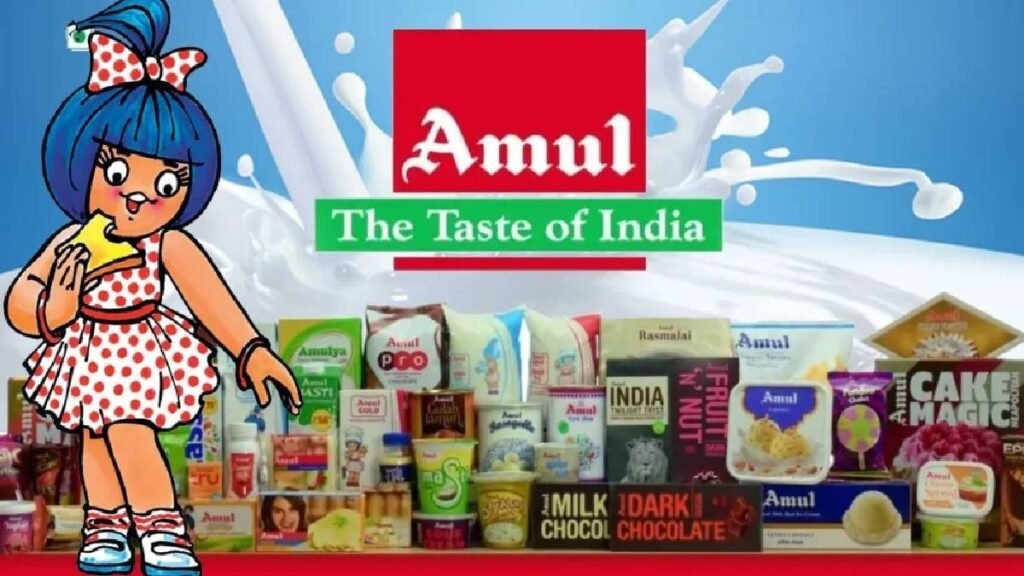
Jayen Mehta highlights India’s opportunity as consumers increasingly move from loose to branded dairy
New Delhi: A modest shift from loose milk and dairy products to packaged and branded alternatives could significantly expand India’s organised dairy sector, according to Jayen Mehta, Managing Director of Gujarat Cooperative Milk Marketing Federation (GCMMF), which markets Amul.
Speaking at the ET World Leaders Forum, Mehta said that even a 5% annual shift from loose to packaged and branded dairy could bring around 3.5 crore litres of milk per day into the formal sector. He described the opportunity as being equivalent to adding another Amul every year.
India’s large informal dairy market
India is the world’s largest milk producer, but a substantial portion of its dairy consumption still takes place through informal and loose channels.
Mehta pointed to the continuing transition among consumers towards packaged and branded dairy products as a major growth opportunity for organised dairy companies.
According to his remarks, Amul currently handles around 350 lakh litres of milk per day and remains concentrated within the organised segment, leaving significant room for expansion as consumers increasingly seek packaged products from trusted brands.
| Indicator | Figure highlighted by Mehta |
|---|---|
| Potential annual shift | 5% |
| Additional milk entering formal sector | ~3.5 crore litres/day |
| Amul milk volume referenced | ~350 lakh litres/day |
| India’s global milk production share | ~25% |
| Families depending on milk livelihoods | 8–10 crore |
Consumer preferences are changing
Mehta said the movement from loose milk to packaged milk is gaining momentum as consumers become more conscious of quality, safety, consistency and trusted branding.
He contrasted the challenge of selling newer categories such as protein products with convincing consumers to change their established habit of purchasing loose milk.
However, he said the transition is now happening at a faster pace, creating an opportunity for organised dairy brands to reach consumers who are moving towards packaged products.
The shift could also benefit the broader dairy ecosystem by bringing more milk into formal procurement, processing and distribution channels.
Opportunity for organised dairy
A greater share of packaged dairy consumption could expand the market for established dairy cooperatives and private processors while strengthening formal supply chains.
For consumers, packaged dairy offers standardisation and traceability, while for processors, a larger formal market can support investment in processing, cold-chain infrastructure, distribution and branded dairy products.
The opportunity extends beyond packaged milk. As consumers move towards organised dairy, companies can potentially expand their portfolios across categories such as butter, ghee, curd, protein products and other value-added dairy products.
Amul sees further room for growth
Mehta’s comments come as Amul continues to expand its presence across India’s dairy market and diversify its product portfolio.
The GCMMF-managed brand crossed a significant scale, with the company previously reporting ₹1 lakh crore in turnover for FY26, while continuing to broaden its product offerings.
The larger opportunity, however, may lie in India’s transition from informal to organised dairy consumption.
If even a relatively small percentage of consumers make the shift each year, the resulting volumes could create substantial additional demand for formal milk procurement and processing.
Formalisation could reshape India’s dairy market
The potential 5% shift highlighted by Mehta illustrates the scale of India’s dairy formalisation opportunity.
For dairy farmers, increased formal procurement could create stronger links with organised processors and cooperatives. For consumers, the transition could mean greater access to standardised and branded dairy products.
As packaged dairy adoption accelerates, the competition among cooperatives, established brands and emerging dairy companies is likely to intensify.
Mehta’s assessment ultimately points to a significant growth opportunity: India may not need a dramatic change in consumer behaviour to add substantial volumes to its organised dairy sector — even incremental annual shifts from loose to packaged dairy could create an entirely new scale of demand.