


Nagpur: Advanced reproductive technologies including sex-sorted semen and IVF-based embryo transfer are emerging as powerful tools to accelerate growth in the Indian dairy industry, according to Union Minister of State for Fisheries, Animal Husbandry and Dairying, Satya Pal Singh Baghel.
Speaking at the 2nd National Veterinary, Dairy and Fisheries Symposium 2026 held at Nagpur Veterinary College under Maharashtra Animal and Fishery Sciences University (MAFSU), Baghel highlighted how these innovations can significantly enhance milk production and farmer income.
Sex-Sorted Semen: A Game-Changer for Dairy Productivity
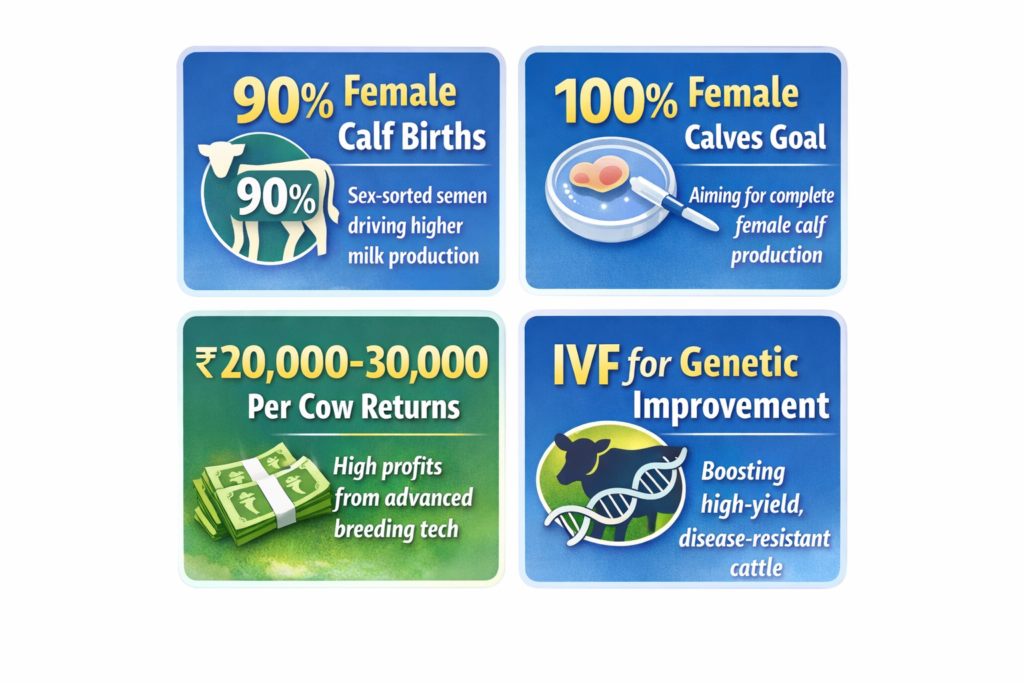
Baghel emphasised that the adoption of sex-sorted semen technology can ensure up to 90% female calf births, which directly strengthens dairy productivity. He expressed a strong vision for the future, stating that achieving 100% female calf births through advanced breeding techniques remains a key aspiration.
Female calves from indigenous breeds such as Gir, Sahiwal and Rathi develop into high-yielding dairy cows. This not only boosts milk production but also reduces the economic burden associated with maintaining non-productive male cattle. The minister noted that milk variants such as A1 and A2 from these breeds command premium prices in the market, contributing to improved dairy market growth.
From an economic standpoint, even a modest investment of approximately Rs750 per semen straw can generate long-term returns ranging from Rs20,000 to Rs30,000 per high-yielding cow. This makes sex-sorted semen a viable and scalable solution for farmers looking to expand their dairy operations.
IVF-Based Embryo Transfer Enhancing Genetic Quality
The minister also underscored the importance of IVF-based embryo transfer in improving livestock genetics. This technology allows farmers to replicate high-performing cattle by implanting embryos from genetically superior cows.
Such advancements can lead to:
- Higher milk yields
- Improved disease resistance
- Enhanced overall herd productivity
These outcomes align closely with current India dairy trends, where genetic improvement and efficiency are becoming central to sustainable dairy farming.
Dairy Sector as a Stable Income Source
Baghel highlighted that livestock and dairy farming provide a reliable income stream compared to seasonal agriculture. In the face of climate uncertainties, erratic rainfall and crop losses, dairy activities offer stability and resilience for rural households.
He stressed that integrating modern breeding technologies with scientific livestock management, veterinary care, and proper nutrition can significantly contribute to doubling farmers’ income.
Focus on Sustainability and “One Health” Approach
A key theme of the symposium was the “One Health” approach, which connects human, animal and environmental health. The minister called for:
- Strengthening veterinary infrastructure
- Improving disease detection and prevention
- Promoting sustainable dairy farming practices
These efforts are essential for addressing challenges such as dairy methane emissions, climate change and animal welfare.
Strengthening Rural Economy Through Dairy Innovation
Baghel reiterated that the dairy sector remains a cornerstone of the rural economy. Increased adoption of technologies such as precision dairy farming, IVF and sex-sorted semen can drive:
- Rural employment generation
- Higher milk production
- Improved farmer livelihoods
He also highlighted the need for greater awareness and infrastructure development to ensure widespread adoption of these innovations across the dairy sector in India.