


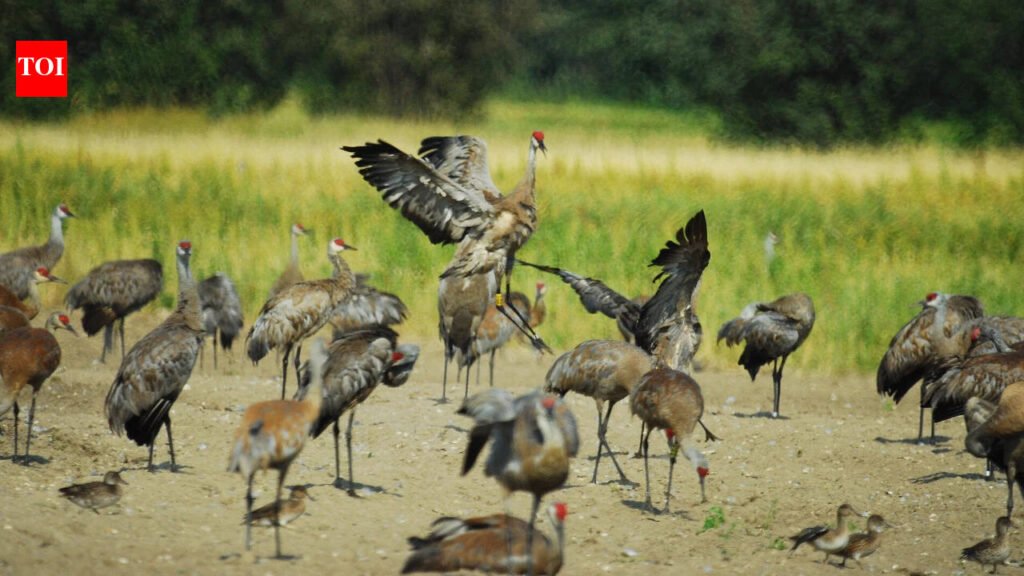
A former dairy farm in Fairbanks, Alaska, has become an important sanctuary for migratory birds, demonstrating how community conservation efforts can preserve agricultural land and protect wildlife for future generations. Today, Creamer’s Field Migratory Waterfowl Refuge spans approximately 1,790 acres and attracts around 150 bird species throughout the year.
From Dairy Farming to a Wildlife Haven
The story began in the early 20th century, when dairy farming operations at Creamer’s Field started attracting migrating birds. According to the Alaska Department of Fish and Game, the farm’s fields provided valuable feeding and resting areas for waterfowl during spring migration.
Leftover grain, manure-enriched soil and shallow pools of water created favourable conditions for birds arriving before the surrounding landscape had fully thawed. Over time, the seasonal migration became a familiar sight for Fairbanks residents, making the dairy farm an important part of the local community.
Community Efforts Saved the Land in 1968
In 1966, the dairy fields were put up for sale, raising concerns about their future as wildlife habitat and open space. Residents came together to protect the property, supported by the Creamer family, which agreed to keep the land off the open market while conservation efforts progressed.
In 1967, the Alaska Conservation Society launched a fundraising campaign to secure an option on the land. This arrangement provided time for the state to obtain federal Pittman-Robertson funding and legislative approval for the purchase.
The state acquired approximately 250 acres of dairy fields in 1968. The Alaska Department of Fish and Game and the Department of Natural Resources subsequently incorporated the fields and adjoining state lands into the Fairbanks Wildlife Management Area.
This community-led initiative helped transform privately operated agricultural land into a protected public resource.
Establishing and Expanding the Refuge
The area received formal protection as a state game refuge in 1979. Its primary objectives included conserving and improving migratory bird habitat while providing opportunities for wildlife observation and research.
The historic dairy buildings were listed on the National Register of Historic Places in 1977. In 1982, the state acquired the buildings and approximately 12 surrounding acres, helping preserve the property’s agricultural heritage.
According to the Conservation Fund, the present-day refuge covers roughly 1,790 acres. Its wetlands, open fields and ponds support a wide variety of wildlife, including Canada geese, snow geese, trumpeter swans, mallards, northern shovelers and sandhill cranes.
Habitat Improvements Support Migratory Birds
Wildlife surveys conducted during the 1970s helped establish a baseline for understanding the area’s birds, mammals and vegetation. Subsequent habitat enhancement projects strengthened the refuge’s ecological value.
In 1984, a neighbouring property owner worked with the Alaska Department of Fish and Game to construct the first pond. In 1987, the department and Ducks Unlimited built six additional ponds to improve waterfowl nesting habitat. Another five-acre pond was established in 1989 to provide summer roosting areas for sandhill cranes.
Research and bird-banding projects also helped scientists understand crane movements and migration patterns. Between 1988 and 1990, biologists banded 59 sandhill cranes, partly to investigate their movements near Fairbanks International Airport. A later project tracked hundreds of birds, including cranes fitted with satellite GPS devices, revealing connections between Alaska’s Tanana Valley and wintering areas in north-central Texas.
A Conservation Success Story
Creamer’s Field continues to attract substantial numbers of migrating birds. Historical counts recorded approximately 1,500 to 2,000 cranes and waterfowl during the final two weeks of August in some monitoring periods, with higher peaks documented in earlier years.
The annual migration also helped inspire the Tanana Valley Sandhill Crane Festival, organised by Friends of Creamer’s Field in collaboration with conservation and wildlife organisations.
The refuge demonstrates how agricultural landscapes can retain lasting environmental value. Through community participation, public funding, habitat restoration and scientific research, a former dairy farm has become a significant destination for wildlife and nature enthusiasts.
Its history highlights the potential for cooperation between farming communities, conservation groups and government agencies to protect natural habitats while preserving important links to agricultural heritage.