


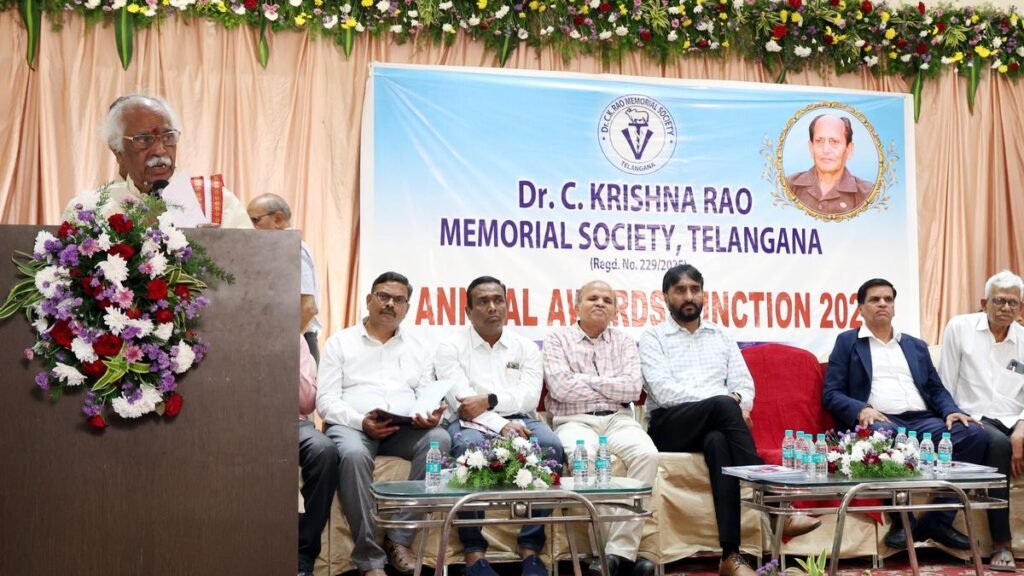
Former Himachal Pradesh Governor Bandaru Dattatreya has emphasised the importance of promoting dairy, sheep and poultry farming to improve farmers’ incomes and strengthen India’s livestock sector. Speaking at the annual awards ceremony of the Dr. C. Krishna Rao Memorial Society in Hyderabad, Telangana, on October 13, 2026, he highlighted the contribution of agriculture and animal husbandry to the national economy.
Dattatreya called for increasing milk and meat production while expanding poultry farming to create additional livelihood opportunities in rural communities. His remarks underline the importance of livestock-based activities in diversifying farm income, generating rural employment and supporting the development of India’s agricultural economy.
Dairy Farming and Livestock Development as Drivers of Rural Growth
Dairy farming remains an important source of income for millions of Indian households, particularly small and marginal farmers. Alongside crop cultivation, milk production can provide a regular revenue stream while supporting employment in animal care, feed management, milk collection, transportation and processing.
Promoting scientific dairy farming practices can help farmers improve productivity, manage operating costs and strengthen the economic sustainability of their businesses. Better animal nutrition, breeding management, veterinary services and access to organised milk markets are important factors in improving dairy-sector performance.
Dattatreya also highlighted the importance of sheep and poultry farming. Diversifying livestock activities can help farmers reduce dependence on a single source of agricultural income and create additional opportunities for rural entrepreneurs. Expanding milk and meat production, supported by appropriate infrastructure and animal healthcare, can also strengthen the wider livestock value chain.
National Livestock Mission Supports Livelihood Opportunities
During the programme, Dattatreya appreciated the role of the National Livestock Mission in promoting self-employment and improving the economic conditions of farmers through livestock-based activities.
The mission supports livestock entrepreneurship and the development of selected livestock value chains, creating opportunities for eligible individuals, farmer groups and rural enterprises. Such initiatives can complement dairy development by encouraging investment in animal husbandry, improving access to support systems and strengthening rural business opportunities.
For the dairy industry, the broader lesson is the importance of combining financial and institutional support with practical improvements in farm management. Access to veterinary care, quality feed, breeding services and reliable procurement networks can help farmers translate increased production into sustainable income.
However, the effectiveness of livestock development programmes also depends on implementation, awareness among beneficiaries, market access and the availability of suitable infrastructure.
Veterinary Professionals and Research Play a Key Role
Dattatreya commended veterinary officers in Telangana for their contributions to animal healthcare, rural development, farmers’ welfare and the implementation of government schemes. He particularly appreciated the services of women veterinarians, recognising their contribution to veterinary practice and livestock development.
Veterinary professionals play an essential role in maintaining animal health, preventing disease, improving reproductive performance and supporting responsible livestock management. In dairy farming, timely diagnosis and treatment can help reduce production losses and protect farmers’ investments in their herds.
Sharath Chandra, registrar of P.V. Narasimha Rao Telangana Veterinary University, highlighted the institution’s research in animal nutrition, health and scientific livestock management. He said the university would continue to provide farmers with technical guidance and scientific advice aimed at improving productivity and profitability.
Research-led approaches can help dairy farmers make informed decisions about feeding, breeding, disease prevention and herd management. Stronger collaboration between veterinary institutions, government departments and farmers can also support the adoption of practical innovations across the livestock sector.
Recognition of Contributions to Agriculture and Veterinary Science
The annual awards ceremony recognised individuals for their contributions to different fields. Vangala Lakshma Reddy, founder president of the Dr. C. Krishna Rao Memorial Society, said the organisation was established to encourage farmers, veterinarians, students and entrepreneurs.
This year, awards and gold medals were presented to 22 individuals. Lakshma Reddy also announced plans to introduce additional awards in the future to recognise deserving contributors.
Kotaiah, the society’s vice-president, recalled C. Krishna Rao’s contributions to the veterinary profession and appreciated the organisation’s efforts to encourage farmers, students and veterinary professionals. Other attendees included general secretary Anantham, treasurer Mallam Mahender, executive committee members, veterinary officers, farmers and award recipients.
Strengthening India’s Dairy and Livestock Economy
The event highlighted the interconnected roles of dairy farming, livestock entrepreneurship, veterinary services and scientific research in rural development. Increasing milk production alone is not sufficient to improve farm incomes; farmers also need access to quality inputs, animal healthcare, efficient collection systems and dependable markets.
For India’s dairy industry, the priorities include improving animal productivity, strengthening farmer support services and expanding value addition through processing and organised marketing. Encouraging livestock-based entrepreneurship can further support employment and income diversification in rural areas.
Dattatreya’s remarks reinforce the need for coordinated efforts among government agencies, research institutions, veterinary professionals and farming communities. Continued investment in these areas can help strengthen India’s livestock sector while creating more sustainable economic opportunities for dairy farmers and rural entrepreneurs.