


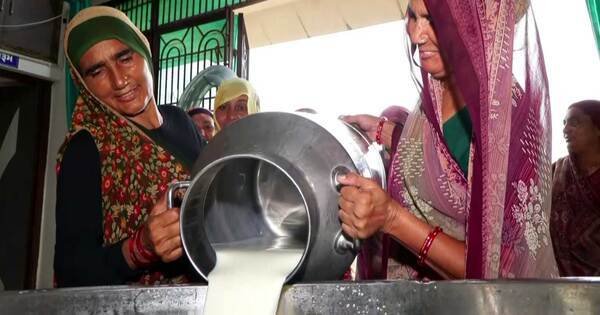
Bhopal: Milk procurement by the Bhopal Milk Union has increased by around 38% over the past year, reaching 3.81 lakh kg per day, as improved returns for farmers, assured procurement and expanded village-level collection infrastructure strengthen the cooperative dairy network.
The increase reflects growing participation from dairy farmers and greater capacity within the milk collection and transportation system. Procurement at the Bhopal unit has risen from 2.76 lakh kg per day to 3.81 lakh kg per day.
At the broader cooperative level, total milk procurement by the organisation that markets Sanchi packaged milk in Madhya Pradesh has also increased substantially, rising from 8.73 lakh kg per day to 10.50 lakh kg per day.
Better Farmer Returns Support Procurement Growth
According to Bhopal Milk Union CEO Pritesh Joshi, improved returns to dairy farmers have been an important factor behind the increase.
Higher and more remunerative milk prices can encourage farmers to supply larger quantities through organised cooperative channels.
Joshi said the improved returns are helping the milk procurement network expand, while assured procurement provides farmers with greater confidence that their milk will have a dependable market.
For dairy farmers, reliable procurement can be particularly important because milk is highly perishable and must be collected and chilled soon after production.
Village-Level Infrastructure Expands
The Madhya Pradesh Cooperative Dairy Federation (MPCDF) has expanded its milk procurement infrastructure to accommodate growing volumes.
The network now includes additional:
- 🥛 Bulk milk coolers
- 🤖 Automatic milk collection units
- 🏘️ Village-level dairy collection centres
- 🧪 Milk testing facilities
The expansion has made milk collection more accessible for farmers while reducing the time required to handle milk after collection.
Immediate chilling is particularly important for maintaining milk quality and reducing deterioration before the product reaches the processing plant.
Better Testing Builds Farmer Confidence
Improved milk testing facilities have also contributed to confidence among dairy farmers.
Automated collection and testing systems can provide farmers with a more structured procurement process while helping cooperatives assess milk quality more efficiently.
The combination of testing, transparent collection and immediate chilling can strengthen the relationship between farmers and the cooperative system.
As procurement volumes increase, these systems become increasingly important for maintaining quality standards across a larger milk collection network.
12 New Milk Tankers Added
With procurement increasing significantly, the Bhopal Milk Union has also strengthened its transportation infrastructure.
The union has inducted:
🔹 12 milk tankers
🔹 1 mobile milk testing laboratory
🔹 2 electric vehicles for dairy-product distribution
The new vehicles were flagged off by NDDB Chairperson Meenesh Shah, in the presence of outgoing MPCDF Managing Director Sanjay Govani and Bhopal Milk Union CEO Pritesh Joshi.
The additional transportation capacity is intended to support faster movement of milk from village-level societies to the processing plant.
60,000-Litre Additional Transport Capacity
Each of the 12 newly inducted milk tankers has a capacity of 5,000 litres.
Together, the tankers add 60,000 litres of transportation capacity per trip.
The 12 tankers were procured at a total cost of approximately ₹3.40 crore.
The expansion is significant as higher milk procurement requires the cooperative to move larger quantities of milk efficiently every day.
Faster transportation can also help ensure that collected milk reaches chilling and processing facilities within the required timeframe.
Mobile Milk Laboratory Strengthens Quality Checks
The Bhopal Milk Union has also introduced a mobile milk testing laboratory, costing approximately ₹20 lakh.
The laboratory will operate under the “Doodh Ka Doodh, Paani Ka Paani” programme and is designed to conduct testing across different dairy products.
It can test:
- 🥛 Milk
- 🥣 Curd
- 🧀 Paneer
- 🧈 Ghee
- 🍬 Mawa
The mobile facility can also test for several adulterants, including starch, urea, maltose, sucrose and neutralisers.
This provides the cooperative with greater flexibility to conduct testing closer to collection points and markets rather than relying exclusively on fixed laboratory infrastructure.
Government Support for Dairy Infrastructure
The new tankers and mobile laboratory have been developed under the Centre’s National Programme for Dairy Development (NPDD).
The mobile laboratory received 50% central assistance under the programme.
Government-supported investment in collection, testing, chilling and transportation infrastructure can help dairy cooperatives expand their procurement networks while maintaining quality standards.
Such infrastructure is particularly important when milk procurement grows rapidly, as existing facilities can otherwise become bottlenecks.
Higher Procurement Creates New Logistics Requirements
The increase in milk procurement has also created a greater need for efficient logistics.
Joshi noted that the higher volumes require faster movement of milk from village societies to the processing plant each day.
This highlights an important relationship between milk procurement and infrastructure.
Increasing farmer participation and milk collection is only sustainable when transportation, chilling and processing capacity grow alongside it.
The addition of the 12 tankers is therefore intended to ensure that the cooperative can handle increased milk volumes without creating delays within the supply chain.
Sanchi Smart Parlour Opens in Bhopal
Alongside the procurement and transportation infrastructure, a Sanchi Smart Parlour has also been established at Bhopal Dairy.
The facility adds another consumer-facing component to the cooperative’s dairy network.
Such retail infrastructure can help dairy cooperatives strengthen direct access to consumers while expanding the visibility and availability of their dairy products.
Stronger Cooperative Dairy Network
The growth in procurement at Bhopal Milk Union is part of a broader effort to strengthen organised dairy procurement in Madhya Pradesh.
The increase from 2.76 lakh kg to 3.81 lakh kg per day at the Bhopal unit represents a substantial expansion in the amount of milk being channelled through the cooperative system.
At the overall cooperative level, procurement has risen to 10.50 lakh kg per day, compared with 8.73 lakh kg per day previously.
This indicates growing milk availability as well as greater participation in organised procurement.
Focus on Farmers and Infrastructure
The development demonstrates how farmer incentives and infrastructure investment can work together to increase organised milk procurement.
Better returns provide farmers with an incentive to supply milk through cooperative channels, while collection centres, cooling facilities, testing systems and transportation make it easier for them to do so.
As these systems expand, cooperatives can potentially increase procurement while improving milk quality and operational efficiency.
Outlook
The 38% rise in Bhopal Milk Union’s milk procurement highlights the growing role of organised dairy collection in Madhya Pradesh.
Higher farmer returns, assured procurement and expanded village-level infrastructure have helped increase daily procurement to 3.81 lakh kg.
The addition of 12 milk tankers, a mobile testing laboratory and electric distribution vehicles is expected to further strengthen the cooperative’s ability to manage rising volumes.
With continued investment in milk collection, chilling, testing, transportation and retail infrastructure, the Bhopal Milk Union could further expand its procurement network and improve market access for dairy farmers.
The development also underlines the importance of building the entire dairy value chain alongside rising milk production—from the village collection centre to processing and ultimately the consumer.