


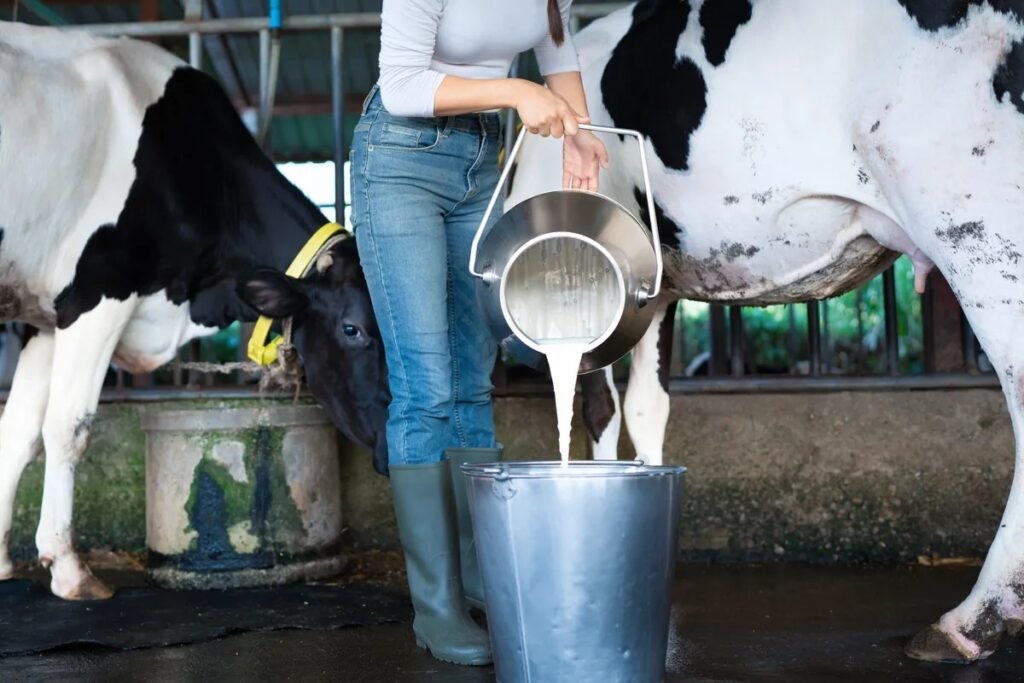
Nairobi, Kenya: A new dairy capacity-building initiative in Kenya aims to improve the productivity, profitability and resilience of smallholder dairy enterprises while providing coffee-farming households with a more reliable source of income throughout the year.
The initiative is being implemented under the Pathways to Prosperity (P2P) Coffee Project, a seven-year programme funded by the Dutch Ministry of Foreign Affairs and implemented by Solidaridad Eastern and Central Africa.
The programme recognises dairy farming as an important complementary enterprise for coffee-growing households, particularly because coffee income is largely seasonal. By strengthening dairy production, farmers can generate regular income from milk while continuing to invest in their coffee farms.
Dairy to Provide Additional Income for Coffee Farmers
Coffee remains an important cash crop for many smallholder households in Kenya’s highland regions. However, farmers often depend on one or two harvest cycles each year, creating periods when household cash flow is limited.
Dairy farming can help address this challenge by generating income on a daily or weekly basis through milk sales. However, low productivity, animal-health challenges, inadequate feeding and poor milk handling continue to limit the profitability of smallholder dairy enterprises.
The new intervention is designed to address these constraints through practical training, technical support and improved farm-management practices.
1,500 Farmers to Receive Dairy Training
The assignment will provide dairy capacity-building to approximately 1,500 farmers across seven counties and 10 training sites. The targeted counties include Bungoma, West Pokot, Trans Nzoia, Nandi, Kericho, Kisii and Bomet.
Farmers will receive practical training covering several aspects of dairy production, including fodder production, feed formulation and planning, breeding, calf management, animal health, dairy housing, manure management, milking hygiene and milk quality.
The programme will use a participatory and demonstration-based approach, allowing farmers to gain practical knowledge that can be applied directly on their farms.
Focus on Feeding, Breeding and Animal Health
Improving herd productivity will be a major focus of the programme. Poor feeding and breeding decisions can significantly reduce milk production and increase the cost of maintaining dairy animals.
The programme will therefore promote improved feeding strategies, better utilisation of locally available fodder and appropriate breeding practices. Calf-rearing techniques will also be addressed to help farmers develop healthier and more productive replacement animals.
Animal health management will form another important component, with farmers receiving guidance on disease prevention, timely veterinary intervention and improved herd management.
Targeted Support for 200 Model Farmers
In addition to group-based training, 200 selected model farmers will receive targeted artificial insemination, breeding and veterinary services.
The support will include initial assessments, service delivery, follow-up and record keeping. This approach is intended to demonstrate improved dairy management practices at farm level and create practical learning points that can benefit other farmers within the communities.
Improving Milk Quality and Food Safety
Milk quality will also receive significant attention under the initiative.
Poor hygiene during milking, the use of unclean containers, delays in collection and exposure to heat can reduce milk quality and contribute to post-harvest losses. Even where farmers maintain good production practices, inadequate handling can affect the value and marketability of their milk.
The programme will therefore conduct milk quality testing and practical demonstrations at three selected farmer and cooperative sites. Farmers will be trained on hygienic milking, proper storage, handling and transportation practices.
Improved milk quality could help farmers reduce losses while strengthening their ability to access reliable dairy markets.
Promoting Climate-Smart Dairy Farming
The initiative will also encourage farmers to adopt climate-smart and resource-efficient dairy practices.
Better utilisation of manure through composting and, where appropriate, biogas systems will be promoted. Integrating dairy and coffee production can allow farmers to recycle farm resources more efficiently while reducing production costs.
The programme also aims to strengthen farmers’ resilience to climate-related challenges by promoting improved fodder production, resource management and sustainable production practices.
Linking Dairy With Coffee Production
A key feature of the programme is its integration of dairy farming with existing coffee-based farming systems.
The broader Pathways to Prosperity Coffee Project aims to support 101,500 smallholder coffee farmers, with a particular focus on women and youth, while strengthening the leadership and governance of 84 coffee cooperatives.
By adding productive dairy enterprises to coffee farms, households can potentially diversify their income sources and reduce their dependence on seasonal coffee revenues.
Programme to Strengthen Farmer Resilience
The dairy intervention forms part of a wider effort to create economically viable, socially responsible and environmentally sustainable agricultural value chains.
Through farmer training, veterinary and breeding services, improved milk-quality management and climate-smart practices, the programme seeks to strengthen the long-term performance of dairy enterprises.
The initiative is expected to help participating farmers improve animal productivity, increase milk yields, reduce production losses and manage farm resources more efficiently.
Applications Open Until September 2
The assignment calls for a qualified consultant or organisation with experience in dairy farmer training, dairy extension, animal nutrition, breeding and artificial insemination, animal health and milk quality.
The selected service provider will be responsible for developing the training curriculum, conducting farmer training, delivering targeted veterinary and breeding services, carrying out milk-quality demonstrations and preparing implementation reports.
Applications, including relevant taxes, are required to be submitted by September 2, 2026.
The initiative highlights the growing importance of dairy diversification in strengthening the livelihoods of smallholder farming households. By combining coffee production with more productive and sustainable dairy enterprises, the programme aims to help farmers build more resilient agricultural businesses and achieve more consistent household income.