


Dairy Cooperatives Explore Fresh Milk Supply for Troops in Border and High-Altitude Areas
Vadodara: Dairy cooperatives could play a larger role in supplying fresh milk to Indian Army personnel stationed in border and high-altitude regions, as the Army and the National Cooperative Dairy Federation of India (NCDFI) explore ways to reduce dependence on ultra-high temperature (UHT) processed milk where local procurement, processing and cold-chain infrastructure are feasible.
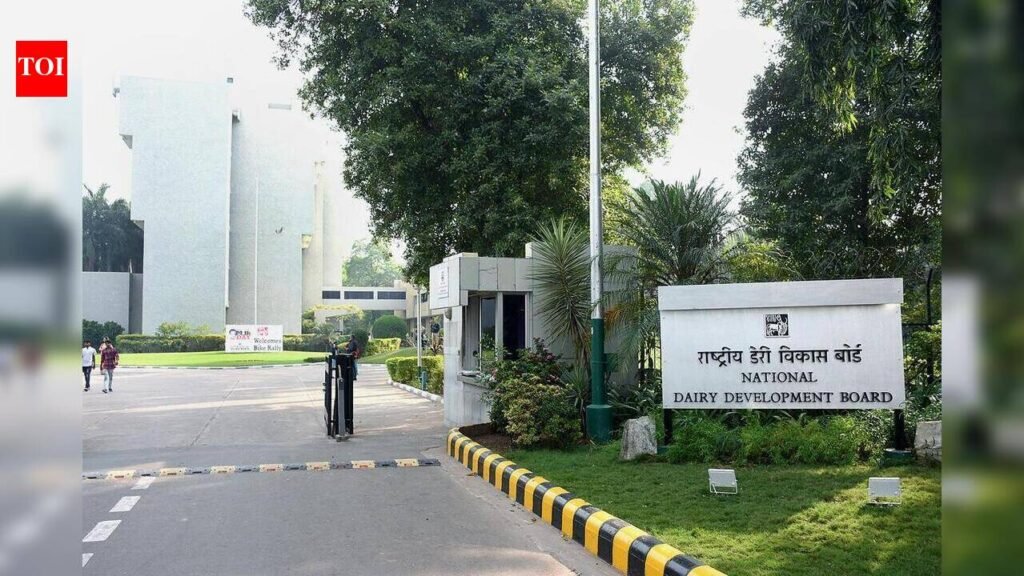
The issue was discussed at a cooperative conclave on the dairy-defence partnership held at the Dr Verghese Kurien auditorium of the National Dairy Development Board (NDDB) in Anand. The event marked more than four decades of collaboration between dairy cooperatives and the defence establishment.
Army Seeks Stronger Dairy Networks
Lt Gen Mukesh Chadha, Director General of Supplies and Transport (DGST), Indian Army, said stronger dairy cooperative networks in border regions could help provide fresh milk to troops while simultaneously creating local markets, employment opportunities and additional livelihoods.
He called for greater coordination between the Army and NCDFI to assess milk requirements and develop the necessary infrastructure for fresh milk supply in locations where operating conditions allow.
While highlighting the potential for increased fresh milk procurement, Lt Gen Chadha stressed that sufficient capacity for long-life milk must continue to be maintained in areas where challenging conditions make UHT milk essential.
At present, UHT milk remains an important part of the Army’s supply chain for troops deployed in remote and difficult locations, with 4.11 crore litres supplied for such requirements.
Balancing Fresh and UHT Milk Supply
The conclave focused on expanding fresh milk availability without compromising the supply of long-life milk to locations where maintaining a reliable cold chain is difficult.
Fresh milk requires dependable collection, processing, refrigeration and transportation infrastructure. Developing these systems closer to border regions could allow cooperatives to supply fresh milk to defence establishments while reducing transportation distances and strengthening local dairy ecosystems.
However, UHT milk will continue to remain essential for remote locations where refrigeration and regular fresh-milk deliveries are difficult to maintain.
Benefits for Farmers and Defence Personnel
NCDFI chairman Meenesh Shah said the partnership provides benefits to both the defence forces and dairy farmers.
For the Army, dairy cooperatives can provide a dependable institutional supply network. At the same time, cooperatives gain access to assured markets, while dairy farmers benefit from regular demand and improved market access.
The expansion of fresh milk procurement could therefore create a stronger connection between dairy producers in rural and border regions and defence establishments.
Four Decades of Dairy-Defence Partnership
NCDFI’s association with the Ministry of Defence dates back to 1984. The partnership has since expanded to involve 117 dairy cooperatives, with the contract value reaching ₹1,627 crore in 2025-26.
Fresh milk supplies to defence establishments increased to 18.48 crore litres in 2025-26. The combined supply of fresh and UHT milk stood at 22.60 crore litres during the same period.
Strengthening the Dairy Supply Chain
The proposed expansion of fresh milk supplies highlights the potential for dairy cooperatives to contribute beyond traditional consumer markets.
If supported by appropriate collection centres, processing facilities, refrigeration and transportation networks, local dairy procurement in border regions could simultaneously strengthen military supply chains and create new economic opportunities for dairy farmers.
The Army and dairy cooperatives will now need to assess regional requirements and infrastructure feasibility to determine where fresh milk can effectively replace or supplement UHT supplies.