


The European plant-based dairy market is moving beyond its niche status, with the sector projected to grow at a compound annual growth rate (CAGR) of 10.3% between 2026 and 2032. The growth is creating new opportunities for traditional dairy processors looking to diversify their portfolios and respond to changing consumer demand.
For established dairy companies, the question is increasingly shifting from whether to enter the plant-based dairy segment to how they can develop and manufacture these products efficiently, sustainably and profitably.
From Product Recipe to Commercial Production
Moving into plant-based dairy requires more than developing a successful recipe. Dairy processors need to consider how formulations can be transferred from laboratory or pilot-scale production to efficient industrial manufacturing.
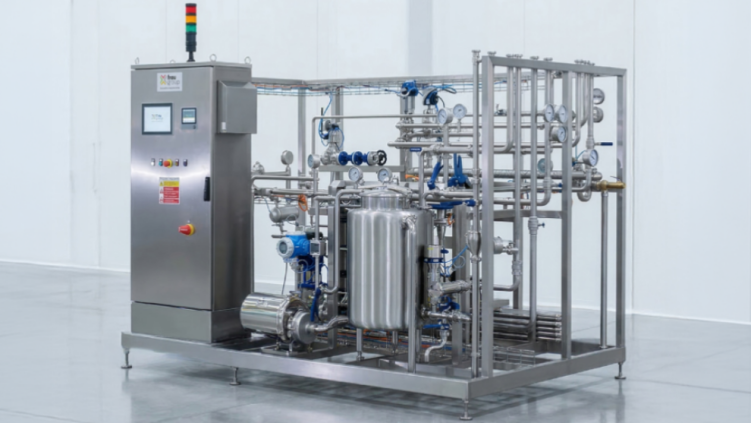
This includes selecting appropriate processing equipment, designing flexible production lines and ensuring that the facility can handle different plant-based ingredients and product formats.
Plant-based products can have different processing characteristics from conventional dairy products. Ingredients such as oats, soy, almonds, peas and other plant sources may require specific handling, mixing, heating, homogenisation and processing conditions.
For manufacturers, flexible plant design can therefore become an important advantage. Production systems that can accommodate changing formulations and product categories can help processors respond more quickly to market demand while improving the utilisation of existing infrastructure.
IIoT Can Improve Production Efficiency
Industrial Internet of Things (IIoT) technologies can also play an important role in the transition towards plant-based dairy production.
Connected equipment and sensors can provide manufacturers with real-time information on production performance, energy consumption, equipment condition and product quality. By collecting and analysing this information, processors can identify inefficiencies and make adjustments during production.
Digital technologies can also support predictive maintenance, reducing unexpected equipment downtime and helping manufacturers manage production more effectively.
For dairy companies already operating sophisticated digital production systems, these technologies can provide a foundation for extending their capabilities into plant-based manufacturing.
Existing Dairy Expertise Remains Valuable
Traditional dairy processors also have an important advantage: extensive experience in food safety, quality control, process engineering and large-scale production.
These capabilities can be transferred to plant-based product manufacturing, although they need to be adapted to the characteristics of plant-based ingredients and formulations.
Quality consistency will remain particularly important as consumers become more familiar with plant-based alternatives. Manufacturers will need to deliver reliable taste, texture, nutritional characteristics, shelf life and product safety while maintaining competitive production costs.
Sustainability and Profitability
Sustainability is another important consideration for companies entering the segment. Efficient plant design and connected production systems can help manufacturers monitor and optimise the use of water, energy and raw materials.
However, sustainable production must also make commercial sense. Companies will need to balance investments in new equipment and technologies with production volumes, consumer demand and long-term market opportunities.
As the European plant-based dairy market expands, dairy processors with adaptable production facilities, strong quality expertise and effective digital systems could be well positioned to compete in the growing segment.
The projected 10.3% CAGR from 2026 to 2032 indicates significant market potential. For dairy companies, successfully moving from recipe development to scalable production could be a key factor in capturing that opportunity.