


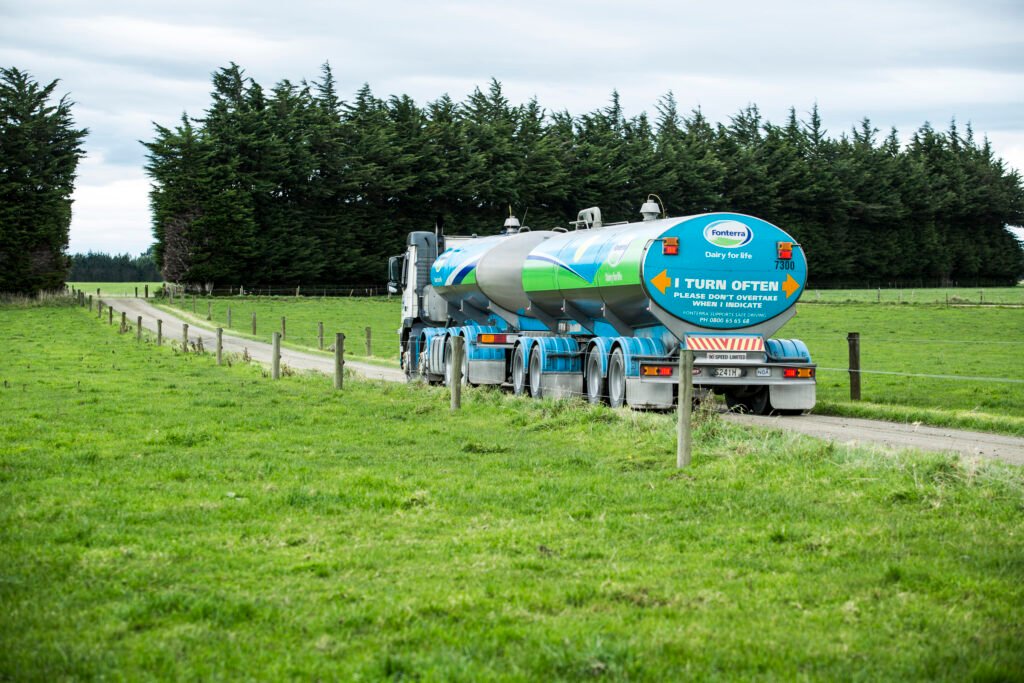
The global dairy trade is navigating a period of sharp divergence as regional export surges collide with a significant cooling of Chinese demand. While the United States and the European Union posted robust export gains in February, a 14% year-on-year collapse in Chinese imports has cast a shadow over near-term price stability. Amidst this volatility, New Zealand’s Fonterra has formalized a major strategic restructuring, completing the sale of its Mainland Group to Lactalis to refocus on its high-margin global ingredients business.
Global Export Divergence
The latest trade data reveals a fragmented international market. The United States led the expansion, with exports rising 12.6%, driven by price competitiveness in cheese and skim milk powder. The European Union followed with a 3.2% rise, whereas New Zealand remained nearly flat at 0.3%. In contrast, Australia’s export volumes contracted by 2.0%, reflecting long-term structural shifts and a smaller national herd. These supply-side increases are now testing the limits of global absorption capacity as traditional buyers retreat.
The China Factor and Demand Headwinds
The most pressing concern for dairy processors is the deepening slump in China. A 14% decline in Chinese imports during February suggests that the world’s largest dairy buyer is successfully boosting domestic self-sufficiency while grappling with subdued consumer sentiment. This demand weakness extends beyond East Asia, with import appetites softening across Latin America, the Middle East, and Africa. For global exporters, the era of relying on aggressive Chinese procurement to floor global prices appears to be transitioning into a more disciplined, value-driven phase.
Fonterra’s Strategic Pivot
Despite the global headwinds, Fonterra is doubling down on its “B2B-first” strategy. On 31 March, the co-operative finalized the sale of its Mainland Group consumer business to Lactalis. This divestment is a watershed moment, allowing the firm to return NZ$3.2 billion to its farmer-shareholders—roughly NZ$2.00 per share—by mid-April. By exiting the capital-intensive consumer brands space in Oceania, Fonterra aims to sharpen its focus on NZMP ingredients and its Anchor Food Professionals arms, which cater to specialized industrial and foodservice requirements.
Indian Market Relevance and Implications
While India remains largely insulated from these global shifts due to its domestic-centric model, the global surplus created by China’s retreat offers a dual-edged sword for Indian stakeholders:
- For Processors: Depressed global prices for skim milk powder (SMP) may limit Indian export opportunities in Southeast Asia, where Indian product often competes with Oceania and US supplies.
- For Exporters: India’s dairy and poultry exports grew by 17.92% in early 2026. However, if global prices remain soft, Indian exporters may find it difficult to sustain this momentum without superior value addition.
- Strategic Takeaway: The Fonterra-Lactalis deal underscores a global trend: the separation of “milk collection” from “brand management.” Large Indian co-operatives should monitor this shift; as global players like Lactalis expand their consumer footprint, local brands will face sophisticated competition in the value-added segment (cheese, specialized proteins).
Forward-Looking Insight
The dairy market is entering a “rebalancing” year. With Fonterra maintaining a high farmgate price forecast (up to NZ$10.00/kgMS) despite weak demand, there is a clear expectation that supply will eventually tighten. However, the immediate risk is a “protein overhang.” If China’s imports do not recover by the third quarter of 2026, we expect global processors to pivot more aggressively toward high-protein ingredients and medical nutrition to bypass volatile commodity cycles.