


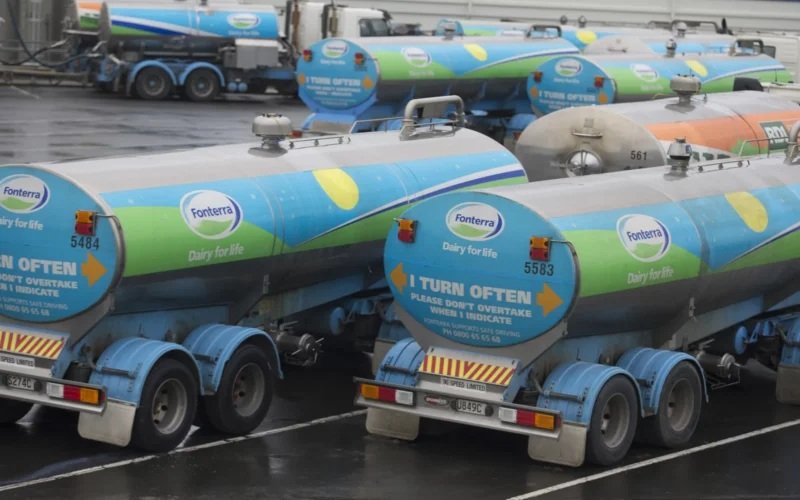
Fonterra has applied for permission to dispose of up to 22 million litres of surplus raw milk on farmland in New Zealand’s Canterbury region, triggering debate over dairy processing capacity, environmental protection and responsible milk production. The proposal seeks changes to seven existing wastewater resource consents covering three of the co-operative’s processing facilities: Clandeboye, Darfield and Studholme.
The application, submitted to Environment Canterbury on October 2, 2026, is intended to provide a contingency option during periods when unexpected operational disruptions prevent the company from processing all the milk collected from dairy farmers. However, the proposed disposal volume has raised concerns among environmental organisations, animal welfare advocates and other stakeholders about freshwater quality, nutrient pollution and food waste.
Fonterra Proposes Contingency Measures for Surplus Milk
According to Fonterra’s application, the company anticipates that processing constraints across the South Island could result in approximately 22,340 cubic metres, equivalent to 22.34 million litres, of surplus raw milk during the peak production period in the 2027 financial year.
The proposed consent variations would allow surplus milk to be incorporated into existing wastewater management systems or transported directly to authorised farmland for application to land.
Fonterra has explained that raw milk is highly perishable and generally needs to be processed within 24 to 36 hours. Unexpected circumstances, including major power interruptions, natural disasters or other operational disruptions, could affect the company’s ability to process milk within this timeframe.
The co-operative maintains that the proposal is intended as an emergency contingency rather than a routine milk disposal practice. It has also indicated that alternative arrangements, including transferring milk to processing facilities in the North Island and adjusting manufacturing operations, would be considered before disposal becomes necessary.
Fonterra confirmed that it had not needed to dispose of any milk during the 2026 peak processing season and did not expect to require the measure in the following season. Improvements made across its manufacturing network were expected to provide sufficient processing capacity.
Environmental Concerns Over Milk Disposal
The proposal has attracted criticism from environmental organisations, particularly because of the potential impact of disposing of large quantities of nutrient-rich raw milk onto agricultural land.
Raw milk contains organic matter, fats, proteins, nitrogen and phosphorus. Although these components can contribute nutrients to agricultural soils, their concentrations are significantly higher than those typically found in the wastewater covered by the existing consents.
If not properly managed, excessive nutrient application can increase the risk of nutrient runoff, freshwater contamination and other environmental impacts.
The Environmental Law Initiative (ELI) has called on Environment Canterbury to reject the application. The organisation argues that disposing of raw milk represents a substantial change from the wastewater activities originally covered by the existing permits.
It has also questioned whether such a large-scale discharge should be considered through variations to existing consents rather than requiring a separate application with greater public scrutiny.
Greenpeace and animal welfare advocates have similarly raised concerns about freshwater pollution and the implications of disposing of milk while households face food affordability challenges.
Environmental campaigners have also questioned the relationship between expanding dairy production and the possibility of generating more milk than available processing facilities can handle.
Farmers and Regulators Offer Different Perspectives
The proposal has received a mixed response from the agricultural sector and environmental groups.
Federated Farmers has described the application as prudent risk management, recognising the challenges dairy processors face when handling large volumes of perishable milk during peak production periods. From the farmers’ perspective, having contingency arrangements can help protect milk collection systems and prevent disruptions that could affect dairy suppliers.
Environmental advocates, however, argue that the proposal raises broader questions about dairy production growth, processing capacity and freshwater protection. They have questioned whether increasing milk production without sufficient processing infrastructure could create avoidable environmental pressures.
The debate reflects the challenge of balancing the operational requirements of New Zealand’s dairy industry with environmental responsibilities.
Environment Canterbury Requests Further Information
Environment Canterbury has requested additional information from Fonterra to assess the potential environmental effects of the proposed consent variations.
The regional council has specifically sought clarification regarding the proposed disposal locations, the impact on surrounding land and the expected duration of the activity.
Concerns have also been raised by mana whenua representatives regarding potential contamination of waterways near the Clandeboye processing facility, particularly because of the area’s high water table and the risk of nutrients and contaminants entering freshwater systems.
The council’s assessment will determine whether the requested changes fall within the scope of the existing resource consents and whether further regulatory scrutiny is necessary.
Implications for New Zealand’s Dairy Industry
The proposal highlights an important challenge for New Zealand’s dairy sector: ensuring that milk production, processing capacity and environmental management remain aligned.
For dairy processors, contingency planning is essential because milk collection cannot simply stop when manufacturing facilities experience unexpected disruptions. Farmers must continue milking their cows, making reliable processing and collection arrangements important throughout the production season.
However, the long-term sustainability of the industry also depends on responsible nutrient management, freshwater protection and sufficient investment in processing infrastructure.
The outcome of Fonterra’s application could influence how dairy processors across New Zealand manage seasonal production peaks and unexpected operational disruptions. It also highlights the importance of balancing business continuity with environmental accountability as the country’s dairy industry continues to evolve.