


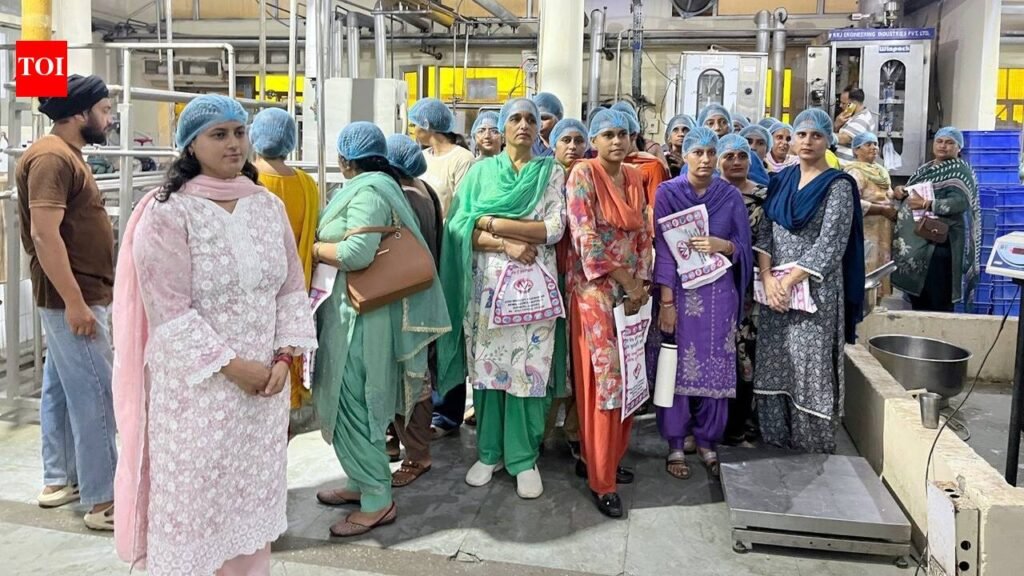
Guru Angad Dev Veterinary and Animal Sciences University (GADVASU), Ludhiana, organised a one-day training programme focused on clean milk production and dairy value addition for 56 women dairy entrepreneurs. The programme was conducted by the Directorate of Extension Education with the objective of strengthening technical knowledge, practical skills and income-generating opportunities for rural women involved in dairy farming.
The initiative highlighted the growing importance of scientific dairy management and value-added products in improving the profitability of small and medium-sized dairy enterprises. By combining technical training with practical exposure, the programme aimed to help participants improve milk quality, strengthen farm management and explore additional sources of income.
Focus on Scientific Dairy Farming
The training included technical sessions on scientific herd management and preventive animal healthcare. Participants were introduced to practices that can contribute to better herd health, improved productivity and more efficient dairy operations.
Preventive healthcare is particularly important for small dairy businesses because animal health directly influences milk production and farm profitability. Scientific management practices can also help farmers identify potential health problems at an earlier stage and maintain healthier herds.
The programme also placed emphasis on clean milk production. Hygienic handling of milk from milking through storage and processing is essential for maintaining quality and protecting consumers.
Training in Milk Hygiene and Processing
Milk hygiene was another major area covered during the programme. Participants received guidance on hygienic milk handling and practices that can help reduce contamination during collection and processing.
The training went beyond primary milk production by introducing women entrepreneurs to the potential of setting up mini dairy processing units. Such facilities can allow farmers and small businesses to convert raw milk into products with additional commercial value.
Value addition can provide dairy entrepreneurs with opportunities to diversify their businesses rather than relying entirely on the sale of fresh milk.
Encouraging Value-Added Dairy Products
Experts at the programme discussed product diversification and the production of premium dairy items. Participants were guided on how value-added dairy products can create additional business opportunities when supported by appropriate processing, packaging and marketing strategies.
The sessions also covered marketing and profitable business models. These areas are increasingly relevant for rural dairy entrepreneurs seeking to build sustainable businesses and connect directly with consumers and local markets.
Developing skills in both production and marketing can help entrepreneurs better understand consumer preferences and identify products that have potential for stronger market demand.
Practical Exposure at University Milk Plant
The programme included a practical component through a visit to the university’s milk plant and processing chain. Participants were able to observe scientific dairy processing techniques firsthand.
Practical exposure can help bridge the gap between classroom-based technical information and its application in real dairy businesses. Seeing processing equipment and procedures directly can also provide entrepreneurs with a clearer understanding of how milk can be handled and converted into different dairy products.
Supporting Women-Led Rural Enterprises
The programme reflects the role of skill development and entrepreneurship training in strengthening women’s participation in the rural dairy economy. For many rural households, dairy farming can serve as an important source of regular income, while value addition can create additional opportunities for business expansion.
Dr JPS Gill, Vice-Chancellor of GADVASU, said that empowering women dairy entrepreneurs with scientific knowledge, practical skills and entrepreneurial capabilities can help improve dairy product quality, enhance household incomes and create sustainable livelihood opportunities in rural areas.
The training therefore combined animal husbandry, milk hygiene, processing, value addition and business development. Such integrated programmes can help rural women develop the knowledge required to operate more efficient and commercially oriented dairy enterprises.