


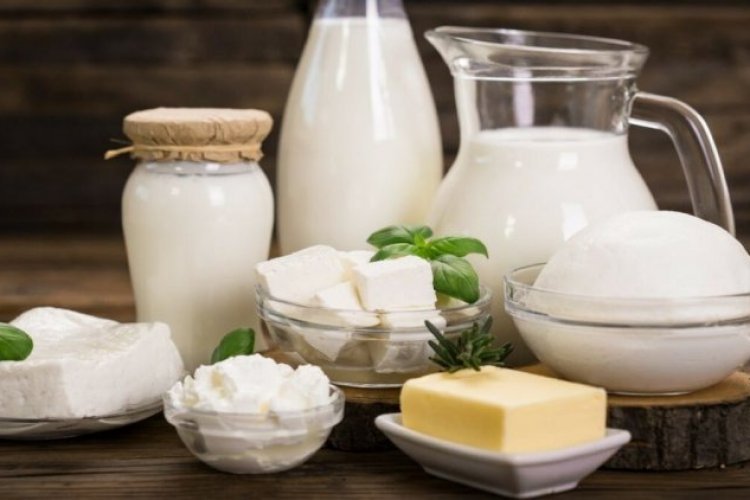
The global dairy market is navigating a period of significant volatility as a supply-side surge, particularly in the European Union, exerts downward pressure on commodity prices. As of April 2026, the market has seen a stark reversal from the bullish start to the year, with butter and cheese bearing the brunt of the correction. While global indices soften, the Indian market presents a divergent narrative, facing domestic procurement pressures and a structural pivot towards value-added processing.
European Oversupply and Global Price Erosion
Western Europe has emerged as the epicentre of the current glut. Improved production efficiencies and a record-breaking “spring flush” in the UK and Northern Europe have saturated the market.
- Butter & Fat: European butter prices have retreated to approximately €4,950–€5,525 per tonne, a sharp decline from previous highs.
- Cheese: Cheddar values have softened by roughly €100 per tonne, currently hovering near €3,550.
- GDT Signals: The most recent Global Dairy Trade (GDT) event on 7 April 2026 confirmed this bearish sentiment, with the Price Index dropping 3.4%. Butter led the decline with an 8.1% slump, while Skim Milk Powder (SMP) showed more resilience, dipping only 1.6%.
The India Angle: A Market Divergence
While the global market grapples with excess, India is entering a phase of “margin recalibration.” Despite a 25% jump in output during the 2024–25 flush season, unseasonal rains and geopolitical tensions in northern milk belts have eroded inventories.
- Procurement Pressure: Indian processors are facing firming procurement costs. Unlike their European counterparts, Indian dairies must balance rising raw milk prices with a domestic consumer market that is increasingly price-sensitive following recent GST adjustments.
- Import Strategy: The global price dip offers a strategic window for Indian players. Stable SMP and WMP prices in Europe may prevent imported inflation, allowing Indian processors to maintain blends for value-added products (VAPs) like curd and paneer, which are seeing double-digit demand growth.
Strategic Shifts: Self-Sufficiency and Innovation
A notable shift in global trade dynamics is the rise of regional self-sufficiency. Saudi Arabia has notably surpassed 131% self-sufficiency in dairy, reflecting a successful long-term strategy to reduce import reliance. This removes a key traditional outlet for European and Oceanian exporters, further contributing to the global stock build-up.
Simultaneously, the industry is undergoing a digital and molecular overhaul.
- Precision Fermentation: By April 2026, lab-grown casein and whey have reached near price-parity with traditional dairy, providing a “buffer” for industrial food manufacturers.
- AI Orchestration: AI-powered predictive analytics are now standard for top-tier cooperatives, allowing them to reroute shipments in real-time to mitigate the impact of the current price floor.
Investor & Processor Implications
For investors, the current climate suggests a “wait-and-see” approach for primary producers but offers a “buy” signal for processors with strong value-added portfolios. In India, the focus should remain on companies with robust cold-chain infrastructure and e-commerce penetration, as general trade continues to lose market share to quick-commerce platforms.
Forward-Looking Insight: Expect global prices to find a firm floor by Q3 2026 as European production momentum cools under “B-price” punitive mechanisms. However, the structural shift towards high-protein and functional dairy will likely permanently decouple VAP margins from raw commodity fluctuations.