


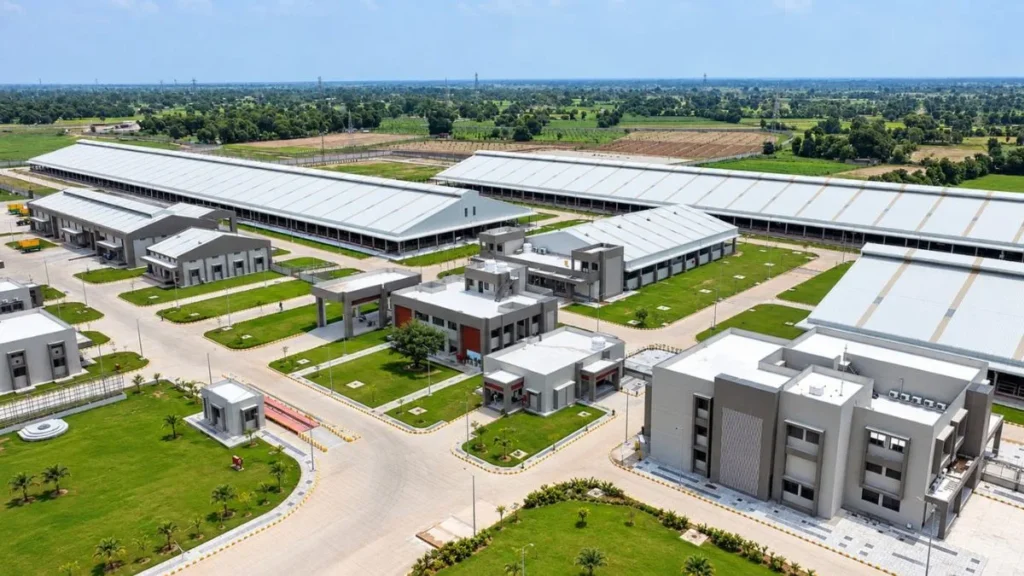
Prime Minister Narendra Modi is scheduled to inaugurate the Bharat Bovine Breeding and Research Centre (BBBRC) at Bhildi in Gujarat’s Banaskantha district on October 30, 2026. Developed with an investment of ₹325 crore, the facility aims to strengthen indigenous cattle breeding, improve milk productivity and promote scientific livestock management in India.
Spread across 127 acres, the centre has been developed by Banas Dairy with technical guidance from the National Dairy Development Board (NDDB) and support under the central government’s Rashtriya Gokul Mission. According to a report by The Statesman, citing IANS, the facility is targeting annual production of 25,000 superior-quality embryos.
The project is intended to improve the genetic potential of cattle and buffaloes, supporting higher milk production and more efficient livestock farming.
Advanced Reproductive Technologies to Improve Breeding
The BBBRC will use advanced reproductive technologies, including ovum pick-up and in-vitro fertilisation (OPU-IVF), alongside embryo transfer. These techniques can help multiply the offspring of genetically superior animals more efficiently than conventional breeding alone.
Banas Dairy chairman Shankar Chaudhary explained that a high-performing cow would normally produce approximately one calf annually. Reproductive technologies can enable multiple embryos to be produced from elite animals, potentially allowing their desirable genetic characteristics to be passed on to more offspring within a shorter period.
The centre’s annual target of 25,000 embryos reflects its focus on scaling up organised breeding programmes. Actual results will depend on factors including embryo quality, successful implantation, pregnancy rates, animal health and the management of recipient animals.
By expanding access to improved breeding material, the facility could support more systematic genetic improvement across participating livestock populations.
Focus on Indigenous Cattle and Buffalo Breeds
The centre will focus on several Indian cattle and buffalo breeds selected for their importance to the country’s livestock sector.
| Livestock category | Target breeds |
|---|---|
| Indigenous cattle | Kankrej, Gir, Sahiwal and Tharparkar |
| Buffaloes | Mehsani, Banni, Jaffarabadi and Murrah |
These breeds form part of India’s diverse animal genetic resources. Indigenous cattle are often valued for characteristics such as heat tolerance and adaptation to local environments, although productivity and feed requirements vary according to breed, genetics, nutrition and farm management.
Improving the genetic quality of these animals could help farmers increase milk output while making better use of available feed and other resources. The initiative also seeks to promote Indian cattle and buffalo breeds internationally.
Potential Benefits for Small Dairy Farmers
A central objective of the project is to improve livestock productivity while addressing the economic pressures faced by farmers. Shrinking areas available for fodder cultivation and rising animal-rearing costs have increased the importance of improving productivity per animal.
The centre’s approach is summarised as producing fewer animals of better quality to obtain more milk. This strategy prioritises genetic merit, animal performance and efficient resource use rather than simply increasing herd size.
According to the report, the facility plans to make disease-free bulls from superior breeds, quality semen and embryos available to livestock farmers at affordable rates. Access to these resources could help farmers strengthen their breeding programmes and improve the productive potential of future generations.
However, higher genetic potential alone does not guarantee greater profitability. Adequate nutrition, veterinary care, reproductive management and suitable housing will remain essential to achieving improved milk yields and controlling production costs.
Supporting Rural Livelihoods and the Dairy Cooperative Sector
The project is also expected to support rural livelihoods, including women who play a significant role in livestock care and dairy operations. Banas Dairy estimates that women account for 70% of the work in the dairy sector, according to the report.
If breeding services are accessible and affordable, small-scale producers may gain opportunities to improve their herds without relying exclusively on purchasing large numbers of additional animals. The impact will depend on the reach of the centre’s services, their cost and the capacity of local farmers to adopt improved breeding and management practices.
As a farmers’ cooperative, Banas Dairy’s involvement also connects the project with an established dairy-sector institution that can potentially help distribute breeding services and technical knowledge.
A Wider Push for Scientific Dairy Development
The BBBRC forms part of a broader effort to strengthen scientific livestock breeding and improve the productivity of India’s dairy sector. Its combination of reproductive technology, indigenous breed development and cooperative-sector participation is designed to connect genetic improvement with farmers’ practical needs.
The facility’s long-term contribution will depend on whether it meets its embryo-production targets, delivers reliable breeding services and translates genetic gains into sustainable improvements in milk production and farm income.