


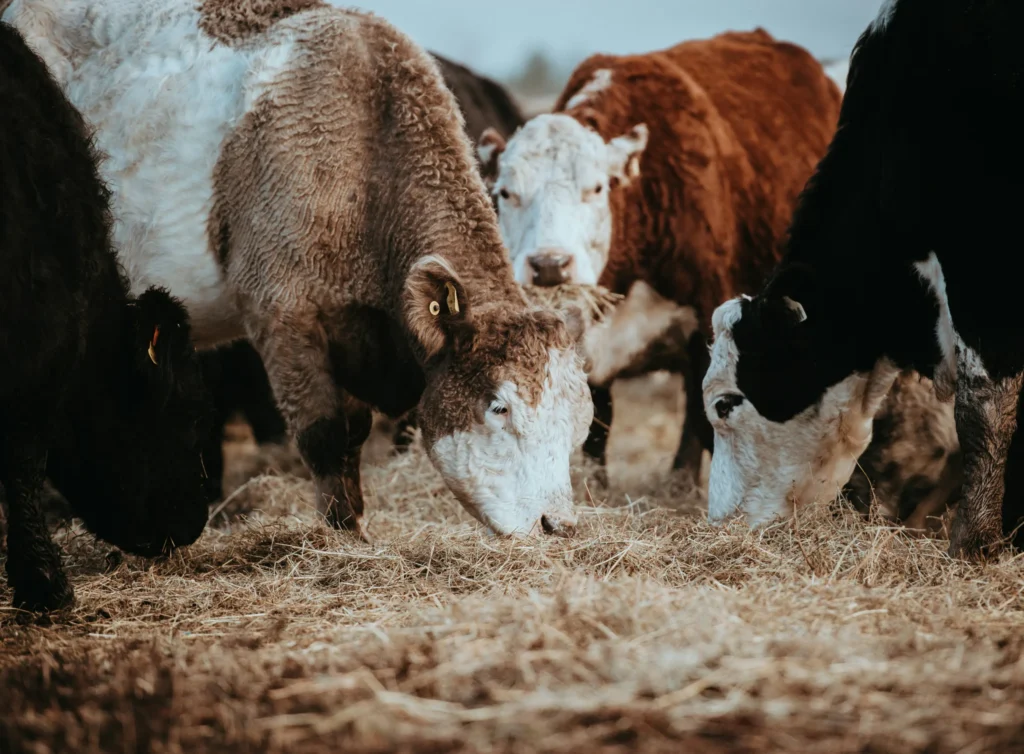
The U.S. hemp industry is exploring animal feed as a potential new outlet for surplus hemp biomass and processing byproducts as producers continue to face an oversupply of material and limited demand.
The hemp boom that followed the 2018 U.S. Farm Bill led to rapid expansion in cultivation, particularly for CBD-rich hemp. However, prices subsequently declined as production increased faster than demand. According to USDA data cited in the source report, U.S. floral hemp production reached 33.2 million pounds in 2025, representing a 60% increase from 2024.
The continuing imbalance has encouraged researchers and industry participants to investigate alternative uses for hemp, including animal feed.
Hemp Byproducts Offer Nutritional Potential
Hemp processing produces several potentially valuable materials, including hempseed meal, hempseed cake, leaves and spent biomass. These materials contain protein, fats and fiber that could make them useful components of livestock diets.
Hempseed cake, for example, contains approximately 34% crude protein and around 12.7% residual lipids. Research has also highlighted its favorable fatty-acid profile and potential as a protein source for ruminants.
Hemp leaves contain approximately 13% crude protein along with significant levels of fiber, making them potentially suitable for ruminant feeding.
Research involving dairy cattle has produced encouraging results. One study found that diets containing up to 143 grams of hempseed cake per kilogram of dry matter increased energy-corrected milk yield. However, higher inclusion levels were associated with dilution of milk fat and protein percentages.
A University of Manitoba study also found that hemp meal could replace canola meal at up to 10.2% of dietary dry matter without negative effects on feed intake, rumen fermentation, digestibility or blood metabolites.
Cannabinoid Residues Remain a Key Concern
Despite the nutritional potential, the presence of THC and CBD remains one of the biggest barriers to wider use of hemp in animal feed.
Research has demonstrated that cannabinoids can transfer from hemp feed into animal products. A 2022 study involving dairy cows found measurable THC, CBD and related cannabinoids in milk after animals consumed hemp silage.
More recent research has explored whether withdrawal periods could reduce this risk.
Oregon State University researchers fed nine Jersey cows a diet containing 13% spent hemp biomass for 28 days. Cannabinoids were detected in milk during feeding, but became undetectable approximately 12 days after the hemp biomass was removed. The researchers concluded that a two-week withdrawal period could address the consumer-safety concern under the conditions studied.
A separate beef-cattle study found no adverse effects on animal behaviour or weight gain. Cannabinoids accumulated in fat tissue but cleared from the tissues after a 33-day withdrawal period, apart from trace CBD detected in adipose tissue.
Regulatory Pathway Begins to Develop
Regulation remains a major factor determining whether hemp byproducts can become commercially viable animal-feed ingredients.
In 2025, the Association of American Feed Control Officials (AAFCO) recognized mechanically extracted hemp seed meal as an animal-feed ingredient for laying hens. The ingredient can be included at up to 20% of the diet, provided it meets specified limits of no more than 20 ppm total CBD and 2 ppm total THC.
The decision does not represent a blanket approval for all hemp-derived feed ingredients. CBD-rich hemp material and spent biomass from cannabinoid extraction remain subject to additional regulatory concerns.
The U.S. Food and Drug Administration has continued to identify unresolved safety issues surrounding CBD and cannabinoid-containing animal food, while seeking additional information and safety data on hemp-derived products used in animals.
State Rules Remain Fragmented
Several U.S. states have introduced policies permitting specific hemp-derived feed ingredients, although requirements vary by state, animal species and product.
States including Alaska, Tennessee, New Jersey, Ohio, West Virginia, Montana, Kentucky, Oklahoma, Texas and Virginia have adopted policies addressing certain hemp-derived feed products.
International rules are also different. Canada generally requires separate assessment of proposed hemp feed ingredients. In the European Union, qualifying low-THC hemp varieties can be cultivated under applicable rules, while hempseed-derived products may enter the feed market under existing regulations.
Australia currently maintains restrictions on industrial hemp as stock feed, although the issue is under review. In 2026, an Australian Senate committee recommended examining regulatory changes related to the hemp industry, including potential animal-feed applications.
The Industry Still Faces Major Challenges
For hemp processors, animal feed could provide an additional market for materials that might otherwise have limited value. However, the opportunity is unlikely to absorb all surplus biomass immediately.
The industry still needs research establishing safe inclusion levels, cannabinoid transfer, withdrawal periods, animal-health effects and reliable testing methods. Feed manufacturers must also determine whether hemp-derived ingredients can compete economically with established protein and fiber sources.
Ultimately, animal feed could become one component of a more circular hemp industry. Hempseed meal and other low-cannabinoid fractions may offer the clearest near-term opportunity, while cannabinoid-rich spent biomass will require additional scientific evidence and regulatory approvals.
For now, hemp-based animal feed represents a potential pathway for converting some processing byproducts into useful agricultural inputs—but its wider adoption will depend on the alignment of science, regulation, safety and economics.