


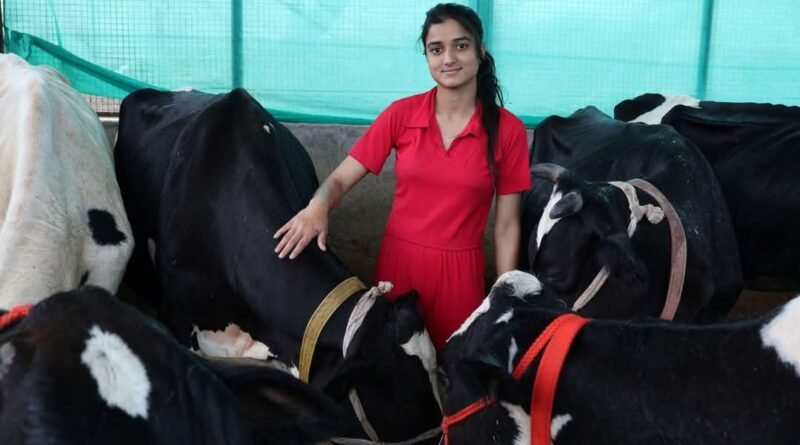
A postgraduate in History from Mandi, Himachal Pradesh, Sakina Thakur has reportedly built a growing dairy farming business by combining personal investment, bank financing and modern dairy management practices. Her journey highlights the opportunities available in India’s dairy sector, particularly for women entrepreneurs seeking to establish sustainable businesses in rural areas.
Sakina chose dairy farming over a conventional career after completing her Master of Arts degree in History. Although her decision reportedly attracted criticism, she continued pursuing her entrepreneurial ambitions with support from her family. Her experience demonstrates how dairy farming can offer an alternative livelihood for educated young people when supported by planning, investment and effective farm management.
From Personal Savings to a Growing Dairy Enterprise
Sakina reportedly launched her dairy business in 2024 with ₹1.25 lakh from her personal savings and an additional ₹2 lakh obtained through a bank loan. The initial investment provided the foundation for establishing her farm and developing its operations.
Rather than treating dairy farming solely as a traditional occupation, she approached it as a business requiring investment, consistent production and operational improvements. Her progress reflects the importance of financial planning and access to credit for small-scale dairy entrepreneurs.
By 2025, Sakina Dairy Farm reportedly had 14 Holstein Friesian cows, a breed known for its high milk-producing potential under suitable feeding, housing and animal-health conditions.
According to the available account of her business, the herd produced approximately 112 litres of milk per day. This translates to an average of eight litres per cow daily across the reported herd, although actual production can vary depending on the number of cows in lactation, their stage of lactation, nutrition and overall health.
The farm’s reported monthly earnings of around ₹1.25 lakh have drawn attention to the commercial potential of dairy farming. However, the figure should not automatically be interpreted as net profit, as the available account does not clarify whether it represents revenue or earnings after operating expenses.
Modern Dairy Practices Support Farm Development
The development of Sakina’s farm illustrates how traditional dairy operations can benefit from practical improvements in technology and resource management.
Milking equipment can help improve milking efficiency, reduce manual workload and support consistent milking routines when properly maintained and cleaned. Maintaining good milking hygiene is particularly important for protecting milk quality and reducing the risk of contamination.
Herd management is equally important. Dairy farmers need to monitor feed quality, clean drinking water, animal comfort, vaccination, veterinary care and reproductive health to maintain productive and healthy cattle. For high-producing breeds such as Holstein Friesians, balanced nutrition and suitable housing are especially important.
Sakina has also reportedly used cow dung as organic fertiliser. This practice can help recycle nutrients, improve soil management and reduce waste when manure is handled and applied appropriately. Integrating manure management into dairy operations can support more resource-efficient farming.
Nevertheless, the financial sustainability of a dairy farm depends on more than milk output. Feed, labour, veterinary treatment, breeding, electricity, equipment maintenance and loan repayments can significantly affect the business’s overall profitability.
Women-Led Dairy Cooperatives Extend the Impact
Beyond her individual enterprise, Sakina has reportedly become involved in a women-led dairy cooperative supporting approximately 70 families across nearby villages.
Dairy cooperatives can help rural milk producers pool their supplies, coordinate collection, improve access to buyers and strengthen their bargaining position. Depending on the cooperative’s arrangements, members may also benefit from access to veterinary services, animal nutrition guidance, training and other support.
For women in rural communities, participation in dairy enterprises can create income opportunities while strengthening their role in household financial decisions and local economic activity.
Sakina’s involvement therefore points to a broader aspect of dairy development: individual farms can contribute to rural livelihoods when connected with community-based production and marketing networks.
A Wider Opportunity for India’s Dairy Sector
India’s dairy industry relies on a diverse network of farmers, cooperatives, milk collection centres, processors and distributors. Entrepreneurs such as Sakina illustrate how small and medium-sized dairy farms can contribute to this wider ecosystem.
Her reported journey also highlights the importance of encouraging young people and women to explore agriculture-related enterprises. Access to affordable finance, practical training, reliable veterinary services, efficient milk collection and stable markets can help farmers build more resilient businesses.
Sakina Thakur’s story offers an encouraging example of ambition meeting traditional agriculture. While her reported production and earnings figures require independent verification, her approach reflects a wider lesson for the dairy industry: with sound management, appropriate technology and strong community connections, dairy farming can become a pathway to entrepreneurship and rural economic development.