


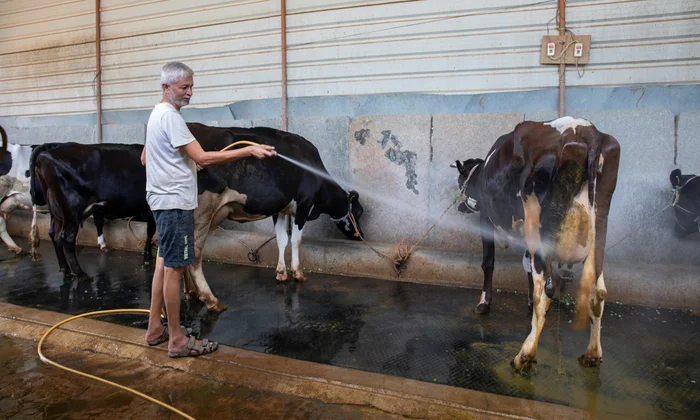
India’s dairy sector is moving towards a more targeted approach to livestock breeding, with greater emphasis on profitability, climate resilience and feed efficiency alongside milk production. The Bharat Bovine Breeding and Research Centre (BBBRC), being established in Bhildi, Banaskantha, Gujarat, aims to help dairy farmers select cattle and buffaloes according to their specific production goals and farm conditions.
The ₹325-crore facility, spread across 127 acres, is scheduled to be inaugurated by Prime Minister Narendra Modi on October 30, according to a report by The Times of India. The centre will use advanced reproductive technologies to multiply genetically superior animals and improve the quality of indigenous cattle and buffalo populations.
Moving Beyond Milk Yield in Cattle Selection
Traditionally, milk production has been a major consideration when choosing dairy animals. However, a high-yielding cow may not necessarily deliver the best financial returns if it requires expensive feed, frequent veterinary care or intensive management.
The BBBRC aims to promote a more comprehensive approach to genetic selection. Alongside milk volume, the centre will focus on feed-to-milk conversion efficiency, heat tolerance, disease resistance and milk composition. These traits can help farmers identify animals that are productive while remaining economical to maintain.
Shankar Chaudhary, chairman of Banas Dairy, highlighted the importance of improving the productivity of indigenous breeds and producing more milk with fewer animals. Such an approach could support higher farm incomes while improving the sustainability of dairy production.
Feed Costs and Climate Stress Shape Breeding Priorities
Feed and fodder reportedly account for approximately 70% to 75% of milk production costs in India. This makes feed efficiency particularly important for smallholder dairy farmers, many of whom operate with limited land, restricted fodder supplies and tight operating budgets.
An animal that produces more milk but consumes disproportionately more feed may not always be the most profitable choice. Conversely, a moderately productive animal that converts feed efficiently, withstands heat and remains healthy could offer better economic returns under certain conditions.
Climate resilience is especially relevant in regions that experience prolonged high temperatures. Heat stress can affect animal comfort, feed intake, reproductive performance and milk production. Selecting animals with greater heat tolerance and disease resistance could help farmers maintain more consistent productivity under challenging conditions.
Breeding priorities will nevertheless differ by region and farm. Some farmers may benefit from higher milk volumes, while others may prioritize milk fat content, lower maintenance costs or resilience to local climatic conditions.
Indigenous Breeds Offer Distinct Advantages
According to the report, the centre’s collection includes more than 15 indigenous breeds, together with crossbred animals, and further additions are planned.
The cattle breeds include Kankrej, Gir, Sahiwal, Red Sindhi, Tharparkar, Rathi, Punganur and Ongole. Buffalo breeds include Mehsani, Banni, Murrah and Jaffarabadi.
Each breed offers different characteristics that can support particular farming objectives. Kankrej cattle, for example, are known for their heat tolerance and resistance to ticks. Holstein Friesian crossbreds are valued for their milk-producing capacity, while buffaloes are important to the dairy industry because of their comparatively high milk fat content.
The opportunity lies in building on these existing strengths through systematic breeding and genetic improvement. Rather than applying the same selection criteria to every animal, farmers could benefit from breeding programmes designed around local conditions, available feed resources and the requirements of their milk market.
Advanced Reproductive Technologies Could Accelerate Genetic Progress
The BBBRC is expected to use advanced reproductive technologies to multiply superior animals and improve livestock genetics. Such technologies can help expand the availability of desirable traits, although their practical impact will depend on implementation, accessibility and adoption by farmers.
For the wider dairy industry, successful genetic improvement could contribute to better feed efficiency, more resilient herds and improved milk quality. However, the benefits will depend on selecting appropriate animals and pairing genetic progress with sound nutrition, healthcare and farm management.
A More Sustainable Future for Indian Dairy Farming
The establishment of the BBBRC reflects a broader need to balance productivity with economic viability and climate resilience. For India’s smallholder-led dairy sector, maximizing milk output alone may not be sufficient when feed costs, animal health and weather conditions strongly influence farm profitability.
By emphasizing traits beyond milk yield, the centre aims to support more informed livestock selection and improve the long-term performance of indigenous cattle and buffaloes. Its wider significance will depend on how effectively improved breeding reaches farmers and translates into measurable gains in productivity, costs and income.
Ultimately, the most suitable dairy animal is not necessarily the one that produces the most milk, but the one whose production, resilience and maintenance requirements best match the farmer’s circumstances.