


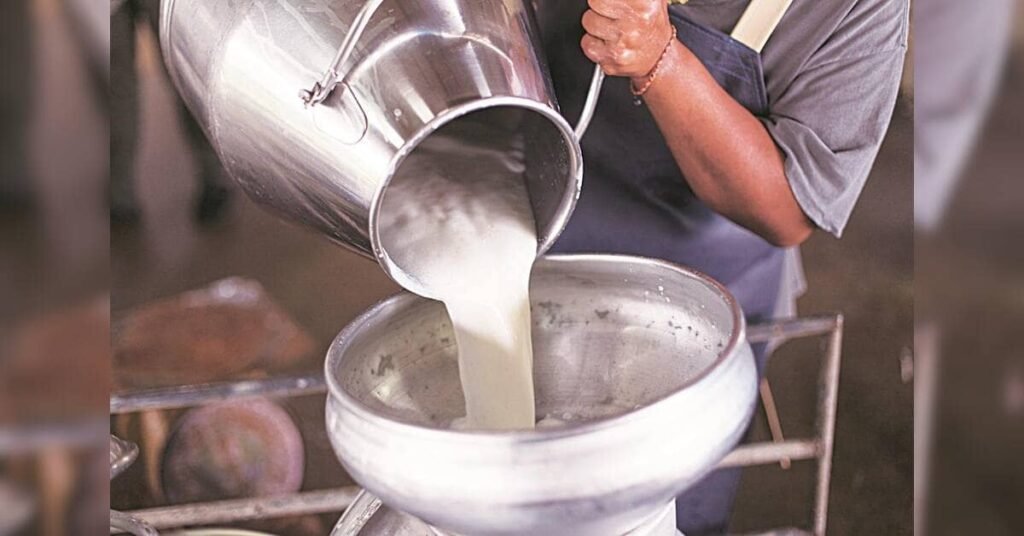
India’s dairy sector continues to expand, supported by rising milk production and increasing investment in processing infrastructure. On October 3, Home Minister Amit Shah laid the foundation stone for a dairy plant worth ₹255 crore in Madhya Pradesh, highlighting the government’s continued focus on strengthening dairy infrastructure and processing capacity.
India currently has more than 800 dairy plants, reflecting the scale and importance of the country’s dairy industry. Milk production has increased substantially in recent years, rising from around 176 million tonnes (mt) in FY18 to 230 mt in FY23. Production is projected to reach approximately 266 mt by FY27, indicating continued growth in the sector.
However, the increase in milk production has not been matched by an equivalent rise in the proportion of milk consumed. The share of milk consumed out of total production declined from 90% in FY18 to 87% in FY23 and is expected to fall further to around 83% by FY27. This trend points toward changes in the way milk is processed, marketed and utilized across the dairy value chain.
Milk Production and Consumption Trends
| Financial Year | Milk Production | Share of Milk Consumed |
|---|---|---|
| FY18 | 176 mt | 90% |
| FY23 | 230 mt | 87% |
| FY27* | 266 mt | 83% |
*Projected figures.
Dairy processing is becoming an increasingly important part of this changing structure. Processing plants accounted for approximately 50–53% of milk production between FY18 and FY27. The remaining milk production continued to move through traditional methods, including direct consumption and informal dairy channels.
The expansion of organized dairy processing could provide opportunities for greater value addition, improved quality control and better supply-chain management. Investments in modern plants can also support the production of products such as milk powder, cheese, paneer, butter, yoghurt and other processed dairy products.
Despite strong growth in domestic milk production, India’s international dairy trade has presented a different picture. The country’s dairy trade surplus has contracted considerably in value terms. India recorded a dairy trade surplus of approximately $49 million in FY18. This increased to $152 million in FY22 before declining sharply to around $42 million in FY26.
India’s Dairy Trade Surplus
| Financial Year | Dairy Trade Surplus |
|---|---|
| FY18 | $49 million |
| FY22 | $152 million |
| FY26 | $42 million |
The decline in the trade surplus may partly reflect muted international milk prices, which can affect the value of dairy exports even when domestic production remains strong. Global market conditions therefore continue to influence India’s position in international dairy trade.
At the domestic level, milk inflation has also remained subdued since 2024. Stable milk prices can provide some relief to consumers, but they also influence the earnings and margins of dairy farmers, processors and other participants in the supply chain.
The latest developments underline a key transformation taking place in India’s dairy sector: production is growing rapidly, while the industry is gradually shifting toward greater processing and organized infrastructure. The ₹255-crore Madhya Pradesh dairy plant is another example of investment aimed at strengthening this ecosystem.
Going forward, India’s dairy industry will need to balance rising production with efficient processing, stable farmer returns, competitive exports and growing domestic demand. Greater investment in modern dairy infrastructure could play an important role in helping the country convert its expanding milk production into higher-value dairy products and stronger opportunities across domestic and global markets.