


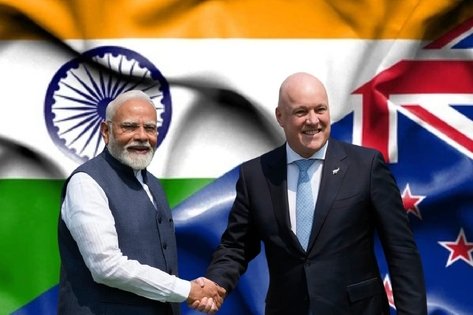
The India-New Zealand Free Trade Agreement (FTA) will come into force on October 20, 2026, creating new market-access opportunities for Indian exporters while providing New Zealand businesses with greater access to the Indian market. The agreement provides for major tariff reductions, investment cooperation and expanded mobility pathways.
Under the agreement, 100% of Indian exports to New Zealand will receive duty-free access from the day the FTA enters into force. The arrangement covers products across sectors including textiles and apparel, leather and footwear, engineering goods, pharmaceuticals, agriculture and processed foods.
For Indian exporters, the agreement removes tariff barriers across the entire range of exports to New Zealand. Labour-intensive industries, including textiles, apparel, leather, footwear, gems and jewellery and engineering goods, are among the sectors expected to benefit from improved market access.
Dairy remains protected
A significant feature of the agreement is India’s decision to keep several sensitive agricultural products outside its tariff concessions. Dairy products including milk, cream, whey, yoghurt and cheese have been excluded, alongside several other sensitive agricultural and food products.
This means New Zealand dairy products will not receive the broad preferential market access that applies to many other New Zealand exports. The protection reflects India’s position on sensitive agricultural sectors and the importance of the domestic dairy industry.
However, the agreement provides some limited access for selected dairy-related products. Certain dairy preparations and other specified products receive phased or preferential tariff treatment under specific arrangements.
What New Zealand gains
New Zealand will receive improved access to the Indian market for a range of products. About 95% of New Zealand exports to India by value will have tariffs eliminated or reduced once the agreement is fully implemented. Around 57% of exports will become duty-free immediately, with duty-free coverage eventually rising to about 82%.
Products benefiting include wood and forestry products, wool, sheep meat and other goods. Preferential quota arrangements will also apply to products such as apples, kiwifruit and albumins, while wine tariffs will be reduced progressively.
Opportunities for students and professionals
The FTA also contains provisions covering services and movement of people. India has secured expanded pathways for professionals and students, including opportunities for up to 5,000 Indian professionals to work in New Zealand at any one time under specified arrangements.
Indian students will also receive improved work and post-study opportunities. The agreement provides for a minimum of 20 hours of work per week during study, while post-study work opportunities can extend up to three years for eligible STEM bachelor’s and master’s graduates and up to four years for doctorate holders.
$20 billion investment commitment
Investment is another major component of the agreement. New Zealand has committed to facilitating US$20 billion of investment into India over 15 years. The arrangement is intended to support investment across areas including manufacturing, agriculture, technology and innovation.
The two countries have also set broader ambitions to expand bilateral trade. Current merchandise trade is around US$2.3 billion annually, with both governments aiming to substantially increase economic engagement by 2030.
The agreement therefore establishes a broad framework covering goods, services, investment, education and professional mobility, while maintaining India’s protection for sensitive sectors such as dairy. Its implementation from October 20 will give exporters and businesses in both countries a clearer framework for expanding bilateral trade.