


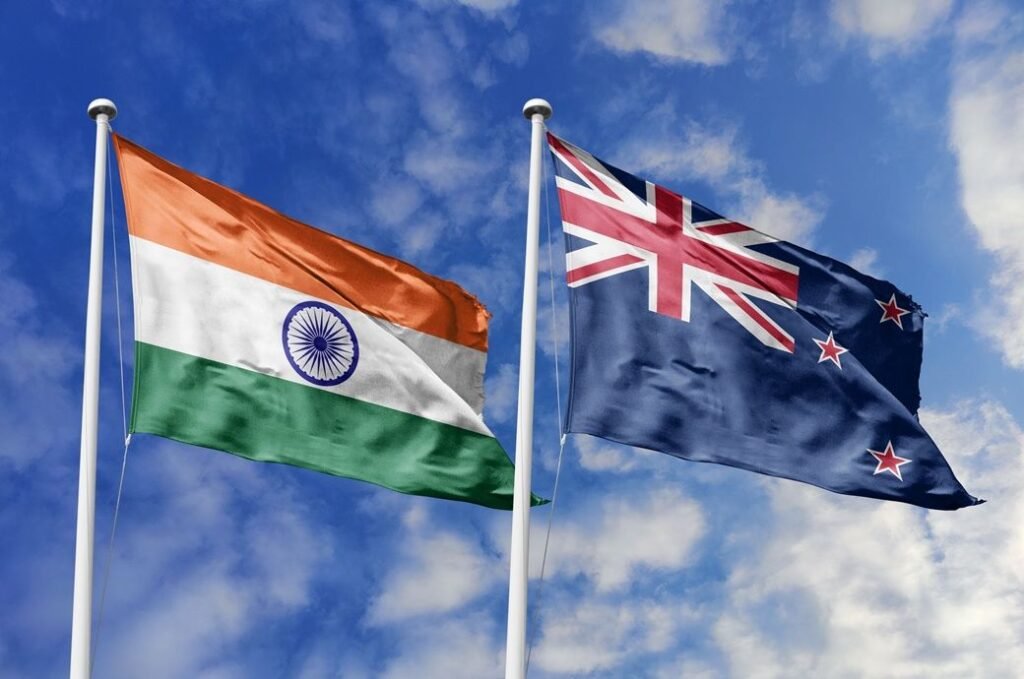
The historic signing of the India–New Zealand Free Trade Agreement (FTA) on 27 April 2026 marks a watershed moment in bilateral trade, yet for the dairy sector, it is a deal defined as much by what is excluded as what is included. While New Zealand secured duty-free access for 100% of Indian exports and a $20 billion investment commitment, the Indian government has maintained its “red line” on liquid milk, butter, and cheese to protect its 150 million rural dairy farmers. However, for the first time, a strategic corridor has been opened for specialised nutrition and infant formula, signalling a shift towards high-value, tech-led dairy cooperation.
Strategic Openings in Nutrition
In a departure from India’s historically rigid stance on dairy imports, the FTA introduces phased tariff liberalisation for high-value segments. Bulk infant formula and milk albumins (specialised proteins) will see tariffs eliminated or significantly reduced over a seven-year period. This is a tactical move by New Delhi; by allowing premium inputs for the booming Indian infant nutrition market, the government aims to lower costs for domestic manufacturers who rely on high-spec New Zealand ingredients that are not yet produced at scale within India.
The ‘Re-Export’ Engine
A critical value-add in this agreement is the zero-duty status for dairy ingredients intended for re-export. Effective from day one, New Zealand processors can supply raw materials to Indian plants for value addition—such as blending, fortifying, or packaging—provided the final product is exported. This “win-win” framework leverages India’s low-cost processing infrastructure and New Zealand’s high-quality raw materials, positioning India as a global manufacturing hub for the Oceania-Pacific markets.
Market Implications
- For Indian Processors: Large-scale players like Amul and Mother Dairy remain insulated from mass-market competition. However, the deal incentivises them to upgrade their technology to compete in the specialized nutrition space where NZ imports will now hold a price advantage.
- For New Zealand Exporters: Firms like Fonterra will shift focus from commodity milk powders to high-margin “functional” dairy. The inclusion of a “Most Favoured Nation” (MFN) clause is the real prize; if India grants better dairy access to the EU or UK in future talks, New Zealand automatically receives the same benefits.
- For Investors: The $20 billion investment commitment from Wellington is expected to flow into India’s cold chain logistics and “precision dairy” technology, addressing the 15%–20% wastage currently seen in the Indian supply chain.
The Forward View
The India–NZ FTA is not the “floodgate” event New Zealand’s dairy lobby had long hoped for, but it is a sophisticated entry strategy. By focusing on the Specialised Nutrition and Infant Formula segments, New Zealand has bypassed political sensitivities to embed itself in the highest-growth segment of the Indian dairy economy. As the Indian middle class expands, the demand for these “science-backed” dairy products will likely outpace domestic supply capabilities, making this “narrow” deal a long-term strategic masterstroke.