


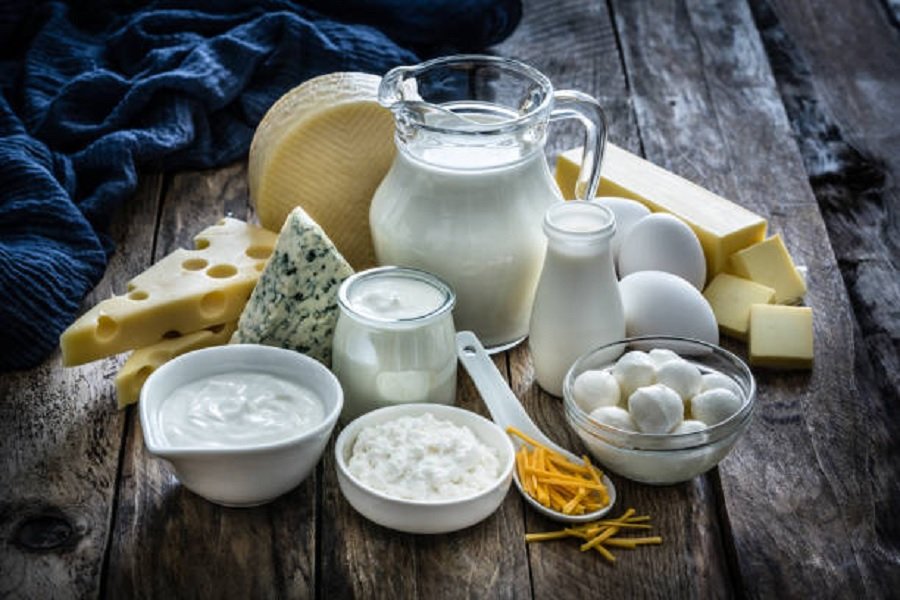
India’s dairy industry is increasingly shifting beyond liquid milk towards value-added products (VAP) such as paneer, cheese, curd, Greek yoghurt, ghee and protein-rich dairy foods. The value-added dairy market is projected to grow from ₹5.5 lakh crore in FY25 to nearly ₹10 lakh crore by 2030, creating opportunities for organised dairy companies to expand processing capacity, diversify products and improve profitability.
According to the supplied Financial Express report, the broader Indian dairy market could grow from ₹12 lakh crore in FY26 to ₹19.6 lakh crore by FY31. Rising interest in protein-rich foods, demand for hygienic packaged products and the gradual shift towards branded dairy products are among the factors supporting this expansion.
Value-Added Products Reshape the Dairy Industry
Liquid milk remains central to India’s dairy supply chain, but it generally offers lower margins than several processed dairy categories. Products such as paneer, cheese, yoghurt and ghee allow companies to diversify revenue and serve different consumer needs.
The report highlights that more than 90% of India’s paneer market remains unorganised. Greater consumer awareness and regulatory attention to the labelling of paneer and cheese analogues could encourage demand for clearly labelled, genuine milk-based products.
However, growth in value-added dairy does not automatically guarantee higher profits. Companies must manage milk procurement costs, processing investments, distribution expenses and competition while ensuring product quality and food safety.
Three Dairy Companies Expanding Their Value-Added Businesses
The report identifies Milky Mist, Parag Milk Foods and Heritage Foods as listed dairy companies pursuing different strategies to increase their exposure to value-added products.
Reported Q1FY27 performance from the supplied article
| Company | Revenue | Value-added product share | Revenue growth |
|---|---|---|---|
| Milky Mist | ₹973.5 crore | 100% | 43.6% |
| Parag Milk Foods | ₹945 crore | 73.9% | 11% |
| Heritage Foods | ₹1,338.1 crore | 47.2% | 17.7% |
Figures are as reported in the source. Value-added product classifications may differ between companies.
Milky Mist: A value-added dairy-focused model
Milky Mist operates across more than 22 product categories, with over 640 stock-keeping units covering paneer, cheese, curd, ice cream, yoghurt, ghee and butter. Paneer generated ₹248.3 crore in Q1FY27 revenue, up 34% year on year. Yoghurt revenue increased 153% to ₹84.5 crore, while ice cream revenue grew 60% to ₹102.3 crore.
Total quarterly revenue rose 43.6% to ₹973.5 crore. EBITDA increased 74.5% to ₹144.9 crore, taking the EBITDA margin to 14.9%. Net profit reached ₹64.7 crore, compared with ₹6.5 crore in the year-earlier quarter. The company is also planning a facility to process cheese whey into whey protein concentrate, targeting additional value from a dairy-processing by-product.
Parag Milk Foods: Combining dairy and nutrition
Parag Milk Foods reported ₹945 crore in Q1FY27 revenue, with value-added products accounting for 73.9%. Its portfolio includes Gowardhan, Go Cheese, Pride of Cows and Avvatar sports nutrition products.
Its newer nutrition-focused business grew 59% year on year to ₹118 crore. Meanwhile, the company’s combined value-added portfolio generated ₹698 crore. Parag is planning to expand cheese processing capacity from 60 to 120 metric tonnes per day, which could also increase the availability of whey for further processing.
Despite revenue growth of 11%, net profit fell 20% to ₹22 crore in Q1FY27, partly reflecting higher taxation. This illustrates why sales growth and profitability need to be assessed separately.
Heritage Foods: Increasing processed dairy sales
Heritage Foods reported Q1FY27 revenue of ₹1,338.1 crore, up 17.7% year on year. Its broader value-added portfolio, including core products and consumer packs of ghee and butter, represented 47.2% of revenue.
Core value-added product revenue grew 40% to ₹563.6 crore, supported by higher sales of curd, paneer, buttermilk, lassi and ice cream. The company has earmarked ₹250 crore for capital expenditure in FY27, with much of the investment directed towards new paneer and ghee processing facilities.
However, EBITDA declined 16.2% to ₹61.9 crore and net profit fell 38.3% to ₹25 crore, as raw material inflation, startup costs and higher depreciation affected earnings.
Processing Capacity and Profitability Will Shape Growth
The three companies illustrate different approaches to the changing dairy market. Milky Mist is concentrated on value-added products, Parag Milk Foods combines established dairy brands with nutrition-focused products, and Heritage Foods is expanding processed dairy while retaining a substantial liquid-milk business.
Investment in processing plants, cold-chain infrastructure, distribution and product development will be important to support this transition. Cheese and paneer manufacturing can also create opportunities to use whey, a by-product of cheese production, for protein ingredients and other applications.
For India’s dairy industry, the wider opportunity extends beyond increasing retail sales. Stronger processing capabilities can create additional markets for milk, support demand for quality-assured products and potentially improve value captured across the supply chain. Nevertheless, the returns will depend on execution, input costs, capacity utilisation and consumers’ willingness to pay for branded products.
The projected ₹10 lakh crore value-added dairy market represents a significant growth opportunity, but it is not a guarantee of profitability for individual businesses. Tracking product growth, operating margins, capital expenditure and cash generation will be essential to understanding how effectively dairy companies convert market expansion into sustainable performance.