


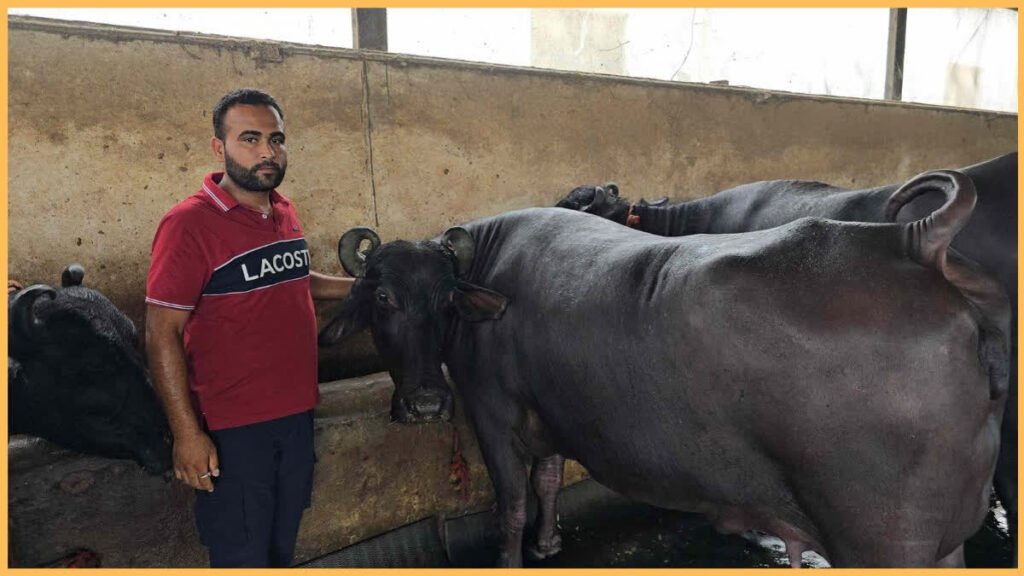
A young dairy farmer from Badthal village in Karnal, Haryana, has demonstrated how scientific management and modern animal husbandry can transform a small dairy operation into a successful rural enterprise.
Robin began his dairy business around eight years ago with just two buffaloes. After reorganising and modernising the farm in 2022, he expanded the operation to more than 100 animals through consistent investment, improved management and a focus on livestock quality.
From Two Buffaloes to 100 Animals
Robin’s dairy farm now produces approximately 500 litres of milk daily. The milk is supplied to a dairy in Nilokheri at a wholesale price of around ₹80 per litre.
Although production varies according to animal health and weather conditions, a systematic sales arrangement helps maintain regular income. The farm sells milk worth approximately ₹9 lakh to ₹10 lakh every month.
|
Business indicator |
Details |
|---|---|
|
Initial herd |
2 buffaloes |
|
Current herd |
More than 100 animals |
|
Daily milk production |
Around 500 litres |
|
Average wholesale price |
₹80 per litre |
|
Monthly milk sales |
₹9–10 lakh |
|
Main breed |
Murrah buffaloes |
|
Regular employees |
5 |
Focus on Murrah Buffaloes and Breed Improvement
The farm primarily consists of Murrah buffaloes, known for their strong milk-producing capacity. According to Robin, individual buffaloes on the farm produce between 18 and 27 litres of milk per day.
The value of the animals varies significantly depending on their breed, health and production performance. Some buffaloes are priced between ₹3.5 lakh and ₹12 lakh.
Rather than depending entirely on purchasing expensive animals from outside, Robin focuses on breed improvement within the farm. He uses high-quality semen from certified sources to develop better-performing livestock and strengthen the quality of his herd over time.
Scientific Management Improves Productivity
Robin says the farm is designed to be more than a traditional cattle shed. Modern facilities have been introduced to improve animal health, comfort and productivity.
The animals receive a balanced diet, including silage twice a day. The farm also prepares nutritious feed according to the animals’ requirements instead of depending completely on commercially purchased feed.
During Haryana’s intense summer, coolers are used to reduce heat stress. The farm also provides open spaces where animals can move, rest and remain comfortable. A pond inside the premises allows the buffaloes to bathe and cool themselves.
These measures are intended to support better animal welfare while preventing heat-related stress from affecting milk production.
Creating Employment in the Village
The dairy farm has also generated employment opportunities. Five workers have been regularly employed for the past four years, handling animal care, feeding and cleaning responsibilities.
Employees Brij Kumar and Shankar, who are from Bihar, said the work has provided financial support to their families. They also noted that wages are paid on time and that Robin provides necessary facilities at the workplace.
The farm therefore contributes not only to milk production but also to rural employment and household incomes.
Family Support and Continuous Learning
Robin acknowledges that expanding the business was not easy. Financial and practical challenges emerged during the process, making family support important.
His brother, who lives abroad, provided financial and emotional assistance, while a relative operating a dairy farm with around 200 animals offered continuous guidance.
Robin believes that dairy farmers must continue learning and adopt new techniques in animal husbandry. His experience demonstrates the importance of combining traditional knowledge with scientific breeding, balanced nutrition, proper housing and organised marketing.
An Inspiration for Rural Youth
Robin’s success has become an example for young people in Haryana who often consider moving abroad for employment. Villagers believe his journey shows that a well-managed dairy business can provide sustainable income without leaving the village.
His transformation from a two-buffalo operation into a large dairy enterprise highlights the potential of modern dairy farming as a viable rural business model. With improved livestock, scientific management, reliable buyers and continuous investment, dairy farming can create income, employment and long-term growth opportunities.