


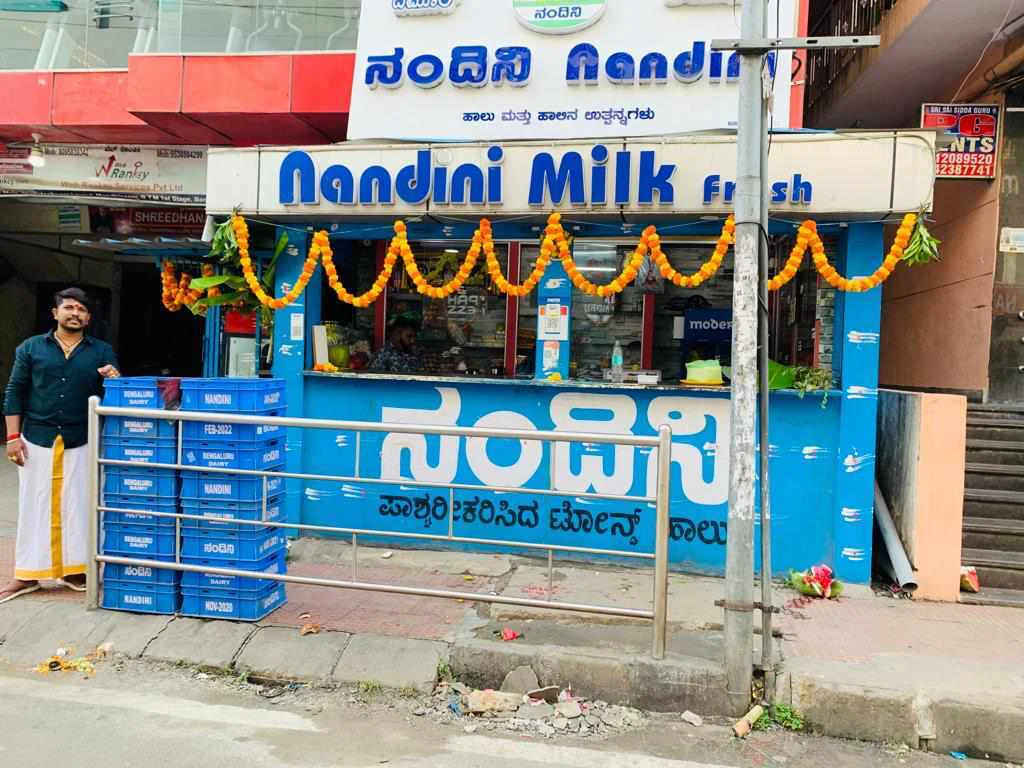
The Karnataka Cabinet has approved an ₹8-per-litre increase in Nandini milk prices, with the revised rates scheduled to take effect from November 1, 2026. Announced in Bengaluru on October 29, the decision aims to provide financial support to dairy farmers facing rising input costs, drought-related production challenges and declining milk procurement.
Under the revised arrangement, ₹7 of the increase will go directly to milk-producing farmers, while the remaining ₹1 will be allocated to dairy cooperatives to help cover operational expenses. The decision is expected to benefit dairy farmers across Karnataka while also increasing the cost of milk for consumers.
Farmers to Receive Higher Procurement Prices
Karnataka’s milk procurement price paid to farmers is set to rise from ₹35 to ₹42 per litre. With the existing state government incentive of ₹5 per litre continuing, farmers will effectively receive ₹47 per litre, including the incentive.
The increase follows demands from milk producers and dairy cooperatives for higher procurement rates. Farmers have faced mounting financial pressure from the rising costs of cattle feed, fodder, medicines, fuel, transportation and plastic packaging.
Milk producers had reportedly sought an increase of ₹10 per litre. After discussions on the proposal and its financial implications, the Cabinet approved an ₹8 increase, dividing the additional amount between farmers and cooperatives.
The move is intended to improve returns for producers while helping dairy unions meet the expenses involved in collecting, processing, packaging and distributing milk.
Nandini Toned Milk Price to Rise to ₹54
Consumers will also feel the impact of the revision. Nandini’s basic toned milk, sold in the blue packet, is expected to increase from ₹46 to ₹54 per litre.
The final retail prices will be determined by the respective milk unions, taking into account factors such as fat and solids-not-fat (SNF) content. The government has maintained that Karnataka’s milk prices will remain competitive compared with several other states, where reported prices are higher.
The revision presents a balancing challenge for the dairy industry: ensuring that farmers receive remunerative prices without making milk significantly less affordable for consumers. The extent of the impact will depend on the final rates adopted by individual milk unions and how households respond to the higher prices.
Drought and Falling Milk Procurement Add Pressure
The decision comes amid difficult conditions for dairy production in Karnataka. According to the state government’s explanation, approximately 228 taluks have been affected by drought, while El Niño-related conditions and summer heat have contributed to pressure on milk production.
Daily milk procurement has reportedly declined by around 10 lakh litres. Lower procurement can create challenges for dairy cooperatives by reducing the volume of milk available for processing and marketing, while fixed and operating expenses continue.
At the farm level, drought conditions can also affect fodder availability and increase feeding costs. When these expenses rise faster than the income farmers receive for their milk, dairy operations can become harder to sustain.
The revised procurement rate is therefore intended to provide additional financial support to producers during a period of elevated costs and supply constraints.
Cooperatives to Receive Support for Operating Expenses
Of the ₹8-per-litre increase, ₹1 will be allocated to milk unions to help cover expenses such as packaging, transportation, fuel and other operational requirements.
These costs form an important part of the dairy supply chain, connecting milk producers with processing facilities, distributors and consumers. Cooperatives must balance payments to farmers with the cost of maintaining reliable collection and distribution networks.
Karnataka’s government has also emphasised that milk unions operate autonomously and must account for both producer remuneration and the costs of delivering milk to the market. The price revision is intended to address pressure across these connected parts of the dairy value chain.
Implications for Karnataka’s Dairy Sector
The latest decision highlights the continuing challenge of balancing farm-level profitability with consumer affordability. Higher procurement prices may help dairy farmers manage rising input expenses, while the additional allocation to cooperatives could support essential operating activities.
However, the longer-term effect will depend on feed and fodder availability, weather conditions, milk production, consumer demand and the financial position of dairy unions.
For Karnataka’s dairy industry, the November 1 revision represents a significant adjustment to milk pricing. Its effectiveness will ultimately be measured by whether it provides meaningful support to producers while maintaining an affordable and dependable milk supply for consumers.