


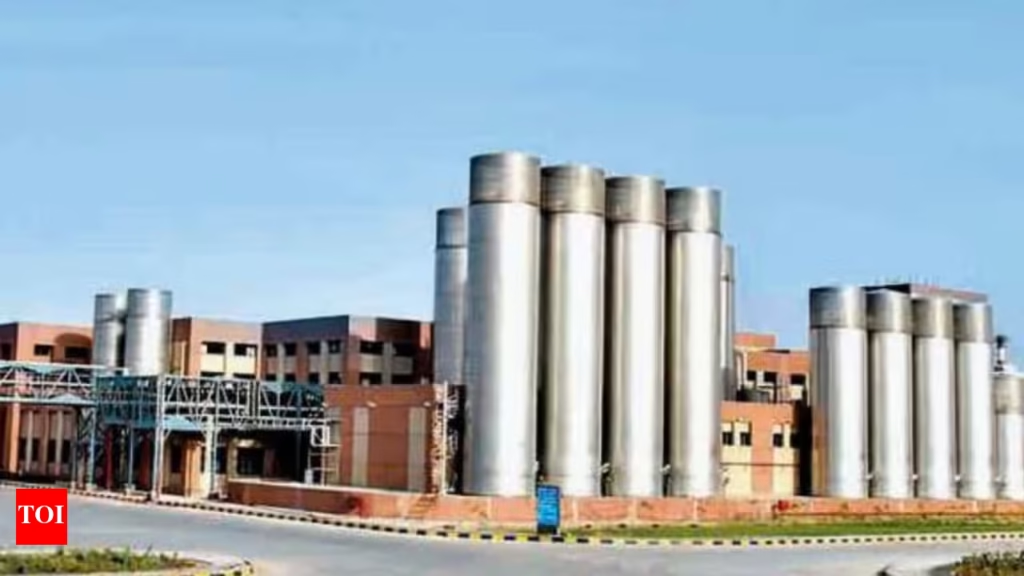
A six-member delegation from Kerala visited Banas Dairy in Palanpur, Gujarat, to study its dairy operations and explore how elements of its successful cooperative model could be adapted to strengthen Kerala’s dairy sector.
The delegation was led by Kerala’s Dairy Development, Milk Cooperatives and Animal Husbandry Minister Bindhu Krishna. During the visit, the team inspected various units of Banas Dairy at Badarpura and gained insights into milk processing and the production of a range of dairy products.
Kerala Explores Banas Dairy’s Cooperative Approach
The visit focused on understanding the operational structure and practices that have helped Banas Dairy develop into a major cooperative dairy organisation. The Kerala delegation examined different stages of dairy operations, including milk processing and the manufacture of value-added dairy products.
Minister Bindhu Krishna described Banas Dairy as an “excellent and replicable model” for the country. She said Kerala was examining how the organisation’s approach could be adapted to meet the requirements of the state’s own dairy sector.
“We will certainly try to adopt the aspects of the Banas Dairy model that are useful and suitable for Kerala,” Krishna said.
The statement highlights Kerala’s interest in strengthening its cooperative dairy ecosystem by learning from established models in other parts of India.
Focus on Milk Processing and Dairy Products
During their visit, the delegation inspected Banas Dairy’s facilities at Badarpura. The officials were introduced to the processes involved in handling and processing milk, along with the manufacturing of different dairy products.
Such exposure can help policymakers understand how large-scale cooperative dairy organisations manage milk procurement, processing and product manufacturing while connecting farmers with organised markets.
For Kerala, studying these systems could provide insights into improving dairy infrastructure and strengthening the value chain from milk producers to consumers.
Banas Dairy as a Model for Dairy Development
Banas Dairy has emerged as an important example of cooperative-led dairy development. Its model demonstrates how dairy cooperatives can combine milk collection, processing and value-added product manufacturing within an organised system.
The Kerala delegation’s visit reflects the growing importance of knowledge-sharing between states in the development of India’s dairy sector. Rather than developing systems independently, state authorities can study successful cooperative structures and identify practices that can be modified according to local conditions.
Kerala’s dairy sector could potentially benefit from lessons related to processing capacity, product diversification, cooperative management and farmer participation. However, the adoption of such a model would need to consider the state’s specific milk production patterns, infrastructure, farmer networks and market requirements.
Strengthening Kerala’s Dairy Sector
The delegation’s visit is part of a broader effort to explore strategies for strengthening dairy development and milk cooperatives in Kerala. Understanding the operational practices followed by established dairy organisations can support policymakers in identifying opportunities for improving efficiency and creating stronger links between dairy farmers and markets.
The discussions and observations at Banas Dairy could therefore contribute to future initiatives aimed at improving Kerala’s dairy infrastructure and cooperative systems.
Minister Krishna said the delegation had gained useful insights into dairy operations and milk processing during the visit.
The exchange between Kerala and Banas Dairy also underlines the importance of cooperation and knowledge-sharing within India’s dairy industry. As states seek to improve farmer incomes, processing capabilities and dairy product availability, successful cooperative models can provide valuable lessons while still requiring adaptation to local needs.