


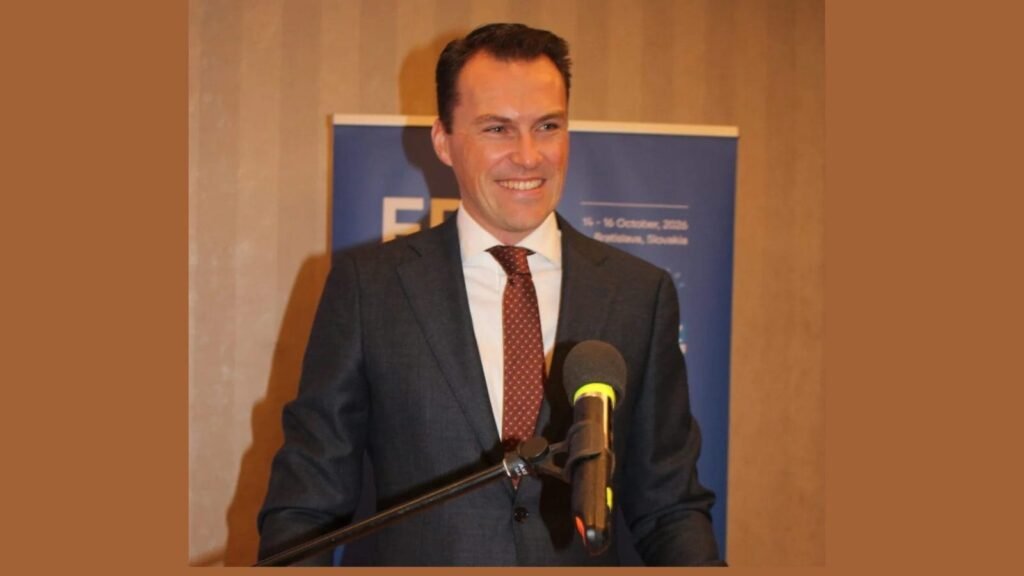
The European Dairy Association (EDA) has elected Koert Verkerk as its new President, succeeding Albert de Groot. Verkerk will lead the organisation at a time when Europe’s dairy industry faces significant economic, geopolitical and sustainability challenges, with priorities including competitiveness, innovation, food security and the long-term resilience of dairy production.
Verkerk is Corporate Director of Public Affairs at FrieslandCampina and serves on the boards of the Dutch Dairy Association (NZO) and the Global Dairy Platform (GDP). His experience in the dairy sector and public affairs is expected to support the association’s engagement with European policymakers and industry stakeholders.
Strengthening Europe’s Dairy Competitiveness
In his first address as President, Verkerk emphasised that dairy should be recognised as a strategic sector for Europe. He highlighted the industry’s contribution to food security, rural economies and the wider European food system.
He also stressed that food security depends on maintaining the economic viability of food production. According to Verkerk, Europe cannot strengthen its food system if farmers and dairy companies lack the financial stability needed to invest, innovate and compete.
His appointment follows the leadership of Albert de Groot, who served as Chief Executive Officer of Vreugdenhil Dairy Foods in the Netherlands from 2016 and was appointed chairman of the Dutch Dairy Association in July 2023.
Under Verkerk’s presidency, the EDA is expected to continue working with its members and policymakers to create conditions that support a competitive and sustainable European dairy sector.
Three Priorities for a Resilient Dairy Industry
Verkerk outlined three central priorities for his presidency: confidence to invest, innovation that creates value, and open and fair markets.
1. Confidence to invest
Farmers and dairy processors require predictable economic conditions to make long-term investments in production facilities, technology, sustainability measures and operational efficiency. Verkerk highlighted the importance of policies that support investment and enable dairy businesses to remain economically viable.
2. Innovation that creates value
Innovation will be essential for improving productivity, developing new products and responding to changing consumer expectations. Verkerk emphasised that innovation should deliver practical results and create measurable value for farmers, processors and the wider dairy supply chain.
3. Open and fair markets
International trade remains important for European dairy businesses seeking to reach customers beyond domestic markets. Verkerk argued that access to open and fair markets allows value generated by dairy exports to flow back to farms, processing facilities and rural communities.
These priorities reflect the association’s broader focus on strengthening the industry’s ability to adapt to changing market conditions while maintaining its global competitiveness.
Sustainability Must Support Farm Viability
Sustainability is another key issue facing Europe’s dairy sector. Farmers and processors are under increasing pressure to improve environmental performance while managing production costs, regulatory requirements and market uncertainty.
Verkerk called for policies that reward measurable progress and allow farmers and dairy companies to adopt solutions suited to their individual circumstances. He argued that sustainability initiatives should improve resilience and productivity rather than simply increase operating costs.
For dairy farmers, this approach highlights the importance of balancing environmental objectives with profitability. Investments in resource efficiency, production technology and improved farm management can support sustainability, but businesses also need the financial capacity to implement these changes.
The challenge for policymakers will be to establish frameworks that encourage environmental progress while preserving the viability of farms and dairy processing operations.
Trade and Local Dairy Communities
Verkerk also highlighted the relationship between local dairy production and international trade. Drawing on his experience in a farmer-owned cooperative, he argued that strong local roots and international ambitions can reinforce each other.
European dairy exports create opportunities for producers and processors to access new markets, diversify revenue and support employment across rural communities. Open and fair trade can therefore contribute to maintaining the economic foundations of local dairy production.
As the European Dairy Association begins this new leadership chapter, its priorities will centre on investment, practical innovation, sustainability and international competitiveness. Verkerk’s presidency comes at a critical time for the sector, as industry participants seek to strengthen food security while adapting to economic and environmental pressures.
The success of these efforts will depend on cooperation between farmers, dairy companies, policymakers and international trading partners to ensure that Europe’s dairy industry remains productive, resilient and competitive.