


Bhopal, August 18, 2026: Madhya Pradesh is intensifying efforts to expand its dairy sector and increase the incomes of livestock farmers, with Chief Minister Mohan Yadav directing officials to accelerate the state’s drive to become the country’s “milk capital”.
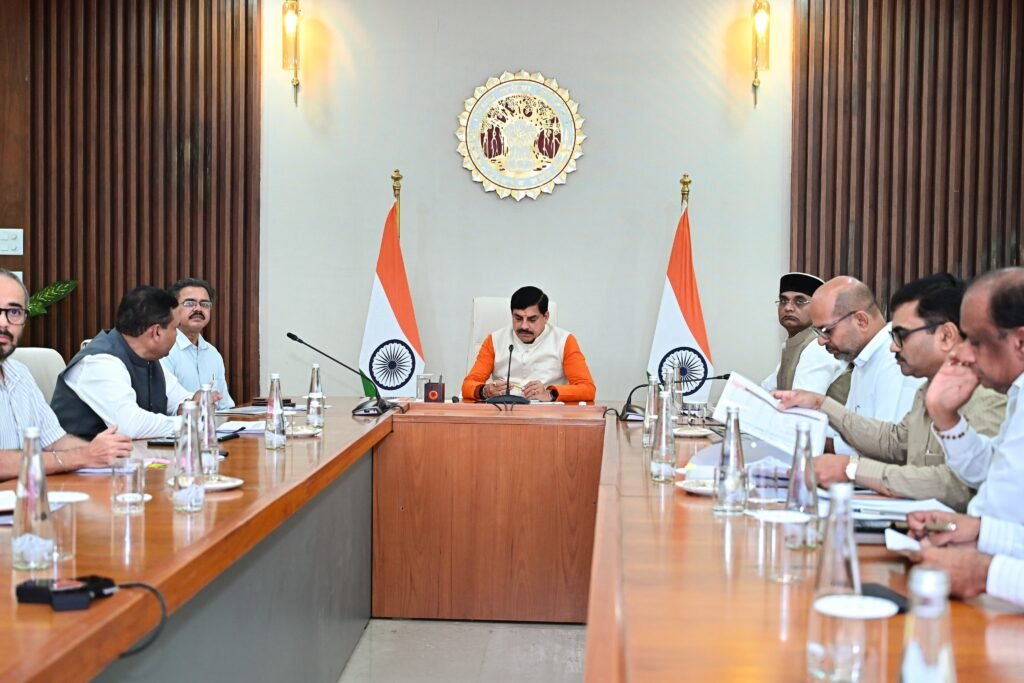
Chairing a meeting of the State-Level Steering Committee, Yadav reviewed the progress of the state’s dairy development programme and called for faster implementation of measures aimed at increasing milk production, strengthening milk collection and improving the economic returns received by livestock farmers.
The push comes as Madhya Pradesh has recorded significant growth in daily milk collection over the past two years. According to officials, daily collection has increased by around 27%, indicating an expanding organised dairy procurement network across the state.
Milk Collection Continues to Rise
Madhya Pradesh’s daily milk collection has increased steadily over the past three financial years.
According to figures presented during the review:
- 🥛 2024-25: 8.73 lakh kg per day
- 🥛 2025-26: 9.66 lakh kg per day
- 🥛 2026-27, up to July: 9.75 lakh kg per day
The increase from 8.73 lakh kg per day in 2024-25 to 9.75 lakh kg per day by July 2026-27 represents an increase of approximately 11.7% over the period covered by the reported figures.
Officials have also described the growth in daily collection over the past two years as approximately 27%, reflecting the broader expansion of the state’s organised dairy network.
The continued increase in procurement provides an important foundation for Madhya Pradesh’s ambition to strengthen its position as a major milk-producing state.
Payments to Milk Producers Increase
The expansion of milk collection has been accompanied by a significant rise in payments made to milk producers.
The amount paid to producers increased from approximately ₹1,477 crore in 2024-25 to ₹1,780 crore in 2025-26.
This represents an increase of more than 27% in one year.
The rise in producer payments is significant because one of the government’s stated priorities is ensuring that the expansion of the dairy sector translates into improved incomes for livestock farmers.
For rural households, dairy farming can provide a regular source of income through frequent milk sales. Increasing organised procurement can therefore help strengthen the role of dairy as a source of cash flow for livestock-owning households.
Nearly 2,000 New Milk Cooperatives Established
A major component of Madhya Pradesh’s dairy expansion strategy is the development of milk cooperative societies.
According to the Chief Minister, around 2,000 new milk cooperative societies have been established across the state during the past two years.
Of these, 1,926 societies are currently operational.
The state has also revived 801 inactive milk cooperative societies, expanding the existing network without relying exclusively on the creation of new institutions.
Cooperative societies are important at the grassroots level because they provide farmers with structured channels for supplying milk to organised dairy networks.
They can also facilitate milk testing, collection, payment and access to services connected with dairy development.
Ambitious Cooperative Expansion Target
Madhya Pradesh has set an ambitious target for further expansion.
The state aims to establish another 3,827 milk cooperative societies by 2028-29.
In addition, the government wants to establish primary dairy cooperative societies in at least 50% of villages across Madhya Pradesh over the next five years.
Achieving these targets would significantly expand the reach of organised dairy procurement, particularly in rural areas where farmers may currently have limited access to formal milk collection infrastructure.
Greater cooperative coverage could also make it easier for farmers to participate in the organised dairy economy.
Focus on Increasing Farmer Incomes
While increasing milk production remains a central objective, the government has emphasised that growth in the dairy sector must translate into better incomes for livestock farmers.
Chief Minister Yadav directed officials to accelerate efforts to increase milk collection while ensuring that the benefits of dairy development reach animal herders.
This focus is important because higher milk production alone does not necessarily guarantee higher farm incomes.
Farmer profitability depends on several factors, including milk yield, procurement prices, feed and fodder costs, animal health expenses, labour and access to organised markets.
Strengthening the cooperative network can help farmers gain more reliable access to formal procurement channels while creating a foundation for additional dairy services.
Technology to Transform the Dairy Value Chain
Technology and digitisation are emerging as important components of Madhya Pradesh’s dairy strategy.
Yadav directed officials to strengthen monitoring of field-level marketing activities using information technology and called for the digitisation of the entire dairy value chain.
The proposed technology-driven approach would cover the process from milk collection through processing and marketing.
A more digitised dairy system can potentially improve transparency in milk collection, record-keeping, quality testing, payments, procurement monitoring and supply-chain management.
The government believes that greater use of technology can improve operational efficiency while also helping increase farmer incomes.
Digitisation From Collection to Marketing
The dairy value chain involves multiple stages, including milk production, collection, quality assessment, transportation, processing, packaging and marketing.
Digitising these processes can provide stakeholders with better access to information and improve coordination between farmers, cooperative societies, milk unions and processing facilities.
At the collection level, digital systems can support more accurate records of milk supplied by individual producers.
At the processing and marketing stages, technology can help improve inventory management, supply-chain visibility and market monitoring.
For farmers, transparent digital records and payment systems can potentially provide greater clarity about the quantities supplied, quality parameters and payments received.
NDDB Support for Milk Unions
The expansion of Madhya Pradesh’s dairy infrastructure is also receiving financial support through the National Dairy Development Board (NDDB).
According to the statement, NDDB, which took over the Madhya Pradesh State Cooperative Dairy Federation (MPCDF), has provided interest-free loans to two milk unions.
The Gwalior Milk Union received an interest-free loan of ₹4.70 crore, while the Jabalpur Milk Union received ₹5 crore.
The loans are intended to support milk collection and processing activities.
Financial support for collection and processing infrastructure is particularly important as milk procurement increases. Without adequate processing capacity and efficient collection systems, growth in milk production can create bottlenecks across the dairy supply chain.
Strengthening Processing Capacity
Increasing milk collection requires corresponding investment in processing infrastructure.
As procurement expands, milk must be transported quickly from collection centres to chilling and processing facilities to maintain quality.
Investment in processing and collection capacity can therefore play a critical role in supporting the state’s dairy expansion.
The interest-free loans provided to the Gwalior and Jabalpur milk unions could help strengthen these capabilities and enable the unions to handle increasing volumes.
The expansion of infrastructure is also important for the development of value-added dairy products, which can allow processors to generate greater value from collected milk.
Building a Wider Rural Dairy Network
The government’s plan to establish primary dairy cooperative societies in at least half of the state’s villages reflects an attempt to create a more extensive rural dairy network.
A wider network of collection points could reduce the distance farmers need to travel to sell milk and potentially encourage greater participation in organised procurement.
It could also bring more villages into the formal dairy ecosystem, creating opportunities for improved access to veterinary services, animal husbandry support, technology and dairy-related information.
The success of the strategy will depend on the operational sustainability of the cooperatives, the availability of collection infrastructure and the ability of milk unions to process and market the additional milk.
Aiming to Build a Stronger Dairy Economy
Madhya Pradesh’s dairy strategy reflects a broader effort to strengthen the state’s rural economy by expanding livestock-based livelihoods.
Dairy farming provides farmers with a relatively regular source of income compared with several seasonal agricultural activities.
By expanding milk collection and cooperative coverage, the government aims to create a stronger connection between livestock farmers and organised dairy markets.
Higher procurement volumes can also create opportunities for investment in milk processing, packaging, distribution and value-added dairy products.
This could generate economic activity beyond the farm level and contribute to the development of a wider dairy ecosystem.
Challenges Ahead
While the targets are ambitious, Madhya Pradesh will need to address several challenges to achieve its goal of becoming India’s “milk capital”.
Sustaining growth in milk production will require improvements in animal productivity, breeding, nutrition, fodder availability and animal healthcare.
At the same time, expanding cooperative societies requires sufficient infrastructure, trained personnel, reliable milk collection systems and effective governance.
Processing capacity will also need to grow in line with procurement. If milk collection expands faster than chilling and processing infrastructure, supply-chain inefficiencies could emerge.
The proposed digitisation of the dairy value chain could help address some of these challenges by improving monitoring and transparency.
Outlook
Madhya Pradesh’s dairy sector is entering an expansion phase, supported by increasing milk collection, higher producer payments, cooperative expansion and investments in milk collection and processing.
The state has already established around 2,000 new milk cooperative societies, revived 801 inactive societies and set a target of another 3,827 societies by 2028-29.
Daily milk collection has also reached 9.75 lakh kg, while producer payments rose to ₹1,780 crore in 2025-26.
With the government aiming to establish primary dairy cooperatives in at least half of the state’s villages over the next five years, the organised dairy network could expand considerably.
The combination of cooperative development, technology, processing infrastructure and farmer-focused policies will be critical to determining whether Madhya Pradesh can achieve its ambition of becoming India’s “milk capital”.
For the state’s livestock farmers, the key measure of success will ultimately be whether rising milk production and stronger collection translate into higher and more sustainable household incomes.
If the planned investments and cooperative expansion are implemented effectively, Madhya Pradesh could strengthen its position as a major player in India’s dairy industry while creating a more connected and technology-driven dairy value chain.