


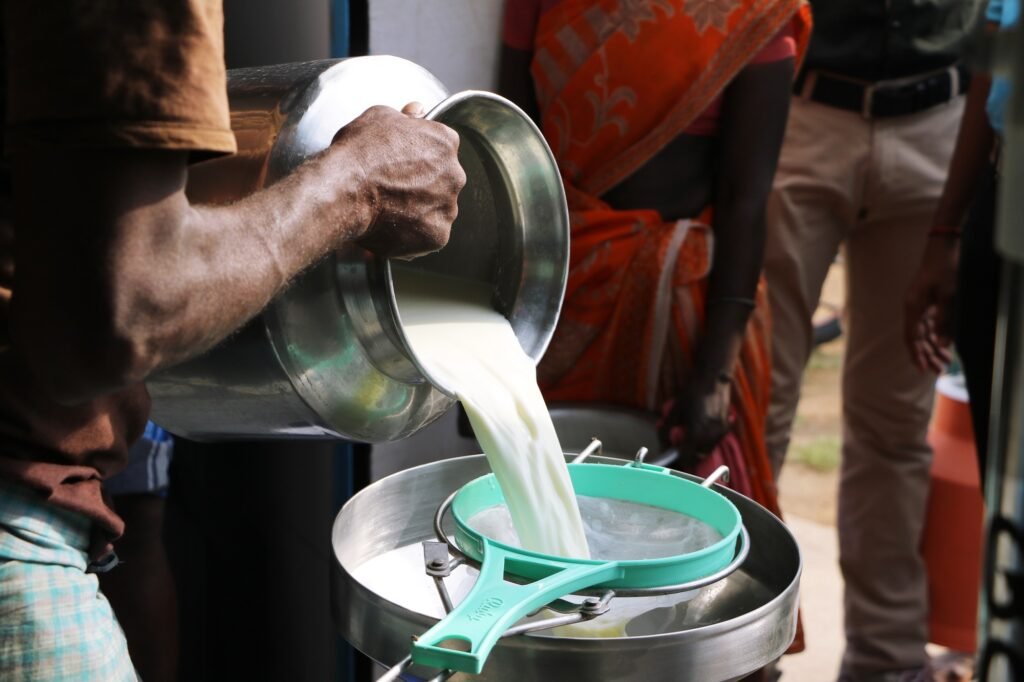
Mumbai, 5 July 2026: The Maharashtra Food and Drug Administration has tightened food safety requirements across the state’s milk supply chain, introducing stricter compliance and surveillance measures after inspections identified repeated cases of milk adulteration, synthetic milk production, antibiotic residues, hygiene failures and cold-chain violations.
The statewide compliance order, issued under Food Safety Commissioner Tukaram Mundhe, covers milk collection centres, dairy processing units, transporters, distributors, wholesalers and retailers. The new framework takes a supply-chain-wide approach, extending regulatory scrutiny from milk procurement and collection through processing, transportation and final sale.
The development represents a significant escalation in Maharashtra’s campaign against milk adulteration. It could have wider implications for dairy businesses operating in one of India’s largest milk-producing and consuming markets.
FDA puts entire dairy supply chain under scrutiny
Under the strengthened norms, milk businesses will be required to maintain traceability records covering the movement of milk from collection to final sale, maintain appropriate cold-chain conditions, use food-grade equipment and implement food safety management systems.
The Maharashtra FDA has also introduced specific labelling requirements for raw milk. Containers carrying raw milk must be clearly marked “RAW MILK” and carry instructions advising consumers to boil it before consumption. Pasteurised milk must be marketed in sealed and properly labelled packs.
The regulator has indicated that enforcement will not be restricted to retailers. Milk producers, collection centres, processing plants, transporters and distributors will all fall within the monitoring framework.
The order comes amid concerns over practices including the dilution of milk with water, the production of synthetic milk using chemicals, the sale of synthetic products as fresh milk, excessive antibiotic residues, poor hygiene, and inadequate temperature management.
“Milk is not merely a food product; it is a nutritional foundation for millions of children, mothers, patients and senior citizens. Adulterating milk amounts to playing with public health. Such practices will not be tolerated in Maharashtra.” Tukaram Mundhe Food Safety Commissioner
Violations could bring heavy penalties
Reports on the new compliance regime indicate that offences involving adulteration, fraudulent claims and illegal operations could attract penalties of up to ₹10 lakh, depending on the nature of the violation and the applicable legal provisions.
Repeat offenders and businesses considered high risk are also expected to face enhanced surveillance.
The regulator’s approach is particularly relevant for segments of the milk supply chain where fragmented procurement, multiple handling points and informal distribution can make end-to-end traceability difficult.
For the organised dairy sector, stronger enforcement could potentially improve the competitive environment by increasing the cost of non-compliance for businesses that compete through adulteration, mislabelling or unsafe handling practices.
Maharashtra targets structural gaps in milk traceability
One of the most important elements of the order is its emphasis on traceability.
India’s milk supply chain involves millions of farmers, village-level collection systems, milk aggregators, chilling centres, cooperative and private dairies, transport networks and multiple retail formats. A failure at any point can affect product quality and food safety.
The Maharashtra order seeks to establish greater accountability at each stage.
For dairy processors and milk collection businesses, the operational implications are likely to include stronger batch records, supplier identification systems, milk-testing documentation, transport records, and temperature-monitoring procedures.
Smaller businesses may face a greater compliance burden, particularly those that rely on manual records and less formalised milk-sourcing systems. However, better traceability can also help legitimate operators protect their brands and demonstrate control over milk quality.
The loose milk trade faces greater compliance pressure
The raw milk labelling requirement is particularly significant for the loose milk market.
The FDA’s decision to require clear identification of raw milk and boiling instructions creates a stronger distinction between unpasteurised milk and processed packaged milk.
The wider compliance framework reported in Maharashtra also includes tighter oversight of milk handling, storage, testing and sale. Regional reporting described the initiative as a broad package of measures intended to improve transparency and quality throughout the milk distribution chain.
For consumers, visible identification of raw milk could improve awareness of the difference between pasteurisation and household boiling. For the dairy sector, however, the policy’s success will depend on consistent enforcement across both formal and informal channels.
Festival demand periods require special attention
The Maharashtra FDA also plans intensified inspection activity during high-demand festival periods, when milk and dairy product consumption increases sharply.
Festival seasons, including Ganeshotsav, Diwali, Holi, Navratri, and Raksha Bandhan, are particularly important for the dairy industry due to increased demand for milk, khoa, paneer, ghee, and traditional sweets.
These demand spikes can place additional pressure on milk availability and processing capacity. They can also create opportunities for unscrupulous operators to introduce adulterated ingredients or falsely labelled dairy products into the market.
The decision to increase surveillance around these periods suggests that Maharashtra’s enforcement strategy will combine routine compliance monitoring with targeted risk-based inspections.
A major issue for consumer confidence and the organised dairy sector
Milk adulteration in India remains more than a food safety issue. It also affects farmer interests, consumer confidence and the economics of legitimate dairy businesses.
In June 2026, before the latest order was announced, the Maharashtra FDA had already signalled that action against adulteration of milk and dairy products would be a priority. Reports at the time said the regulator linked the issue to both consumer protection and the need for producers of good-quality milk to receive fair value.
This is an important point for the Indian dairy industry.
When adulterated or artificially manufactured products enter the market at lower costs, compliant dairies and genuine milk producers can face unfair competition. Stronger enforcement, therefore, has potential implications beyond public health.
It may also support greater formalisation in the Maharashtra dairy market by encouraging investment in testing systems, digital traceability, hygienic milk handling and cold-chain infrastructure.
The real test will be sustained enforcement.
The new order is significant, but the effectiveness of Maharashtra’s crackdown will depend on sustained implementation.
Milk moves through one of India’s most complex agricultural supply chains. Strong regulations alone cannot eliminate adulteration unless authorities have adequate inspection capacity, laboratory testing support, intelligence gathering and consistent follow-up.
The regulator had already been conducting wider anti-adulteration enforcement activities before the milk order. In late May 2026, the Maharashtra FDA arrested 33 people, sealed 27 establishments and seized goods worth nearly ₹50 lakh during a statewide drive covering banned gutkha and food adulteration offences.
For the dairy industry, another important question will be how smaller milk collection centres, distributors and retailers adapt to the expanded documentation and food safety requirements.
A transition period involving industry education, practical compliance guidance and digital record systems could help strengthen implementation, especially at the fragmented end of the milk supply chain.
Dairy Dimension Perspective
Maharashtra’s latest action reflects a necessary shift from isolated raids towards supply-chain accountability.
Milk adulteration cannot be addressed effectively by testing only the product available at the retail counter. Authorities must be able to trace milk backwards through transportation, processing, chilling, aggregation and collection.
The emphasis on traceability, cold-chain control, food-grade equipment and formal food safety systems is therefore a positive development for the dairy sector.
However, stricter rules must be matched by consistent and technically sound enforcement. Genuine small dairy businesses should be helped to understand and comply with regulatory requirements, while deliberate adulteration and synthetic milk operations require uncompromising action.
For organised dairy companies and cooperatives, stronger enforcement could ultimately support consumer trust and encourage the continued shift towards safer, traceable milk channels.
The larger question is whether Maharashtra can convert an intensive crackdown into a permanent food safety system.
That will determine whether the latest measures become a turning point for Maharashtra dairy news or another short-lived campaign against a persistent problem.