


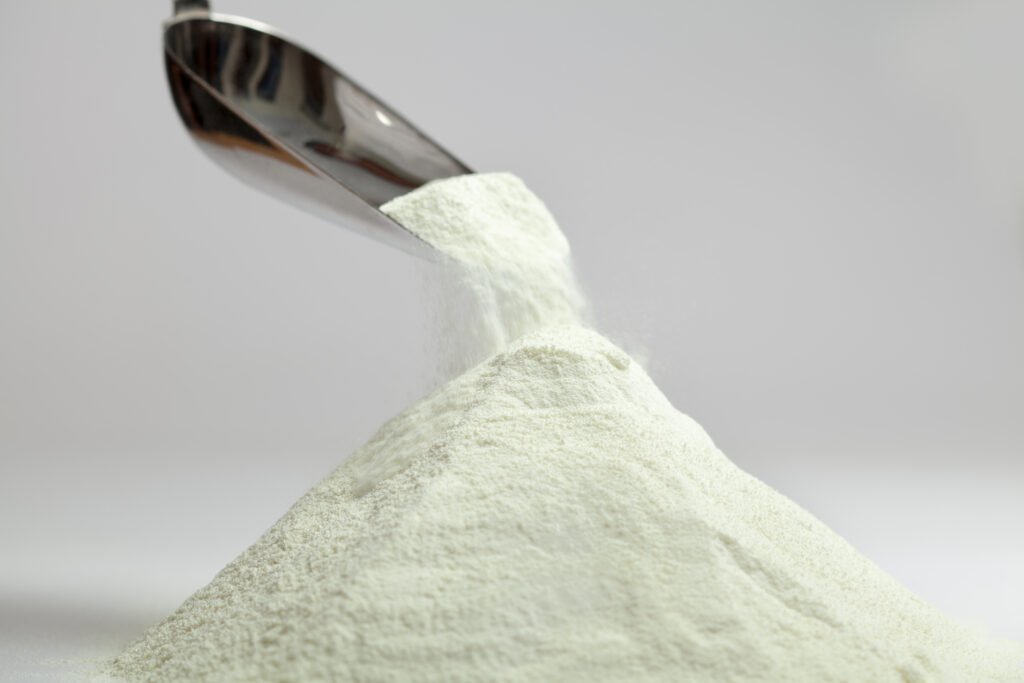
Food safety authorities investigate adulteration of skimmed milk powder in Mandya
Two officials of the Mandya District Milk Union (MANMUL) have been suspended following a food safety investigation into the alleged adulteration of around 57 tonnes of skimmed milk powder in Karnataka’s Mandya district.
The action follows an inspection by officers from the Food Safety and Drug Administration Department, who raided MANMUL premises and a warehouse at Gejjalegere in June. Samples of the skimmed milk powder were collected during the inspections for laboratory testing.
The investigation has raised concerns over the safety and quality of dairy ingredients used within the milk-processing supply chain and has placed renewed focus on quality control, product testing and accountability in dairy cooperatives.
Food safety department conducts inspections
According to reports, Food Safety and Drug Administration officials conducted inspections at MANMUL facilities and the Gejjalegere godown after concerns emerged regarding the quality of the skimmed milk powder.
The department collected samples from the stock for examination. The affected product was identified as Nandini skimmed milk powder, a dairy ingredient associated with Karnataka’s cooperative dairy network.
The quantity involved — approximately 57 tonnes — makes the case significant for the state’s dairy sector, particularly because skimmed milk powder is commonly used as an ingredient in dairy processing.
Two officials suspended
Following the investigation, two MANMUL officials were suspended in connection with the case.
The suspensions highlight the responsibility of dairy cooperatives and their officials to ensure that products entering processing and distribution channels meet applicable food safety and quality requirements.
The case also demonstrates the role of regulatory inspections and laboratory testing in identifying potential quality issues before products can move further through the dairy supply chain.
Quality control remains critical for dairy cooperatives
The incident comes at a time when India’s dairy industry is increasingly focused on strengthening food safety, traceability and quality assurance across the value chain.
Milk powder plays an important role in dairy processing because it can be stored, transported and incorporated into a range of products. Any quality issue involving large quantities therefore has the potential to affect processors, distributors and consumers.
For dairy cooperatives, robust procurement controls, supplier verification, laboratory testing and proper storage procedures are essential to prevent adulteration and maintain consumer confidence.
| Key Details | Information |
|---|---|
| Location | Mandya, Karnataka |
| Dairy cooperative | MANMUL |
| Product involved | Nandini skimmed milk powder |
| Quantity reported | Around 57 tonnes |
| Inspection authority | Food Safety and Drug Administration Department |
| Inspection period | June 2026 |
| Inspection location | MANMUL premises and Gejjalegere godown |
| Action reported | Suspension of two officials |
Investigation underscores need for traceability
The case also underlines the importance of maintaining clear records for dairy ingredients from procurement through storage and processing.
Traceability systems can help identify the origin of products, track individual batches and establish responsibility when quality concerns arise. Regular sampling and laboratory analysis can further help dairy organisations detect adulteration or deviations from required standards.
For consumers, such regulatory action can provide reassurance that suspected violations are being investigated and that accountability mechanisms are being applied.
Wider implications for Karnataka’s dairy sector
Karnataka has one of India’s major cooperative dairy networks, with Nandini serving as the consumer-facing brand of the state’s cooperative dairy system. Any food safety issue involving a large quantity of dairy ingredients therefore carries implications beyond the immediate facility.
The Mandya case is likely to reinforce the importance of tighter quality-control procedures, stronger internal monitoring and closer coordination between dairy cooperatives and food safety authorities.
As the investigation progresses, laboratory findings and subsequent regulatory action will be important in determining the precise nature of the alleged adulteration and the extent of responsibility among those involved.
For the wider dairy industry, the episode serves as a reminder that maintaining product integrity requires controls at every stage — from raw material procurement and ingredient storage to processing, testing and final distribution.