


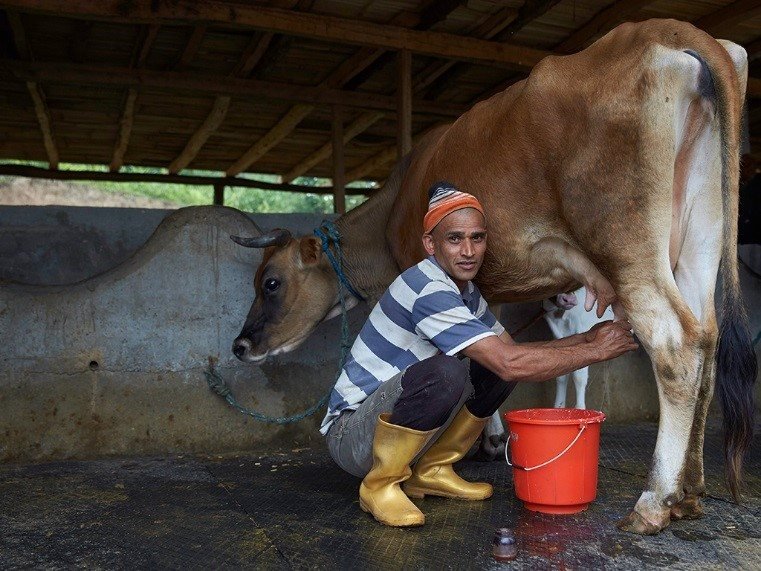
Nepal’s dairy industry has established a strong production base, creating significant opportunities for value addition, product diversification and the development of competitive domestic dairy brands. However, despite rising milk production and an extensive farmer network, the sector has yet to fully translate its production potential into a diversified consumer market.
According to the National Statistics Office, Nepal produced approximately 2.72 million tonnes of milk in FY 2024/25, up from 1.76 million tonnes a decade earlier. This growth highlights the increasing importance of dairy farming to the country’s agricultural economy and rural livelihoods.
The Dairy Development Corporation (DDC) also reports annual milk collection exceeding 60 million litres, connecting more than 200,000 milk producers through approximately 1,200 cooperatives across 45 districts. This extensive network provides an established foundation for expanding domestic dairy processing and strengthening market access.
Despite this progress, much of Nepal’s dairy industry remains concentrated on conventional products, including liquid milk, curd, ghee and paneer. Developing a broader range of value-added dairy products could help processors improve profitability, reach new consumer segments and reduce dependence on conventional milk sales.
Product Diversification Could Unlock New Market Opportunities
India’s Amul provides an important example of how product innovation, consistent quality, attractive packaging, distribution networks and sustained marketing can transform a dairy cooperative into a recognised consumer brand.
Nepal’s dairy processors could explore similar opportunities by expanding their product portfolios. Potential growth categories include different varieties of cheese, cream, flavoured milk, yoghurt, protein beverages and convenient dairy-based products. These categories could serve changing consumer preferences while creating additional demand for domestically collected milk.
Product development, however, requires more than introducing new SKUs. Dairy companies must invest in consumer research, taste consistency, quality assurance, appropriate packaging and competitive pricing. Understanding purchasing behaviour and identifying profitable product categories will be essential for building sustainable brands.
Institutional sales also present an opportunity. Hotels, restaurants, cafés, bakeries and food-service businesses require consistent supplies of dairy ingredients and processed products. Building dedicated institutional distribution channels could provide processors with more predictable demand and stronger relationships with commercial buyers.
Infrastructure, Investment and Government Support Remain Essential
Expanding Nepal’s dairy processing capabilities will require improvements across the supply chain. Cold-chain infrastructure, modern processing facilities, chilling centres, refrigerated transportation and quality-testing laboratories are particularly important for maintaining product quality and reducing post-collection losses.
Private dairy companies could play a greater role in introducing new technologies, developing specialised products and strengthening retail distribution. However, access to affordable finance and a predictable regulatory environment will remain important for encouraging long-term investment.
Government policy will also influence the industry’s competitiveness. Import-tariff policies should balance protection for domestic producers with the need to encourage efficiency, innovation and competitive pricing. Excessive protection without improvements in productivity could limit the industry’s long-term development.
Additional priorities include supporting dairy farming productivity, facilitating technology adoption, strengthening farmer support programmes and encouraging public-private partnerships. DDC could also benefit from greater operational and commercial flexibility to improve decision-making, develop new products and respond more effectively to changing market conditions.
A transparent and timely milk price-revision mechanism would further support the sector. Relevant movements in the Indian dairy market could serve as one benchmark, alongside domestic production costs, farmer requirements and local market conditions.
Building Competitive Dairy Brands Beyond Production
Nepal’s dairy industry already possesses several important advantages, including an established milk-producing community, an extensive cooperative network and growing domestic production. DDC has decades of institutional experience and consumer recognition, while private processors offer opportunities for entrepreneurship and market innovation.
The next stage of development will depend on how effectively these strengths are converted into commercially successful products. Professional marketing management, SKU-wise profitability analysis, consumer-focused product development and sustained brand campaigns should become integral parts of dairy business strategies.
The industry must also recognise that production growth alone does not guarantee commercial success. Strong brands require consistent quality, reliable distribution, competitive pricing and a clear understanding of consumer expectations.
Nepal does not lack dairy potential. What it needs is a stronger focus on value addition, investment, professional management and market development.
With coordinated efforts from the government, DDC, private dairy processors, cooperatives and farmers, Nepal could build a more diversified and competitive dairy industry.
The opportunity is no longer limited to producing more milk. It is about transforming that milk into trusted, innovative and profitable consumer brands. Can Nepal’s dairy industry create its own Amul success story?