


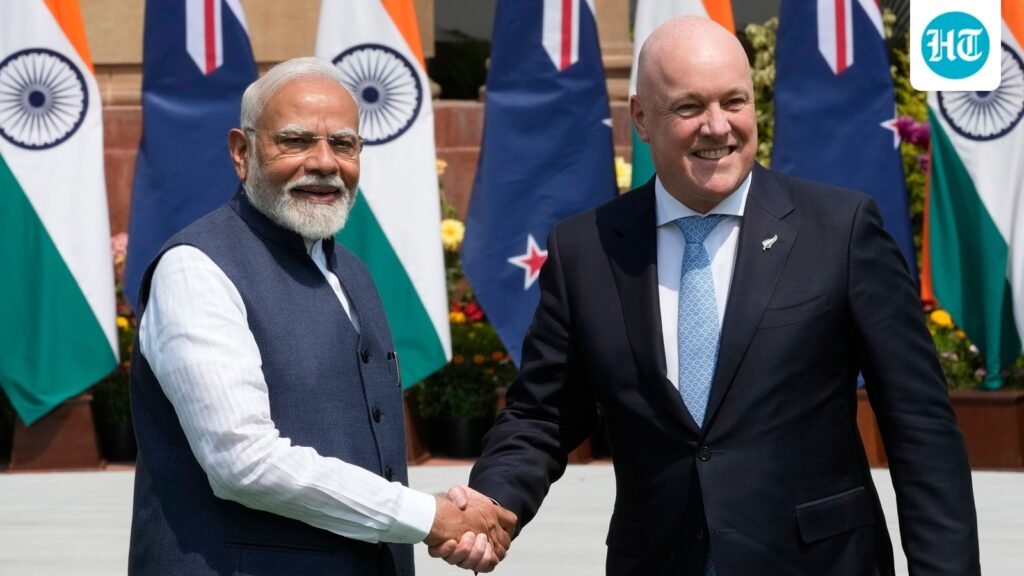
New Zealand’s parliament has approved legislation implementing its free trade agreement (FTA) with India, clearing an important step toward reducing tariffs and expanding bilateral trade. The agreement is expected to eliminate or significantly reduce tariffs on about 95% of New Zealand exports to India.
The legislation passed on Wednesday by a vote of 93-29, with support from the opposition Labour Party. The agreement is expected to enter into force later this year after both countries complete their respective ratification procedures.
Tariff Cuts to Cover Most New Zealand Exports
Under the trade agreement, more than half of the products covered will become duty-free from the day the deal takes effect. Overall, around 95% of New Zealand exports to India will receive either full tariff elimination or significant reductions.
New Zealand Trade Minister Todd McClay described the benefits for exporters as immediate and substantial, while confirming the government’s expectation that the agreement will take effect during the current year.
The deal is intended to improve market access for New Zealand businesses while strengthening commercial ties with one of its major trading partners.
Indian Goods to Receive Duty-Free Access
The agreement also provides significant market access for Indian exporters. Under the arrangement, all Indian goods will receive duty-free access to New Zealand.
The reciprocal tariff measures are designed to support two-way trade by lowering the costs associated with importing goods between the two countries. Both governments have also highlighted the agreement’s potential to strengthen investment and broader economic cooperation.
As part of the deal, New Zealand has committed to investing NZ$20 billion in India over the next 15 years.
Bilateral Trade Continues to Grow
The agreement comes as trade between New Zealand and India continues to develop. Two-way trade reached NZ$3.99 billion in the year to June 2026.
India currently ranks as New Zealand’s ninth-largest market for goods and services exports. The FTA is expected to provide exporters with improved access to each other’s markets and create additional opportunities for businesses across multiple sectors.
The agreement follows years of negotiations between the two countries. New Zealand and India formally signed the trade deal in April, marking a major step toward closer economic cooperation.
Implications for Dairy and Agricultural Trade
Improved market access could be particularly relevant to New Zealand’s agricultural and food sectors, which are important contributors to the country’s export economy.
Lower tariffs can reduce the landed cost of products entering the Indian market and potentially improve competitiveness for exporters. For India, duty-free access to New Zealand could similarly support greater opportunities for Indian businesses seeking to expand into the New Zealand market.
The agreement’s impact on specific agricultural and dairy products will depend on the detailed tariff schedules, implementation timelines and market conditions once the FTA comes into force.
Ratification Still Required
Although New Zealand’s parliament has now approved the implementing legislation, the agreement has not yet taken effect. Both New Zealand and India must complete their respective domestic ratification procedures before the FTA becomes operational.
Once those procedures are completed, the agreement will establish the framework for the planned tariff reductions and duty-free access, alongside the broader investment and trade commitments.
The implementation of the FTA is expected to mark a significant new phase in economic relations between New Zealand and India, with exporters and businesses positioned to benefit from expanded market access.