


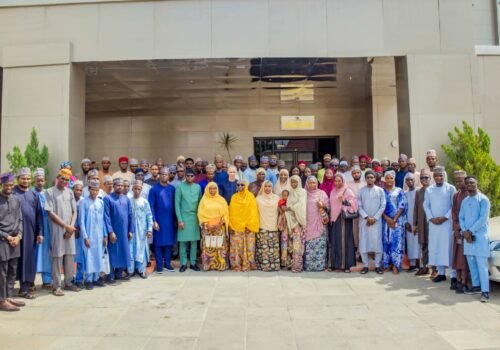
The Advancing Local Dairy Development in Nigeria (ALDDN) programme has enrolled more than 63,000 smallholder dairy farmers and facilitated the supply of over 15 million litres of fresh milk to processors during its six-year intervention across seven Nigerian states.
Funded by the Bill & Melinda Gates Foundation and implemented by Sahel Consulting Agriculture & Nutrition Limited in partnership with government agencies, dairy processors and private-sector organisations, the programme formally concluded with a closeout event in Kano.
The initiative began in 2020 and operated across Adamawa, Bauchi, Jigawa, Kaduna, Kano, Plateau and Taraba.
More Than 63,000 Farmers Enrolled
According to Sahel Consulting Managing Partner Temi Adegoroye, the programme directly enrolled 63,261 farmers and connected them to formal dairy supply chains.
The participating farmers were organised into 2,663 Self-Help Groups, while 234 cooperatives were formed and registered with state governments. The organisational structure was designed to strengthen farmers’ ability to collectively access markets, services and support.
During the programme, participating farmers supplied more than 15 million litres of milk to partner processors, generating over ₦6 billion in milk sales.
The results demonstrate the potential for formal milk collection systems to connect smallholder producers with processors while creating more reliable market opportunities.
Cooperative Viability Improves
Cooperative development was another major component of the intervention.
A 2026 audit found that the proportion of moderately viable cooperatives increased from 66% to 90%, while the share classified as non-viable declined from 33% to 8%.
The programme also exceeded its target for cattle services. A total of 83,963 cows were serviced against a target of 75,000.
In addition, 83,936 cattle were vaccinated against Contagious Bovine Pleuropneumonia (CBPP), supporting livestock health across participating communities.
More than 61,000 farmers received training in Good Dairy Practices, while 279 Community Livestock Workers were engaged to provide local livestock services.
Fodder Production and Dairy Infrastructure
Feed availability was another focus of the programme. More than 4,705 hectares of fodder were cultivated, exceeding the original target of 4,000 hectares.
The intervention also supported milk collection and dairy infrastructure by providing eight milk evacuation trucks and 7,676 stainless-steel milk cans.
A solar-powered facility was established at Sebore Farms with a processing capacity of 70,000 litres of milk per day.
The programme additionally supported the installation of 75 solar-powered boreholes across 74 communities, helping address water availability for livestock-producing communities.
Strengthening Links Between Farmers and Processors
The programme placed considerable emphasis on connecting organised farmer groups with commercial dairy processors.
Senior Programme Officer Mustapha Musa said the intervention helped strengthen livestock production by linking organised pastoralist cooperatives with processors, including L&Z.
In Kano, more than 150 small pastoralist groups were consolidated into 24 larger cooperatives. Farmers received training covering animal nutrition, milk production, livestock health and artificial insemination.
Around 13 solar-powered boreholes were also provided in communities supplying milk to L&Z, alongside annual vaccination campaigns.
These measures were intended to improve both milk production and the reliability of supply to formal processors.
Programme Focuses on Long-Term Sustainability
With the programme now closed, organisers have focused on ensuring that the systems created during the intervention continue operating.
Farmers have been integrated into partner processors’ supply chains, while extension agents, artificial insemination technicians, Community Livestock Workers and other service providers have been trained and equipped to continue supporting producers.
Sahel Consulting has also called for continued government engagement with pastoralist cooperatives and stronger collaboration between public institutions and private-sector processors.
Reliable market access remains an important factor in maintaining farmer participation in formal dairy supply chains.
Farmers Report Improved Market Access
The impact of the programme has also been reflected at the individual farmer level.
Hawwa’u Abubakar, a beneficiary from Bunkure Local Government Area, said the direct milk-supply arrangement with L&Z reduced the need to transport milk to markets because the processor collects milk directly from her doorstep.
She reported that her earnings can reach ₦100,000–₦150,000 over several days, depending on the quantity of milk supplied.
She also credited feed-processing equipment and other programme support with helping her expand her dairy activities.
The ALDDN programme’s six-year intervention highlights the role of farmer organisation, infrastructure, animal health services and reliable processor linkages in strengthening Nigeria’s smallholder dairy supply chain.