


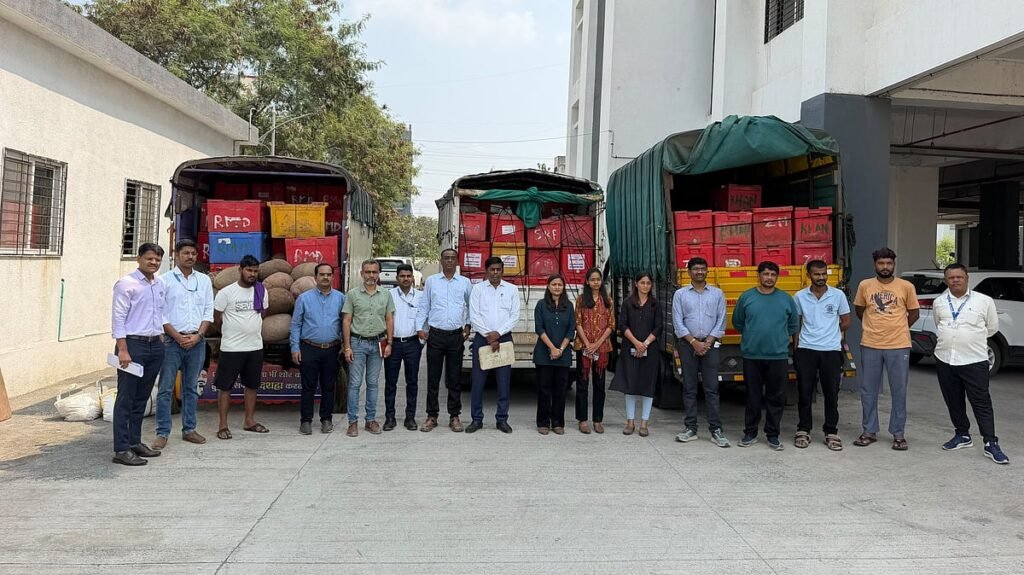
Authorities seize dairy products worth ₹28.40 lakh over concerns about uncontrolled transportation and storage temperatures, with further action pending under food safety laws.
The Food and Drug Administration (FDA) in Pune has seized 9,440 kilograms of paneer and khoya valued at approximately ₹28.40 lakh during inspections conducted ahead of Diwali. The operation took place on October 19 across Bavdhan, Kasba Peth and Bibwewadi after officials found that the dairy products were being transported and stored under uncontrolled temperature conditions.
According to The Free Press Journal, the seized consignment included 9,000 kg of paneer and 440 kg of khoya brought to Pune from Karnataka. The department suspects the products may be unsafe for human consumption, and further legal action is underway under the Food Safety and Standards Act, 2006.
The seizure highlights the importance of maintaining food safety standards throughout the dairy supply chain, particularly during festive periods when demand for paneer, khoya and milk-based sweets increases.
Paneer and khoya seized across three locations
The inspection operation began at approximately 6 am, with FDA officials conducting checks at three locations in Pune.
In Bavdhan, authorities seized 3,200 kg of paneer valued at ₹9.60 lakh. In Kasba Peth, a further 3,040 kg of paneer worth ₹9.12 lakh was confiscated. Officials seized another 2,760 kg of paneer valued at ₹8.28 lakh in Bibwewadi.
The department also seized 440 kg of khoya worth ₹1.40 lakh in Kasba Peth. According to the report, the consignment was linked to Shivshankar Dairy at Dengle Bridge.
The preliminary report identified vehicles associated with the consignments, including registration numbers KA 23 B 7149, KA 71 2453 and KA 71 0406. The total value of the seized products was reported at ₹28,40,800.
Uncontrolled temperatures raise food safety concerns
Paneer and khoya are perishable milk-based products that require appropriate temperature control during storage and transportation. Exposure to unsuitable conditions can encourage microbial growth, accelerate spoilage and potentially compromise product safety.
The FDA’s action followed the discovery that the products were being transported, stored and sold in the open under uncontrolled temperature conditions. Officials suspect the stock may be unsafe, but the preliminary findings do not establish that the products were adulterated or contaminated.
Laboratory testing and further investigation will be important in determining whether the seized dairy products meet applicable food safety requirements. The final findings will help establish the appropriate regulatory action.
A separate account of the operation also raised concerns about missing printed manufacturing dates and food safety information on the products. However, the preliminary report did not conclusively establish whether the entire consignment lacked this information or whether the products were counterfeit.
For dairy businesses, the case underscores the need for proper temperature management, product traceability, accurate labelling and compliance with food safety regulations.
Festive demand increases the importance of dairy inspections
Diwali typically brings higher demand for milk-based sweets and ingredients such as paneer and khoya. This seasonal increase can place additional pressure on manufacturers, distributors, transporters and retailers to move products quickly while maintaining appropriate handling conditions.
Long-distance transportation requires particular attention because dairy products may be exposed to unsuitable temperatures if refrigeration and storage arrangements are inadequate. Poor handling can reduce shelf life and create food safety risks before products reach consumers.
Routine inspections and effective cold-chain management are therefore important for protecting consumers and maintaining confidence in the dairy sector. Manufacturers and suppliers must ensure that their products are transported under appropriate conditions and carry the required information.
Further investigation to determine compliance
The Pune FDA’s seizure represents a precautionary enforcement action following concerns about the handling and storage of the dairy products. The reported seizure alone does not confirm that the products were adulterated or that all the stock was unsafe.
Further details on laboratory results and subsequent action against the suppliers were not available in the preliminary report.
The case serves as a reminder that dairy product safety depends on every stage of the supply chain, from processing and packaging to transport, storage and retail distribution. As festive consumption rises, consistent monitoring and compliance remain essential to protecting consumers and supporting the credibility of India’s dairy industry.