


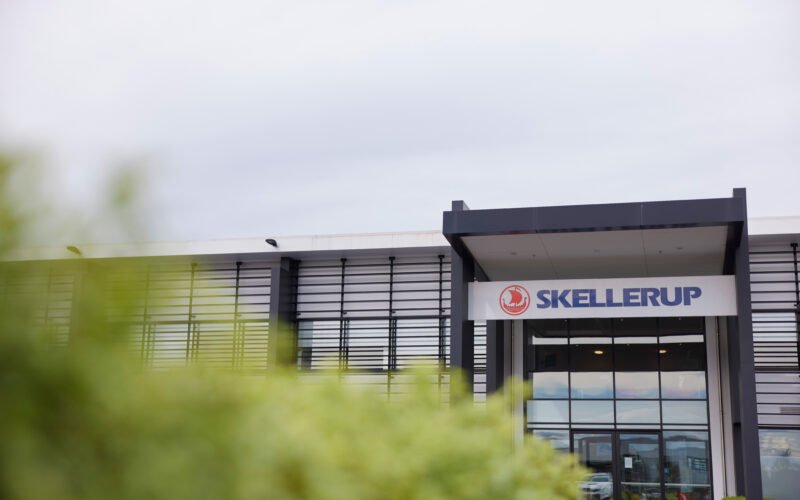
New Zealand, August 2026: Skellerup Holdings has reported a record operational performance for FY2026, with strong global demand for dairy consumables helping drive growth across its Agricultural Division.
The company, which manufactures specialised rubber and polymer products for agricultural and industrial applications, benefited from robust demand for milking liners, tubing, animal hygiene products and other essential dairy consumables.
The Agricultural Division emerged as one of the company’s key growth engines, recording revenue of $128 million, an increase of 13% year on year. EBIT from the division rose 12% to $39.6 million.
The results highlight continued demand for essential dairy equipment and consumables across major milk-producing regions, particularly the United States and Europe.
Agricultural Division Drives Growth
Skellerup’s Agricultural Division focuses on products that are essential to modern dairy farming and milk-processing operations.
Its portfolio includes:
- 🥛 Milking liners
- 🔧 Specialised tubing
- 🧪 Rubberware
- 🐄 Animal hygiene products
- 🐮 Calf-feeding equipment
- ⚙️ Other dairy-farm consumables
Revenue from the division reached $128 million, representing a 13% increase compared with the previous year.
EBIT increased by 12% to $39.6 million, demonstrating that the division’s revenue growth translated into higher operating earnings.
The performance reflects strong underlying demand for products that are repeatedly required across commercial dairy operations.
Commercial Dairy Consumables See Strong Global Demand
Worldwide sales of essential consumables used in the commercial dairy sector increased by 15%.
Demand was particularly strong in established dairy-producing regions, with mature, high-volume production belts in the United States and Europe acting as important growth drivers.
These markets have large commercial dairy operations that require regular replacement of milking components and other consumable equipment.
Unlike large capital investments that may be purchased infrequently, products such as milking liners and tubing form part of the recurring operating requirements of dairy farms.
This provides manufacturers with a relatively stable underlying demand base when dairy production remains strong.
Record Manufacturing Throughput
Strong international demand pushed Skellerup’s manufacturing operations to historic levels of throughput.
The company’s international manufacturing footprint increased production to keep pace with orders from the global dairy sector.
Particularly high demand was recorded for milking liners and specialised silicone and rubber tubing.
Skellerup’s dedicated manufacturing facilities in New Zealand and the United Kingdom achieved record production volumes as the company responded to rising customer requirements.
The performance demonstrates the importance of manufacturing capacity in supporting the expansion of the global dairy supply chain.
Milking Liners Remain an Essential Dairy Consumable
Milking liners are an important component of modern milking systems.
They come into direct contact with animals during the milking process and are subject to regular replacement as part of dairy-farm maintenance and hygiene practices.
Strong demand for milking liners therefore provides an indication of continued activity across commercial dairy operations.
For manufacturers such as Skellerup, higher global milk production and sustained investment in dairy infrastructure can create demand for these recurring consumables.
The company’s record production volumes suggest that this underlying market remained strong during FY26.
Stronger New Zealand Market
Skellerup also recorded solid growth in its domestic New Zealand agricultural business.
The company’s New Zealand revenue benefited from strong farmgate milk payouts, which influenced the timing of farmer purchasing decisions.
Higher returns from milk production can improve farmers’ ability to invest in equipment, maintenance products and animal-management solutions.
The improved dairy economics therefore supported demand for agricultural products in the domestic market.
Thriver Calf-Feeding Range Gains Momentum
Another area of growth was Skellerup’s Thriver calf-feeding teat range.
The company reported accelerated adoption of the product as farmers invested in calf-rearing equipment.
Calf management is an important component of dairy productivity because early-life nutrition and animal care can influence the future performance of replacement animals.
Growing adoption of specialised calf-feeding products therefore reflects continued interest in improving animal management and farm efficiency.
Growth Despite Global Supply-Chain Challenges
The strong performance came despite a difficult international operating environment.
Global manufacturers faced continued supply-chain disruptions, raw-material sourcing challenges and trade-related uncertainty.
Skellerup Chief Executive Graham Leaming highlighted the company’s ability to navigate raw-material bottlenecks associated with geopolitical conflicts in the Middle East and changing international trade tariffs.
For manufacturers dependent on specialised rubber, silicone and polymer inputs, disruptions in raw-material supply can affect production schedules, costs and delivery times.
Maintaining manufacturing continuity under these conditions was therefore an important part of Skellerup’s FY26 performance.
International Manufacturing Network Provides Resilience
Skellerup’s international manufacturing footprint allowed the company to respond to strong demand across multiple markets.
Facilities in New Zealand and the United Kingdom played an important role in meeting demand for dairy consumables.
A geographically diversified manufacturing network can provide companies with greater flexibility when dealing with supply-chain disruptions, logistics constraints and regional market changes.
The record production volumes reported during FY26 indicate that Skellerup was able to maintain high levels of operational throughput despite these challenges.
Industrial Division Also Reports Strong Growth
While the Agricultural Division was a major growth contributor, Skellerup’s Industrial Division also delivered a strong performance.
Industrial Division EBIT increased 17% to $56.6 million.
The division benefited from sales of precision-engineered polymer seals and vacuum systems used across industrial applications.
The growth demonstrates that Skellerup’s performance was not dependent solely on agricultural demand.
Its diversified business model provides exposure to both dairy and broader industrial markets.
Dairy Supply Chain Benefits From Consumables Demand
The results offer an insight into an often-overlooked part of the global dairy industry.
Much of the focus within dairy markets is placed on milk prices, production volumes, processing capacity and dairy commodity markets.
However, dairy production also supports a large ecosystem of suppliers providing equipment, consumables and animal-management products.
Companies producing milking liners, tubing, rubberware and hygiene products benefit from ongoing investment and activity at the farm level.
Strong demand for these products can therefore provide an indirect indicator of the health and activity of commercial dairy operations.
US and European Dairy Markets Remain Important
The United States and Europe were identified as major demand drivers for Skellerup’s commercial dairy consumables.
Both regions have highly developed dairy industries with large-scale farms and sophisticated milking infrastructure.
These markets also have established replacement cycles for milking equipment and consumables, creating recurring demand for specialised products.
For suppliers, maintaining relationships with dairy farms, equipment manufacturers and distributors in these markets can provide relatively stable long-term opportunities.
Implications for the Global Dairy Industry
Skellerup’s FY26 performance highlights several broader trends within the global dairy supply chain.
First, demand for essential dairy-farm consumables remains strong in major commercial milk-producing regions.
Second, farmers with stronger milk-price returns may have greater capacity to invest in equipment and animal-management products.
Third, manufacturers are increasingly required to maintain resilient supply chains amid geopolitical and trade-related disruptions.
Finally, the continued expansion of specialised dairy equipment and consumables reflects the increasing sophistication of modern dairy farming.
Outlook
Skellerup’s record FY26 performance demonstrates the strength of demand for essential products supporting commercial dairy operations.
The Agricultural Division generated $128 million in revenue, while EBIT reached $39.6 million. Global sales of key dairy consumables increased 15%, with the United States and Europe providing important demand support.
At the same time, record manufacturing throughput in New Zealand and the United Kingdom enabled the company to respond to strong orders for milking liners, tubing and other products.
The company’s ability to maintain production despite raw-material challenges, geopolitical tensions and changing trade tariffs also highlights the growing importance of resilient supply chains.
With global dairy producers continuing to invest in milking infrastructure, animal management and farm efficiency, demand for specialised consumables is likely to remain an important part of the wider dairy industry’s supply ecosystem.
Skellerup’s FY26 performance therefore provides another indication that strong dairy activity extends beyond milk and dairy products themselves, supporting a broader network of equipment, technology and consumable suppliers around the world.