


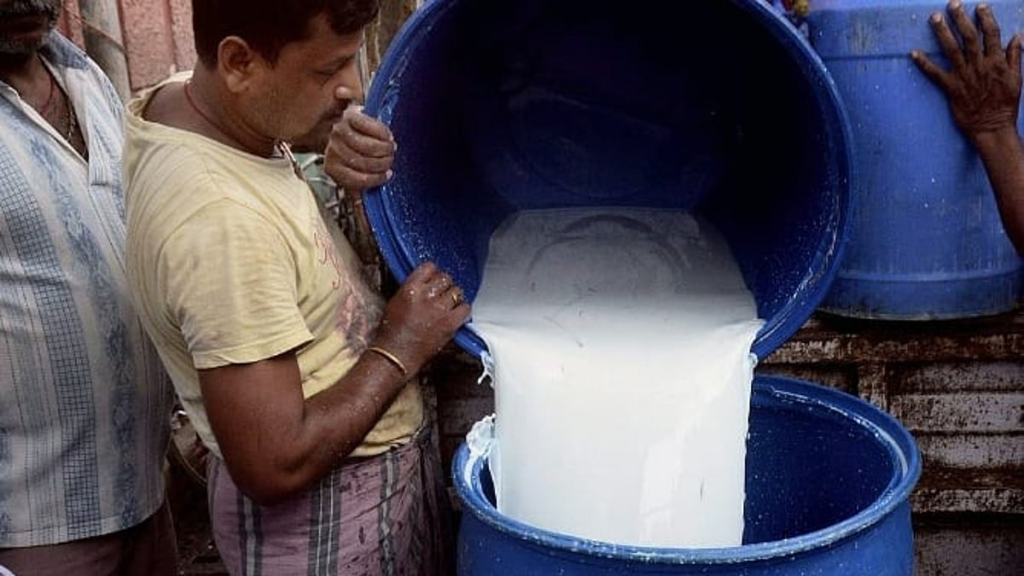
The dairy industry has traditionally measured growth through milk procurement, market share, distribution networks and cold-chain expansion. However, consumer preferences are changing. The key question is no longer simply how much milk is being sold, but how dairy products contribute to consumers’ health, nutrition and daily protein intake.
This shift is creating a significant opportunity for South India, where dairy consumption has long been deeply integrated into everyday diets. Curd with rice, buttermilk after meals and paneer-based dishes are not recent food trends in the region. They have been part of household eating habits for generations.
South India Has a Strong Dairy Consumption Base
Government health data indicates that milk and curd consumption is considerably higher in several southern states than the national average. While fewer than half of Indians consume milk or curd daily, approximately three out of four adults in states such as Andhra Pradesh and Karnataka reportedly consume these products regularly.
The region also records higher yogurt consumption. Per capita yogurt consumption across southern states is estimated at 4.2 kilograms annually, compared with a national average of 2.8 kilograms.
These figures show that South India already has a strong foundation for dairy growth. Consumers are familiar with dairy products and do not need to be introduced to the category. Instead, the next opportunity lies in helping consumers understand the nutritional value of products they already consume.
Protein Is Reshaping Dairy Demand
Across India, protein has become an increasingly important part of food and wellness conversations. A nationwide survey found that around six in ten urban Indians do not consume protein-rich foods daily. It also indicated that nearly three-quarters of respondents were unable to correctly identify their daily protein requirement.
For healthy adults, the Indian Council of Medical Research recommends approximately 0.66 to 0.83 grams of protein per kilogram of body weight, depending on individual needs and conditions.
India is already the world’s largest milk-producing and milk-consuming country. Therefore, the challenge is not a lack of supply. The larger challenge is communicating how existing dairy products can support better nutrition.
Curd, paneer and other dairy products can be positioned as convenient, familiar and affordable sources of protein. This gives dairy companies an opportunity to connect traditional consumption habits with modern health priorities.
A Mature Market Still Offers New Growth
South India has often been viewed as a mature dairy market where significant growth has already taken place. However, changing consumer preferences suggest that the region still has considerable potential.
Growth is increasingly being driven by value-added products such as curd, paneer, high-protein dairy products and richer formats rather than only by packaged liquid milk. Southern states are emerging as important markets for protein-focused foods, with dairy positioned at the centre of this movement.
The opportunity is not to change what consumers eat, but to help them recognise the nutritional benefits of their existing choices. A bowl of curd consumed at breakfast or paneer included in a weekly meal can become part of a consumer’s daily protein calculation.
Convenience Is Supporting Product Trial
The growth of quick-commerce platforms is also making it easier for consumers to experiment with new dairy formats. Single-serve and protein-focused products require less commitment from first-time buyers and can be purchased conveniently for immediate consumption.
For young professionals, fitness-conscious consumers and busy households, these formats offer a practical way to add protein to daily diets without significantly changing established eating patterns.
The Road Ahead
The dairy companies that understand this shift early could gain more than regional market share. They may help shape how consumers across India understand and consume protein.
South India’s advantage is its long-standing trust in dairy. The region is not adopting a completely new habit. It is discovering a new way to describe an old one. By combining familiar products with stronger nutritional communication, product innovation and credible information, the dairy industry can use South India as a model for the next phase of national growth.