


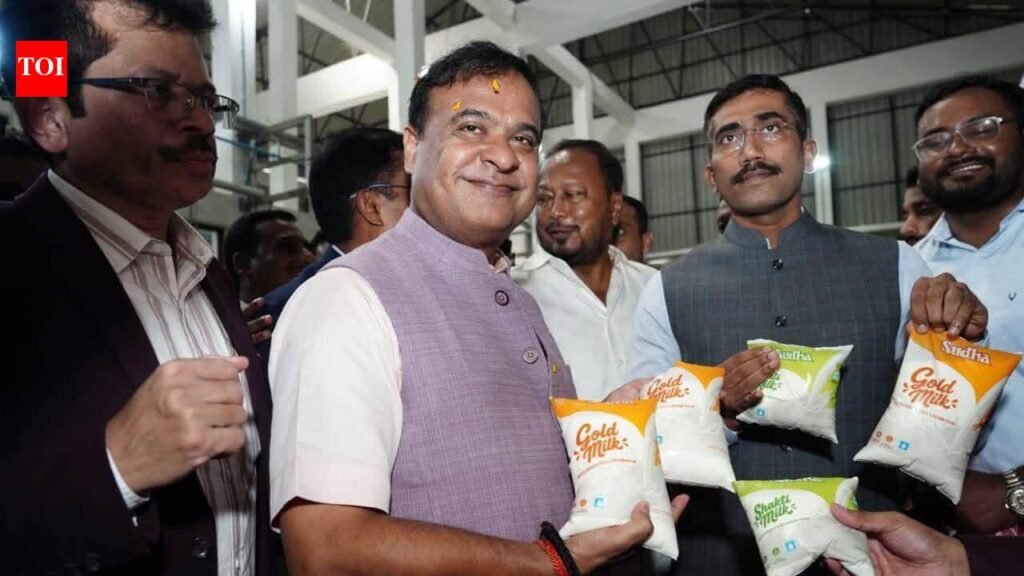
Sudha Milk, the dairy brand operated by the Bihar State Milk Cooperative Federation Ltd. (COMFED), has strengthened its presence in Northeast India with the inauguration of a milk processing plant capable of handling 20,000 litres of milk daily in Assam. The new facility is expected to improve regional distribution, increase the availability of dairy products and support the expansion of the cooperative dairy network.
Assam Chief Minister Himanta Biswa Sarma inaugurated the facility at Kanyaka Dairy in Jamugurihat, Shantipur, in Tezpur’s Sonitpur district. The inauguration was attended by COMFED Chairman-cum-Managing Director Shirshat Kapil Ashok, marking another step in Sudha’s efforts to expand beyond its home market of Bihar.
New Processing Capacity to Strengthen Regional Supply
The new plant will help Sudha improve the supply of packaged milk and dairy products across Tezpur and surrounding areas. By adding local processing capacity, COMFED aims to strengthen distribution efficiency and respond to growing demand for branded dairy products in Assam.
Sudha initially entered the Assam market in November 2018, marketing packaged milk and dairy products through a third-party processing facility at Amingaon, Guwahati. Its operations have since expanded across several parts of Assam and neighbouring states, including Meghalaya and Arunachal Pradesh.
The Guwahati unit currently distributes Sudha products through approximately 2,200 retail vendors. Its portfolio includes packaged milk, curd, paneer, curd juice, peda and milk cake, allowing the cooperative to serve consumers across multiple dairy categories.
The unit sells an average of approximately 50,500 litres of milk daily. During the financial year 2025–26, it recorded business worth ₹121 crore and reported a profit of ₹8 crore, highlighting the commercial potential of its Northeast operations.
COMFED Plans a Larger Dairy Processing Facility
Beyond the newly inaugurated plant, COMFED is pursuing plans to establish its own larger dairy processing facility in Assam, with a proposed capacity of 100,000 litres per day.
The federation has requested suitable land from the Assam government for the proposed project. The Assam Industrial Development Corporation has reportedly identified potential sites and presented them to COMFED officials for inspection and consideration.
If implemented, the proposed facility would significantly expand Sudha’s local processing capacity and provide additional infrastructure to support its growing distribution network.
A larger plant could also improve the cooperative’s ability to introduce new products, strengthen cold-chain operations and serve additional retail markets. However, the project’s implementation will depend on land allocation, investment decisions and subsequent development.
Bihar’s Growing Milk Production Supports Expansion
Sudha’s expansion into Assam comes amid substantial growth in Bihar’s milk production. According to information attributed to the Press Information Bureau, Bihar’s milk production increased from 7.77 million tonnes in 2014–15 to 12.85 million tonnes in 2023–24.
This growth reflects the increasing importance of dairy farming in the state’s agricultural economy and provides a broader foundation for cooperative-led marketing and processing.
According to COMFED’s public relations officer, the federation currently supplies approximately 16–18 lakh litres of Sudha milk to the market daily, alongside other dairy products. It procures around 25 lakh litres of milk from farmers each day, while the government’s stated target is to increase procurement to 50 lakh litres daily.
Expanding processing and distribution infrastructure will be important to managing greater milk volumes, reducing supply bottlenecks and maintaining consistent product quality as procurement increases.
Greater Opportunities for Farmers and Dairy Businesses
Sudha’s expansion could create additional opportunities for dairy farmers in the Northeast if the growing market translates into stronger local milk procurement. A wider cooperative network can connect rural producers with organised buyers, potentially improving market access and creating more predictable outlets for milk.
Increased demand for paneer, curd and traditional milk-based sweets could also support value addition, allowing dairy businesses to serve consumers beyond the liquid milk market.
However, sustained growth will require reliable milk collection systems, adequate chilling facilities, quality testing, veterinary support and efficient transportation. These investments are particularly important for maintaining milk quality across geographically dispersed markets.
Sudha products are also available in Delhi-NCR and Kolkata, demonstrating the federation’s broader distribution reach beyond Bihar.
The inauguration of the 20,000-litre-per-day plant represents a further step in Sudha’s regional expansion strategy. With a larger facility under consideration and demand for packaged milk and value-added dairy products increasing, Assam could become an important market for COMFED. The long-term impact will depend on the execution of its infrastructure plans, the strength of its distribution network and its ability to build sustainable links with dairy farmers across the Northeast.