


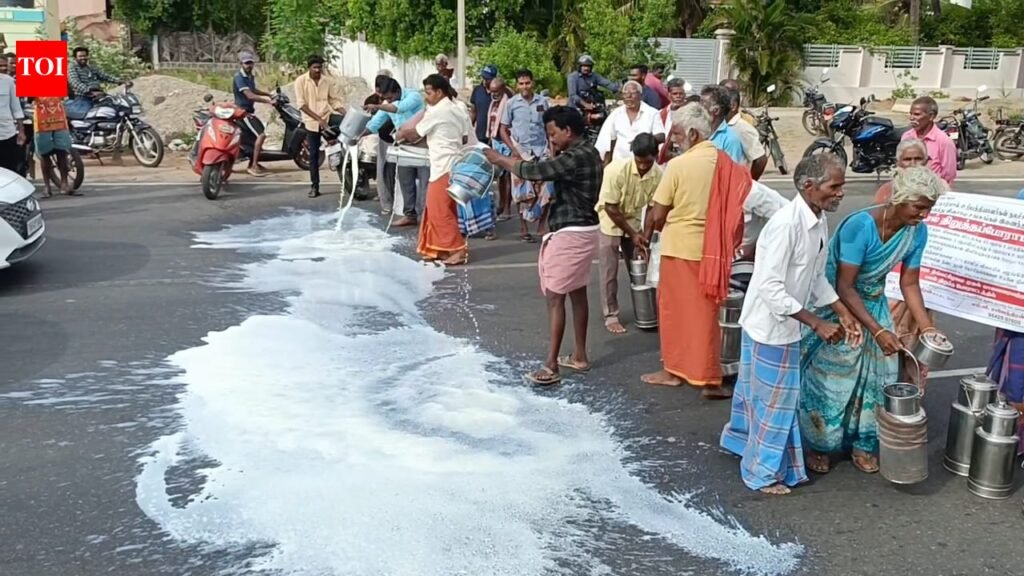
Salem: Dairy farmers in Salem district staged a protest near Attur on Monday, demanding an increase in milk procurement prices and a waiver of farm loans. The demonstration, held on the Salem–Chennai National Highway, caused significant traffic disruption for more than two hours before police intervention helped bring the blockade to an end.
The protest was part of a statewide agitation announced by the Tamil Nadu Milk Producers’ Welfare Association, reflecting growing concerns among dairy farmers over rising production costs and inadequate returns from milk sales.
Farmers Protest Over Rising Dairy Costs
Farmers from Ramanayakkanpalayam, Thennangudipalayam, Appammasamuthiram and nearby villages gathered at Selliyampalayam to voice their concerns. As part of the protest, some farmers poured milk onto the highway, highlighting their dissatisfaction with the prices they receive for their produce.
The farmers said rising cattle feed, animal maintenance and other input costs have placed considerable financial pressure on dairy households. They argued that existing procurement prices are insufficient to cover production expenses while providing farmers with a sustainable income.
Demand for Higher Milk Procurement Prices
A major demand of the protesting farmers was an immediate increase in the price paid for milk supplied to cooperative dairies.
Farmers said procurement prices need to reflect the rising costs of cattle feed, veterinary care, labour and animal maintenance. They warned that inadequate returns could make dairy farming increasingly difficult for small and marginal producers.
The farmers also demanded a waiver of outstanding farm loans, saying debt relief would help dairy households manage their financial burden and continue milk production.
Protest Causes Traffic Disruption
The demonstration led to significant traffic congestion on the Salem–Chennai National Highway, with the blockade continuing for more than two hours.
Personnel from the Attur rural police station held discussions with the protesting farmers to resolve the situation. Following the talks, the farmers withdrew the blockade and traffic movement resumed.
The incident highlights the growing frustration among dairy farmers and the pressure on authorities to address their demands.
Aavin Procurement Price May Rise
The protest comes amid ongoing discussions over milk procurement prices in Tamil Nadu.
Dairy Development Minister C Vijayalakshmi recently indicated that the state government was considering increasing Aavin’s milk procurement price from ₹41 to ₹44 per litre.
The government has already increased the procurement price by ₹3 per litre. However, the minister said further discussions would be held with the Chief Minister before a final decision is taken.
Political Leaders Call for Further Increase
The issue has also received attention from political leaders.
Former minister E V Velu pointed to increasing cattle feed and maintenance costs and urged the government to raise the procurement price.
Former Chief Minister Edappadi K Palaniswami demanded an even higher procurement rate, proposing ₹50 per litre for cow’s milk and ₹60 per litre for buffalo milk.
These demands reflect the wider debate over whether current procurement prices adequately compensate farmers for rising production expenses.
Government Defends Aavin’s Financial Position
Responding to the demands, Vijayalakshmi also raised concerns about Aavin’s financial position. She attributed part of the cooperative’s financial difficulties to the previous government’s decision in 2021 to reduce Aavin’s retail milk price by ₹3 per litre.
According to the minister, the reduction resulted in an additional annual loss of around ₹270 crore for the cooperative.
The issue demonstrates the challenge faced by dairy cooperatives in balancing affordable milk prices for consumers with higher returns for producers.
Rising Costs Pressure Dairy Farmers
For dairy farmers, the central concern remains the widening gap between production costs and milk procurement returns.
Expenses related to cattle feed, veterinary treatment, labour, animal maintenance and farm operations have increased, putting pressure on farmers’ margins. Farmers argue that procurement prices must increase accordingly to ensure dairy farming remains financially viable.
Small and marginal dairy farmers are particularly vulnerable to rising input costs because milk sales often represent an important source of regular household income.
Wider Challenges for Tamil Nadu’s Dairy Sector
The Salem protest highlights broader challenges facing Tamil Nadu’s dairy industry. The government and Aavin must balance three competing priorities: keeping milk affordable for consumers, maintaining the financial health of the cooperative and ensuring farmers receive adequate compensation.
Higher procurement prices could improve farmer incomes and encourage continued milk production, but they could also increase the financial burden on the cooperative if retail prices are not adjusted accordingly.
With dairy farmers continuing to demand higher procurement prices and loan relief, pressure is likely to remain on the Tamil Nadu government to respond to their concerns.
The outcome of the government’s consideration of a ₹44-per-litre procurement price could therefore become an important development for dairy farmers across the state.