


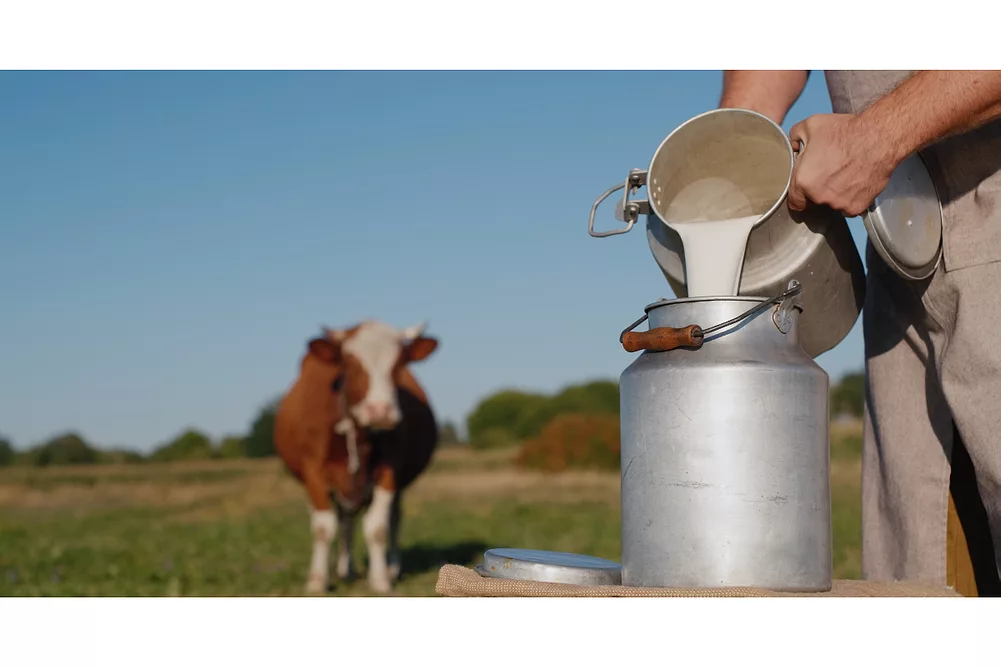
India has firmly established its position as the global leader in milk production, and Tamil Nadu is emerging as a key player, not by sheer volume, but through a strong cooperative network, a growing private sector presence, and a strategic focus on sustainability.
India’s Dairy Surge: A Global Milestone
Three decades after the iconic “Doodh Hai Wonderful” campaign by the National Dairy Development Board (NDDB) redefined milk as an aspirational drink, India’s dairy sector has hit new highs. As of 2023–24, India’s per capita milk availability surged to 471 grams per day, significantly above the global average of 394 grams.
Milk output has increased by an impressive 63.6% over the last decade, rising from 146.3 million tonnes in 2014–15 to 239.3 million tonnes in 2023–24, driven by rising domestic demand, improved rural incomes, and government-led cooperative initiatives.
Tamil Nadu: Building Strength Beyond Scale
While Tamil Nadu ranks 11th in total milk production nationwide, it stands 4th in cooperative milk procurement—a critical indicator of organised sector strength. The state’s annual milk output has increased from 8.75 million tonnes in 2020 to 10.8 million tonnes in 2024.
According to IMARC Group, Tamil Nadu’s dairy market was valued at ₹1.38 lakh crore in 2024 and is projected to reach ₹4.23 lakh crore by 2033, registering a CAGR of 12.61%. Both demand-side dynamics and efficient procurement systems fuel this growth trajectory.
Private Dairies Drive Diversification and Scale
Private players are transforming Tamil Nadu’s dairy landscape with investments in value-added products, exports, and consumer brand expansion.
-
Hatsun Agro Product Ltd, India’s largest private dairy, processes over 40 lakh litres of milk per day, operating a vast network of 4,000 retail outlets. With popular brands like Arokya, Arun Ice Creams, and Ibaco, the company posted ₹8,699 crore in revenue in FY 2023–24. Hatsun is doubling its dairy exports from ₹13 crore to ₹26 crore and recently acquired Milk Mantra Dairy in Odisha for ₹233 crore, signalling its pan-India ambitions.
-
Milky Mist Dairy Food Pvt Ltd, known for its dominance in paneer and cheese, is evolving into a full-stack dairy FMCG player. Its Erode facility—the largest paneer plant in India—produces 150 tonnes daily. With ₹2,349 crore in revenue in 2024–25 and 108 branded parlours, the company has filed for an IPO and expanded into frozen foods, RTE meals, and confectionery.
-
Akshayakalpa Organic, based in Karnataka but operational in Tamil Nadu, is spearheading sustainable dairy farming through farm cluster models. Its Chengalpet cluster showcases a model where farmers earn up to ₹1 lakh per month, thanks to clean feed practices, organic certification, and productivity-focused interventions.
Organised Market Edge: Tamil Nadu’s Competitive Advantage
Despite larger milk-producing states like Uttar Pradesh, Tamil Nadu’s edge lies in its organised market penetration, where over 35% of milk procurement is handled by cooperatives and organised entities. In comparison, Uttar Pradesh sees only 10% of its dairy sector operating in an organised manner.
The state’s farmers enjoy the highest procurement prices in India, a direct result of cooperative strength and private sector competition. The ongoing expansion of Amul through Andhra Pradesh’s Chittoor district, Nandini’s cattle feed initiatives, and Aavin’s grassroots farmer mobilisation is further heating up competition.
Challenges and the Road Ahead
While the growth outlook remains robust, experts stress the need for better dairy infrastructure, feed-to-milk efficiency, and widespread farmer education in precision dairy practices.
Industry veterans like R.S. Sodhi of the Indian Dairy Association suggest that scalable, sustainable models, such as Akshayakalpa’s cluster approach, could become blueprints for improving both farmer incomes and consumer trust.
With its strong cooperative base, private sector innovation, and sustainability focus, Tamil Nadu is fast positioning itself not just as a dairy producer, but as a model for the future of Indian dairying.