


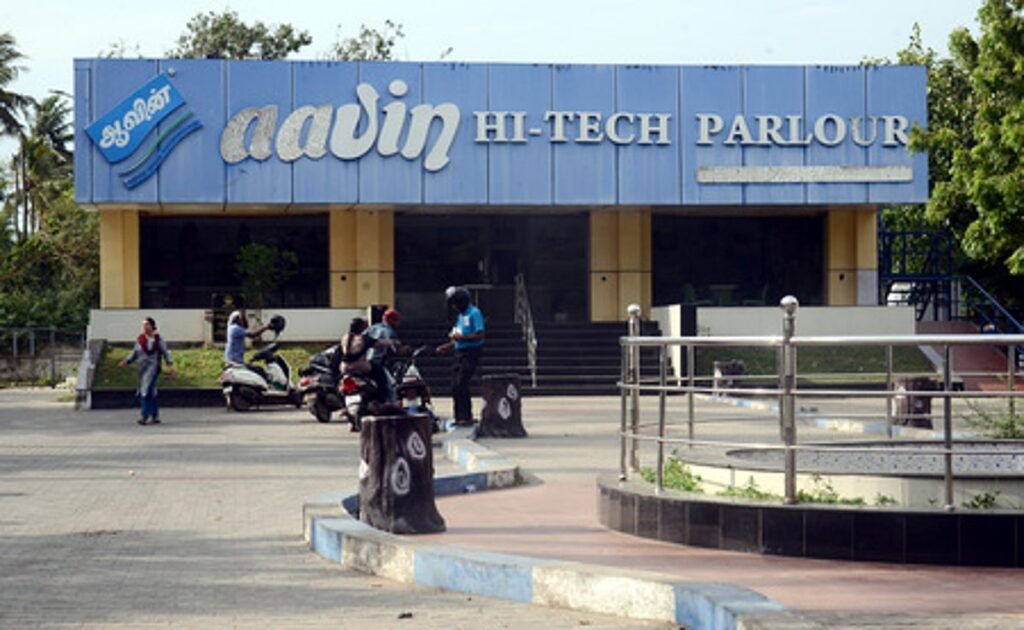
The Tamil Nadu government has revised the milk procurement prices paid by Aavin, increasing the rates for both cow and buffalo milk from September 1, 2026. The revised procurement prices are aimed at increasing payments to milk suppliers, while the retail prices of Aavin milk will remain unchanged.
Under the new Government Order (GO), cow milk meeting the benchmark of 8.2% SNF (Solid-Not-Fat) and 4.3% fat will qualify for a procurement price of ₹44 per litre.
The revised rate represents an increase from the previous cow milk procurement price of ₹38 per litre. The procurement price for buffalo milk has also been increased from ₹47 to ₹53 per litre.
New Cow Milk Procurement Structure
According to the government order, the revised ₹44 per litre cow milk procurement price consists of a base procurement rate of ₹36 per litre and an incentive of ₹8 per litre.
The Tamil Nadu government will provide ₹600 crore annually to Aavin to support the incentive component. District milk producers’ unions will contribute an additional ₹120 crore toward the revised procurement arrangement.
The changes were announced in the Tamil Nadu Assembly last month under Rule 110 and have now been formally implemented through the government order.
The revised procurement structure links the full procurement price to specified quality parameters, particularly milk fat and SNF content.
Buffalo Milk Price Increased to ₹53
Alongside the increase in cow milk procurement prices, the government has raised the procurement price for buffalo milk by ₹6 per litre.
The new buffalo milk procurement price stands at ₹53 per litre, compared with the previous rate of ₹47 per litre.
The changes cover procurement through Aavin’s milk producers’ cooperative network and are intended to provide higher returns to milk suppliers while maintaining the existing consumer price of Aavin milk.
Changes in Cooperative Society Deductions
The government order also revises the contribution collected from milk suppliers toward the administrative expenses of primary milk producers’ cooperative societies.
The deduction has been increased from ₹1.25 to ₹1.75 per litre.
In addition, district milk unions will deduct ₹1 per litre from suppliers, with the amount credited to farmers. These deductions form part of the revised financial arrangement governing milk procurement through the cooperative system.
The government has also directed primary cooperative societies to make procurement payments directly into farmers’ bank accounts through Direct Benefit Transfer (DBT).
This payment mechanism is intended to ensure that procurement payments reach eligible milk suppliers directly through their bank accounts.
Quality Standards for Milk Procurement
The new order also specifies minimum quality requirements for milk accepted for procurement.
Milk containing less than 3% fat and 7.5% SNF should not be procured. The order states that such milk should be confiscated and that the supplier should not receive payment for it.
The specified quality thresholds reinforce the importance of milk composition in determining procurement eligibility and payments within the Aavin system.
Retail Milk Prices Remain Unchanged
Despite the increase in procurement prices, the retail price of Aavin milk will remain unchanged under the revised arrangement.
The government-supported incentive and contributions from district milk producers’ unions will therefore help finance the higher procurement rates without an immediate increase in the consumer price of Aavin milk.
The revised procurement policy represents a significant change in the payment structure for milk suppliers associated with Tamil Nadu’s cooperative dairy network. With higher rates for qualifying cow and buffalo milk, government financial support and direct bank transfers, the new arrangement is expected to reshape the economics of milk procurement for Aavin and its producer network.
The implementation from September 1 makes the revised procurement rates applicable across the relevant Aavin procurement system, while the existing retail prices continue for consumers.