


How Frontrunner Farms is turning the world’s largest dairy sector’s quality blind spot into a farmer income opportunity — THROUGH THE “HERD INTELLIGENCE PROGRAM” — one 10-day cycle at a time.
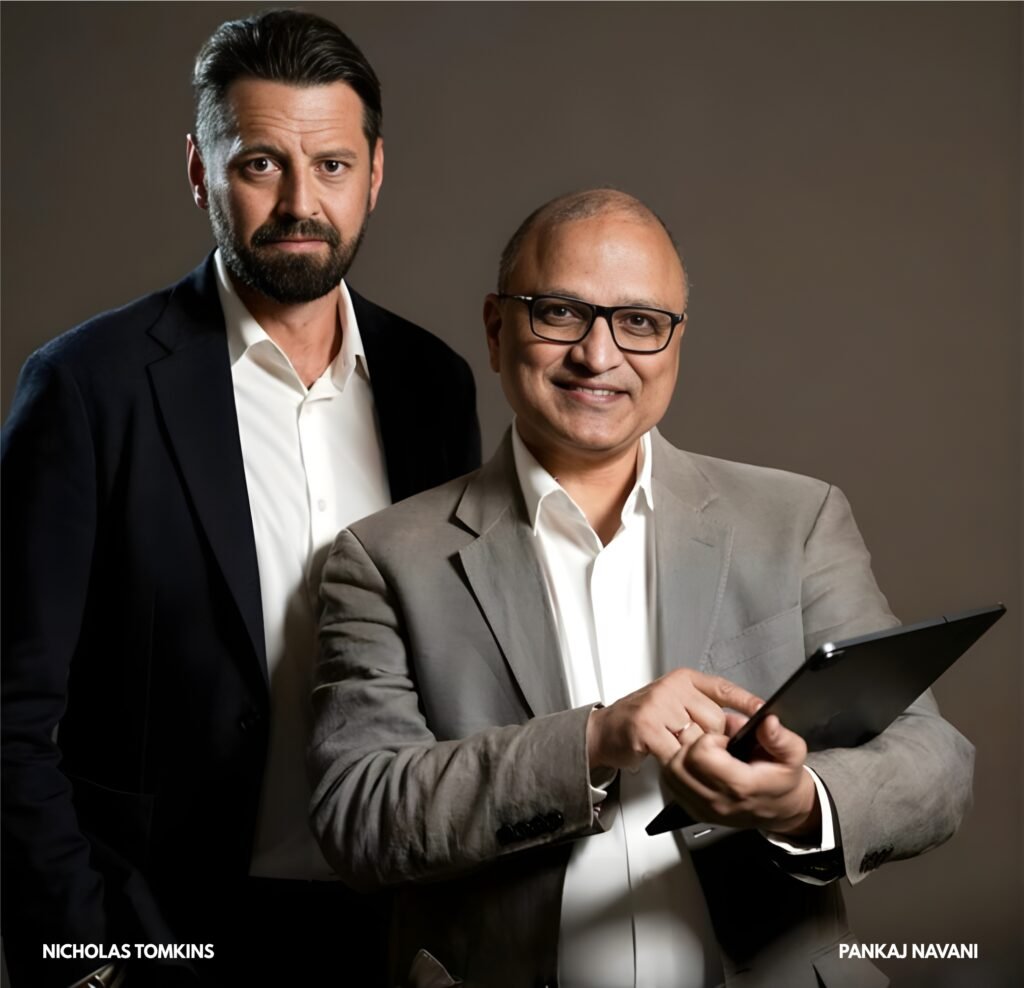
Pankaj Navani, Chief Data Architect & CEO, FFIN
The Shift from Farming to System-Building
Pankaj Navani did not set out to build a data company. His early years at Binsar Farms were spent at the sharp end of Indian dairying—managing herds, building a brand, and watching the challenges of scaling compound as demand grew. The lesson came gradually, then all at once: India’s dairy sector does not have a supply problem; it has quality issues.
“We were producing more milk every year, but nobody could tell a farmer exactly what that milk was worth beyond Fat and SNF,” Navani recalls. “Antimicrobial resistance, aflatoxin contamination, somatic cell counts — these were invisible costs draining farmer income. The system simply wasn’t designed to see them.”
That insight became the founding thesis of Frontrunner Farms India Pvt Ltd (FFIN): milk quality, not milk volume, is India’s real bottleneck. Fixing it would require not better cows or bigger sheds, but better information—delivered continuously, at farm level, in a language that translates directly into rupees per litre.
The transition from farmer to system-builder was not a pivot so much as an expansion of scope. Navani’s years managing herds had taught him that the information asymmetry in Indian dairying was not incidental—it was structural. Processors had no economic incentive to test beyond fat and SNF, while farmers had little visibility into the hidden costs eroding their margins. The entire value chain was optimised for throughput, not quality.
FFIN was built to turn that equation on its head. Quality is not a cost imposed on the farmer; it is income already being produced and silently forfeited—recoverable through better data, faster correction, and a system designed to make clean milk pay.
Nicholas Tomkins COO & Commercial Strategy Lead
A Global Lens on an Indian System
Nicholas Tomkins brought a different vantage point. With years of exposure to dairy systems across Europe, and the Americas, his first impression of India’s dairy ecosystem was one of paradox: a country that is the world’s largest milk producer, yet one where the vast majority of output moves through value chains that neither measure nor reward quality at the farm gate.
“In mature dairy markets, quality is baked into the price signal. A farmer in England or the Netherlands knows exactly how somatic cell count (SCC), bacterial counts, and residue status affect their cheque,” Tomkins explains. “In India, the price signal is almost entirely blind to these parameters. The result is a system where a farmer producing genuinely clean milk receives the same rate as one whose milk carries hidden liabilities.”
The disconnect, in Tomkins’ analysis, is not one of capability but of architecture. Indian farmers—particularly those running progressive, purebred Holstein Friesian operations in states like Punjab—possess the genetics, the infrastructure, and the technical know-how required to produce high-quality milk.
Why Quality Never Became the Default
Ambition. What they lack is a feedback loop that connects what happens in the parlour to what shows up in the payment.
India has discussed milk quality for decades. The Food Safety and Standards Authority of India (FSSAI) has set thresholds. Export ambitions have been articulated in policy document after policy document. Yet the procurement system still operates, in the main, on two parameters: fat percentage and solids-not-fat.
The reasons are structural. Testing for a wider panel—SCC, aflatoxin AT-M1, antibiotic residues, bacterial counts—requires laboratory infrastructure, cold-chain discipline, and analytical capacity that most collection points lack. More fundamentally, it demands an economic model in which quality measurement pays for itself. Without a price premium that flows back to the farmer, testing becomes a cost centre rather than a value driver.
There is also a coordination challenge. For most large processors, shifting to a higher-quality procurement model introduces immediate cost and potential supply risk, while the commercial upside remains uncertain and uneven across the market. In a highly competitive procurement environment, no single player can easily move first without risking margin or volume. As a result, the system tends to stabilize around what is acceptable and scalable, rather than what is optimal.
A related gap is the absence of a structured, outcome-linked extension system. In many mature dairy markets, processors invest heavily in upstream technical support—nutrition, herd health, milking practices—because their profitability is directly linked to milk quality. In India, that linkage is weaker. Extension is often fragmented across multiple actors—feed companies, veterinarians, local advisors—each addressing a part of the problem but without a unified view of milk quality outcomes at the farm level. As a result, interventions can be inconsistent, reactive, and difficult to measure in economic terms. Without a feedback loop connecting farm practices to milk quality and income, extension remains advisory rather than performance-driven.
This is the gap FFIN identified: not the absence of standards, but the absence of a continuous, farm-level intelligence system that converts quality data into actionable economics—and does so frequently enough to change behaviour.
That system design flaw lies at the heart of the “quality as default” conundrum. The system does not actively discourage quality, but neither meaningfully reward it. Over time, that has created a stable equilibrium where “acceptable” becomes the default.
Inside the Herd Intelligence Program
The Herd Intelligence Program (HIP) positions itself not as a testing service but as an intelligence layer for the dairy value chain — one designed to generate a verified quality record against every litre it touches, continuously and without exception. The distinction matters. A testing service produces a certificate; HIP produces a decision framework for its farmers.
The operating unit is a 10-day cycle, repeated 36 times a year. Each cycle begins with daily bulk-tank sample collection from enrolled farms, maintaining cold-chain integrity from parlour to laboratory. Samples pass through a three-lab architecture. PDS Lab handles primary screening (fat, SNF, temperature, methylene blue reduction time); FFIN’s in-house laboratory performs Certificate of Analysis grading and classification; and GADVASU—the state veterinary university in Ludhiana—provides confirmatory testing, calibration, and scientific oversight.
Across these three nodes, each sample is assessed against 7–10 parameters, including SCC, aflatoxin M1 (measured via competitive ELISA and validated against NABL-accredited LC-MS reference), antibiotic residues, and compositional markers. On day ten, a compiled scorecard is delivered to the farmer with RAG (red, amber, green) status indicators, trend lines, identified blockers, and a prioritised action plan.
The three-lab design is deliberate: no single point of failure while adding a governance layer that strengthens scientific credibility. Between August 2025 and March 2026, the system generated 3,619 lab records, 2,356 daily SCC readings, and 2,400 daily M1 readings across 50 purebred Holstein Friesian farms in five districts of Punjab.
Turning Data into Farmer Income
Farmers adopt what pays. Navani is unequivocal on this point. HIP’s design philosophy rests on translating every technical parameter into a rupee value that a farmer can act on within a defined time window.
The economics are revealing. Across a 13-farm subset, HIP identified approximately INR 3.77 crore in annual revenue at risk—income lost to invisible quality gaps. The composition gap alone—the difference between actual and achievable fat and SNF levels—accounts for INR 55–70 lakh annually, validated against processor payment records.
Then come the hidden losses. Elevated SCC reduce yield even when fat percentages appear acceptable—what FFIN terms the “fat percentage paradox.” A farm may appear healthy on a processor’s ledger while losing litres per cow per day to subclinical mastitis. Aflatoxin M1 contamination, often driven by mycotoxin-laden feed, creates rejection risk and, in export markets, outright exclusion. Antibiotic residues, when detected, result in blocked milk days—entire consignments diverted or discarded.
HIP’s intervention model is built around the 72–96 hour recovery window for aflatoxin M1: the time required for contamination to clear once the feed source is corrected. Frequent testing and rapid reporting give farmers a critical window to act before losses compound.
Baseline data underscores the scale of the opportunity. Across the study period, 63% of SCC readings exceeded 600,000 cells per millilitre, and 51% of M1 readings breached the FSSAI action limit of 500 parts per trillion. These are not marginal farms but some of Punjab’s most progressive operations—suggesting that sector-wide exposure is significantly larger.
The Discipline of Data Integrity
With multiple collection points, three laboratories, and 36 testing cycles per year, maintaining data integrity is non-trivial. FFIN addresses this through end-to-end traceability—every sample tagged from bulk tank to lab result—and a tiered quality assurance protocol that includes cross-validation and periodic calibration audits overseen by GADVASU.
The methodology paper underpinning HIP, currently under peer review and targeted at journals such as the Indian Journal of Dairy Science and Tropical Animal Health and Production, applies the Hortet and Seegers (1998) meta-analysis framework with a deliberate conservative bias. HIP’s loss coefficients are 5–32% below published central estimates—ensuring that revenue impact claims remain defensible.
“If we overstate the numbers, farmers lose trust in the first cycle,” Navani notes. “We would rather understate and let the data surprise them.”
Creating a Market for Gem-Quality Milk
FFIN’s downstream ambition extends beyond farm optimisation. Under the PureGEM ingredient brand—Pure Goodness Ensured Milk—the company aims to create a new category: assured, traceable, premium-quality milk with a defined specification.
PureGEM-grade milk must meet strict thresholds, including SCC below 400,000 cells per millilitre, aflatoxin M1 below 500 parts per trillion (FSSAI limit), zero antibiotic residues, and full traceability to farm and feed source.
The commercial logic is straightforward: buyers—whether export-oriented processors or institutional purchasers—will pay a premium for milk backed by a Certificate of Analysis rather than assumption. India’s dairy export performance supports this thesis: exports reached $662 million in 2024, up 80% year-on-year, with a shift toward value-added fats. The Gulf Cooperation Council region alone accounts for roughly 45% of export value, where quality assurance is a prerequisite for market access.
Why Punjab, Why Now
Launching HIP at GADVASU in Ludhiana on 4 April 2026, in collaboration with the Punjab Dairy Farmers Association (PDFA), is a strategic move. Punjab hosts some of India’s most advanced dairy farms—high-yielding Holstein herds, mechanised milking, TMR feeding, and sexed semen adoption exceeding 60%.
GADVASU provides scientific credibility, while PDFA offers grassroots linkage—together forming the institutional backbone needed to build trust.
“We deliberately chose the hardest geography first,” Tomkins explains. “Punjab’s farms are large, capital-intensive, and data-literate. If the model works here, it works anywhere in India.”
Scaling the Model: Friction Points
The challenges ahead are clear. Logistics—particularly cold-chain maintenance and sample collection—remain immediate constraints. At scale, the cost of daily testing must be absorbed by value chain participants through premium pricing, reduced losses, or both.
Farmer behaviour is the deeper variable. Even with clear economic signals, changes in feed, hygiene, or infrastructure require both conviction and capital. HIP’s four-tier architecture—Insight, Foundation, Shield, and Advantage—addresses this by building adoption progressively, driven by data rather than sales.
The roadmap reflects this pragmatism:
- Phase 1: Validate methodology across 50+ farms
- Phase 2: Expand to 100–150 farms within 12 months
- Phase 3: Scale to 50,000 litres/day of export-grade milk
Redefining How Milk Is Valued
“We are not building a premium milk brand,” Navani says. “We are building quality infrastructure. Any brand outcome is incidental.”
Tomkins reinforces the point: India does not lack dairy brands—it lacks a system that verifies quality at origin, continuously.
If HIP succeeds, it will establish something fundamentally new: a real-time, farm-level intelligence system that makes milk quality both visible and economically relevant.
Whether this scales nationally or remains a regional model will depend on execution and value chain alignment. But the underlying insight is difficult to ignore: quality becomes the default only when it pays.
For an industry long anchored in fat and SNF, HIP signals a shift—from commodity milk to intelligent milk. And if that shift holds, it will not be driven by policy or aspiration, but by a farmer reading a 10-day report and recognising a simple truth: clean milk pays better.