


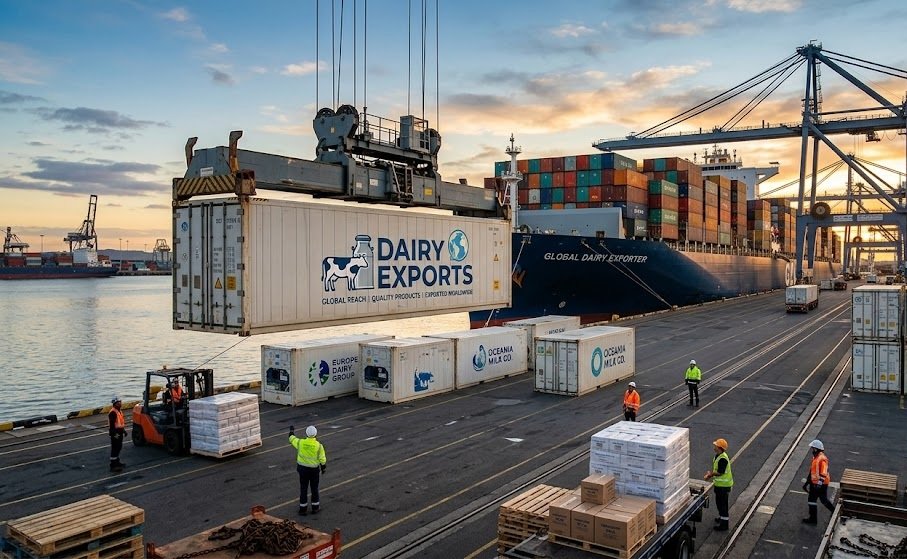
Ukraine’s Dairy Exports Fall Sharply as EU Tariff Quotas and Weak Prices Pressure the Market
Ukraine’s dairy sector is facing mounting challenges as the reinstatement of European Union tariff quotas and declining global commodity prices significantly reduce export opportunities for domestic processors.
According to preliminary data from Ukraine’s State Statistics Service and industry associations, the country’s dairy exports recorded substantial declines in both volume and value during June 2026, raising concerns over profitability and market stability.
Dairy Export Volumes Continue to Decline
Ukraine exported approximately 11.53 thousand metric tonnes of dairy products in June 2026, generating export revenues of $35.06 million.
Compared with May 2026:
- 📉 Export volumes declined by 23%
- 📉 Export revenues fell by 31%
On an annual basis:
- 📉 Export volumes were down 7%
- 📉 Export earnings decreased by 23%
During the first half of 2026, Ukraine exported:
- 🥛 63.78 thousand tonnes of dairy products (-10%)
- 💰 Total export revenues of $180.87 million (-20%)
Ice Cream and Condensed Dairy Products Lead Exports
Despite the broader market slowdown, certain categories continued to perform relatively well.
The leading export categories in June included:
🍦 Ice cream – 28%
🥛 Condensed milk and cream – 26%
🧀 Cheese – 14%
🧈 Butter – 10%
🧬 Casein – 8%
Ukraine recorded growth in exports of:
- Milk and non-condensed cream
- Fermented dairy products
- Whey products
- Ice cream
However, exports of higher-value commodities such as butter and cheese experienced notable declines.
Butter Market Under Significant Pressure
One of the biggest concerns for the Ukrainian dairy sector remains the butter market.
Compared with May 2026:
- 🧈 Butter export volumes declined by 78%
- 💰 Butter export revenues plunged by 83%
Industry participants indicate that weak international demand and declining global prices have resulted in increasing inventories of unsold dairy products.
Butter and milk powders traditionally represent the backbone of Ukraine’s dairy export portfolio, making the slowdown particularly challenging for processors.
Growing stock accumulation is now exerting downward pressure on domestic milk prices and processor margins.
EU Tariff Quotas Reshape Trade Dynamics
The reinstatement of tariff quotas between the EU and Ukraine has further complicated export conditions.
Reduced preferential access to European markets is limiting opportunities for Ukrainian exporters at a time when global dairy commodity prices are already under pressure.
Simultaneously, cheese imports from Europe continue to rise, increasing competitive pressure on domestic producers.
This changing trade environment is forcing Ukrainian dairy companies to:
- Explore alternative export destinations
- Diversify product portfolios
- Improve competitiveness in value-added products
- Manage rising inventory levels
Global Market Weakness Adds to Challenges
The broader global dairy market has remained relatively weak since the second half of 2025.
Key factors contributing to the downturn include:
- 🌍 Strong milk production in major exporting regions
- 📉 Falling commodity prices
- 🥛 Softer international demand
- 🚢 Increased competition among exporters
These developments have made it increasingly difficult for smaller exporting nations to maintain market share and profitability.
Outlook: Industry Faces a Difficult Adjustment Period
Looking ahead, Ukraine’s dairy sector may continue to face short-term challenges unless global demand conditions improve.
Key factors to monitor include:
🔹 Future EU trade arrangements
🔹 Recovery in butter and milk powder demand
🔹 Global commodity price trends
🔹 Inventory developments among processors
🔹 Expansion into alternative export markets
While categories such as ice cream, whey and fermented dairy products continue to show resilience, prolonged weakness in butter and milk powder markets could continue to weigh on producer incomes and milk prices.
The current environment highlights the growing importance of diversification and value addition in ensuring long-term resilience for Ukraine’s dairy industry.