


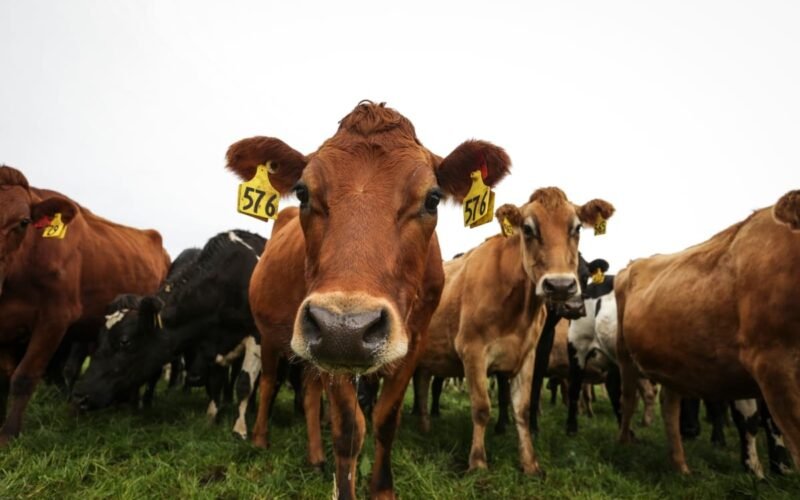
Uttarakhand’s government has prepared a comprehensive dairy development action plan targeting more than 200,000 small and marginal farmers across the state. The initiative aims to improve milk productivity, strengthen livestock health services, expand dairy cooperative networks and provide producers with better access to domestic and international markets.
The programme will receive financial support from the Gates Foundation, while GDI Partners will provide advisory assistance. The initiative was discussed at a government-level meeting chaired by Dr. B.V.R.C. Purushottam, secretary of Uttarakhand’s Animal Husbandry and Dairy Development Department.
The proposed measures focus on addressing several challenges faced by small-scale dairy producers, including limited access to quality breeding services, balanced animal feed, veterinary assistance, milk collection infrastructure and organised markets. By coordinating these areas, the government aims to strengthen dairy-based livelihoods and improve the long-term sustainability of milk production across Uttarakhand.
Livestock Productivity, Nutrition and Veterinary Care at the Centre
A major component of the action plan is improving the productivity of dairy animals through better breeding practices and reproductive healthcare. Proposed interventions include artificial insemination, embryo transfer and other livestock improvement techniques intended to support more productive dairy herds.
Animal selection, timely pregnancy diagnosis and accessible reproductive services will also form part of the programme. These measures could help farmers manage breeding cycles more effectively, improve herd productivity and make better use of available livestock resources.
Animal nutrition is another priority. The government plans to promote balanced feed preparation and establish mini feed mills to improve the local availability of suitable livestock feed. Reliable access to quality feed is important for maintaining animal health, supporting milk production and managing dairy farming costs.
The programme also proposes technology-enabled veterinary services, including animal-health advisories, pregnancy-testing kits and low-cost artificial insemination. If implemented effectively, these interventions could help farmers obtain essential services closer to their villages and reduce delays in reproductive management and veterinary care.
Strengthening Dairy Cooperatives and Market Access
Beyond farm-level improvements, the initiative seeks to strengthen dairy cooperative societies and expand milk collection and processing networks. Cooperatives can help small producers aggregate milk volumes, access organised buyers and improve their connections with dairy processors.
Expanding collection infrastructure is particularly important in geographically challenging regions such as Uttarakhand, where mountainous terrain and dispersed villages can complicate milk transportation. Efficient collection systems, suitable transport arrangements and reliable quality testing are essential for maintaining milk quality and reducing losses.
The action plan also identifies domestic and international market access as an area of development. Stronger links between producers, cooperatives, processors and buyers could help create more dependable marketing channels for village-level dairy farmers.
However, the benefits will depend on effective implementation, including adequate chilling facilities, quality-control systems, trained personnel and sufficient processing capacity.
Key Components of Uttarakhand’s Dairy Development Plan
| Focus area | Proposed intervention |
|---|---|
| Target beneficiaries | More than 200,000 dairy farmers |
| Livestock breeding | Artificial insemination and embryo transfer |
| Animal nutrition | Balanced feed and mini feed mills |
| Veterinary services | Animal-health advisories and pregnancy testing |
| Technology | Low-cost reproductive services and diagnostic support |
| Cooperatives | Strengthened dairy societies and milk collection |
| Processing | Expanded milk collection and processing networks |
| Market development | Access to Indian and international buyers |
Partnerships and Implementation
The action plan involves government departments and livestock development institutions, supported by external development partners. Participants at the meeting included Animal Husbandry Director Dr. Uday Shankar, Dairy Development Director Ela Giri, Livestock Development Board chief executive Dr. Rakesh Singh Negi, and Gates Foundation representatives Nidhi Jain and Priyanka Kakadu.
The collaboration is intended to support planning and implementation across breeding, nutrition, animal healthcare, cooperative development and dairy processing. Financial support from the Gates Foundation and advisory assistance from GDI Partners are expected to contribute to the programme’s development.
The government has also identified trained personnel, effective service delivery, quality control, transport infrastructure and reliable milk buyers as important requirements for translating the action plan into measurable outcomes.
Implications for Uttarakhand’s Dairy Industry
The proposed initiative could create opportunities to improve rural incomes, strengthen dairy cooperatives and increase the efficiency of milk production across Uttarakhand. Better breeding services, nutrition and veterinary support may help farmers improve productivity, while stronger collection and processing networks could connect small producers with organised markets.
For the wider Indian dairy industry, the programme highlights the importance of combining farm-level productivity improvements with investment in infrastructure and market access. Its long-term impact will depend on how effectively the proposed measures reach farmers and whether improved production is matched by dependable procurement and processing capacity.
As implementation progresses, farmer participation, service availability, milk quality and market connectivity will be important indicators of success. The initiative represents a proposed development pathway for strengthening Uttarakhand’s dairy economy and supporting more than 200,000 small and marginal dairy farmers.