


The Uttarakhand government is preparing a special initiative to strengthen dairy farming, improve milk productivity and expand market access for small and marginal farmers across the state. The programme aims to benefit more than 200,000 dairy farmers by improving livestock breeding, animal nutrition, veterinary services and cooperative infrastructure.
According to a report by Garhwal Post, the state government has developed an action plan to strengthen dairy-based livelihoods and help producers access national and international markets. The initiative is expected to support higher farm incomes while improving the resources available to dairy farmers.
The programme will receive financial support from the Gates Foundation, while GDI Partners will provide advisory assistance. A government-level meeting to discuss the action plan was chaired by Dr. B.V.R.C. Purushottam, Secretary of the Animal Husbandry and Dairy Development Department.
Improved Breeding and Nutrition to Boost Milk Productivity
Improving livestock productivity is a central component of the proposed initiative. The programme will focus on artificial insemination (AI), embryo transfer and better breeding practices to support the development of more productive dairy herds.
Scientific breeding interventions can help farmers improve herd quality and production potential when supported by appropriate animal selection, nutrition and veterinary care. Wider access to these services could be particularly valuable for smallholders who face difficulties obtaining timely and affordable livestock support.
Animal feed and nutrition will also receive considerable attention. The government plans to encourage balanced animal feed preparation and establish mini feed mills to improve the availability of suitable feed at the local level.
Proper nutrition is essential for maintaining animal health, supporting milk production and improving reproductive performance. Locally accessible feed supplies could help farmers manage feeding costs and reduce the challenges associated with obtaining consistent-quality inputs.
Technology to Strengthen Animal Healthcare Services
The programme will incorporate technology-based interventions to make livestock services more accessible and effective. Proposed measures include animal health advisories, pregnancy testing kits and low-cost artificial insemination services.
Timely pregnancy diagnosis can help farmers manage breeding schedules, while accessible animal health advice may support earlier identification of potential problems. Affordable reproductive services could also help farmers improve breeding outcomes without incurring excessive costs.
These interventions are intended to complement existing animal husbandry services rather than operate independently of them. Effective implementation will require trained personnel, reliable service delivery and awareness among farmers about the availability and appropriate use of the technologies.
Improved access to animal healthcare can help reduce avoidable production losses and support more consistent milk supplies for collection and processing.
Cooperatives and Processing Networks to Expand Market Access
Strengthening dairy cooperative societies and market infrastructure is another major priority. The initiative aims to expand milk collection and processing networks, enabling farmers to connect more effectively with organised dairy markets.
For small-scale producers, dependable milk collection arrangements can reduce the difficulties of transporting perishable milk and finding regular buyers. Cooperative networks can also help aggregate milk volumes, improve coordination and create stronger links between village-level producers and processors.
The government’s focus on national and international market access reflects an effort to connect higher production with broader commercial opportunities. However, the benefits will depend on the availability of suitable processing facilities, quality-control systems, transport infrastructure and buyers willing to procure milk and dairy products at sustainable prices.
Expanding market access alongside production improvements will therefore be important to ensure that additional milk output translates into stronger farm incomes.
Government, Development Partners and Dairy Institutions Collaborate
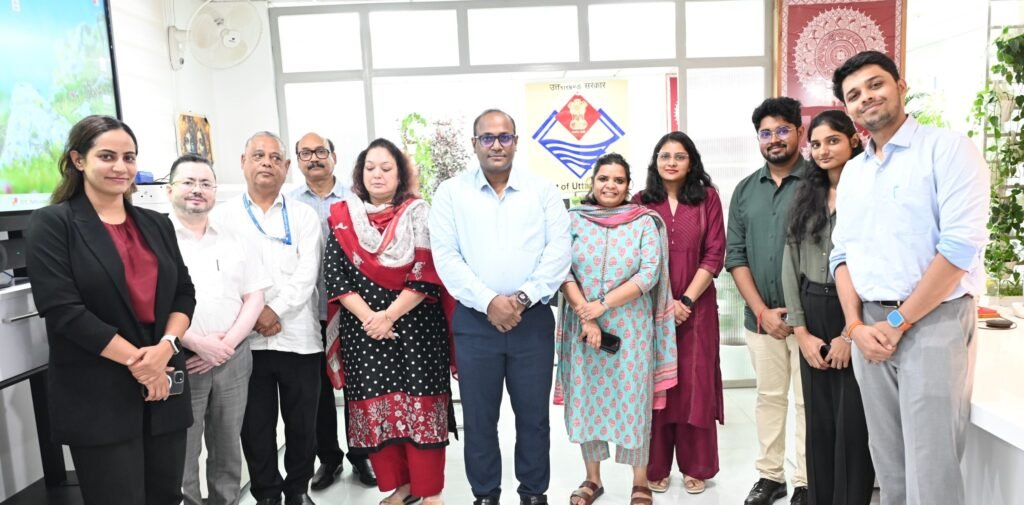
The action plan was discussed at a meeting attended by senior officials from Uttarakhand’s animal husbandry and dairy development institutions, alongside representatives of the Gates Foundation.
Participants included Animal Husbandry Director Dr. Uday Shankar, Dairy Development Director Ela Giri, Livestock Development Board CEO Dr. Rakesh Singh Negi, and Gates Foundation representatives Nidhi Jain and Priyanka Kakadu.
The involvement of government departments and development partners is intended to coordinate technical assistance, funding and implementation across different parts of the dairy value chain.
Outlook for Uttarakhand’s Dairy Sector
The proposed initiative represents a broad effort to improve dairy farming through coordinated investments in breeding, nutrition, animal health, technology and market infrastructure.
If implemented effectively, the programme could help small and marginal dairy farmers improve livestock productivity, strengthen links with cooperatives and access more reliable markets. Better integration between farm-level support and milk processing will be essential to achieving these objectives.
With a target of more than 200,000 farmers, the initiative could become an important part of Uttarakhand’s strategy to strengthen rural livelihoods and develop a more productive, market-connected dairy sector. Its long-term success will depend on effective delivery of services and measurable improvements in milk production, market access and farmer incomes.