


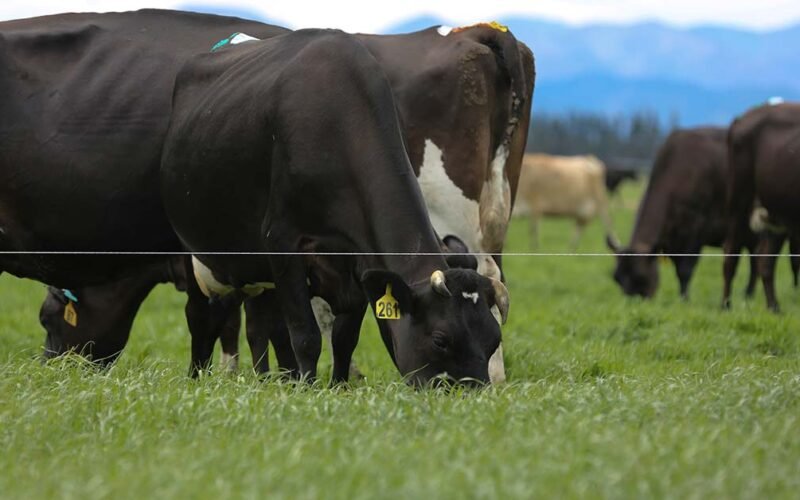
Dairy farmers across New Zealand’s Waikato region have recorded significant improvements in milk production during the latest season, supported by better pasture management, genetic improvements and favourable growing conditions. However, rising farm operating expenses have limited the financial benefits of higher production, highlighting the growing importance of cost management and operational efficiency in the dairy industry.
According to regional benchmarking data compiled by Cooper Aitken, owner-operator dairy farms increased their average milk production per farm by 7% year-on-year. Over the past six seasons, production per farm has grown by 21%, while milk output per hectare has increased by 18%. Around 6% of the per-hectare improvement was achieved during the latest season alone.
Cooper Aitken partner Rachel Robb noted that herd stocking rates remained largely unchanged across the surveyed farms. This indicates that productivity improvements were primarily driven by more efficient pasture management, better genetic conversion and favourable seasonal growing conditions rather than an increase in herd numbers.
Average milk production income for owner-operators increased to NZ$1.64 million, compared with NZ$1.47 million in the previous season, reflecting stronger production and improved revenue generation.
Rising Input Costs Challenge Dairy Farm Profitability
Despite higher milk production and increased farm income, operating expenses continued to rise across Waikato dairy operations. Average operating expenditure for owner-operators reached NZ$5.99 per kilogram of milk solids (kgMS), compared with NZ$5.45/kgMS in the previous season.
Fertiliser costs recorded one of the largest increases, rising by 40%, equivalent to an additional NZ$206.65 per hectare. Animal health expenses increased by 20%, adding NZ$30.67 per cow, while purchased feed costs rose by 10%, representing an additional NZ$0.18/kgMS.
These increases reflect the financial challenges associated with maintaining pasture quality, supporting herd health and ensuring adequate nutrition throughout the production cycle.
The higher input costs affected the financial benefits generated through increased milk production, resulting in a slight year-on-year contraction in gross operating profit.
For dairy farmers, managing input expenditure while maintaining milk output has therefore become an increasingly important component of farm management strategies.
Adoption of Agricultural Technology Expands
The benchmarking report also highlighted growing adoption of agricultural technology across Waikato dairy farms.
Around 17% of surveyed farmers reported using wearable technology, including monitoring collars and electronic ear tags, compared with 12% in the previous season.
These technologies allow farmers to monitor animal behaviour, health indicators and reproductive activity. Better access to livestock data can support early identification of health issues, improve breeding management and help optimise herd performance.
As dairy farming becomes increasingly data-driven, technology adoption is expected to remain an important consideration for improving operational efficiency and animal management.
Sharemilkers Record Strong Financial Performance
While owner-operators experienced pressure from rising operating costs, 50:50 sharemilkers recorded one of their strongest financial seasons in recent years.
Their cash income increased by 28%, supported by stronger livestock prices, while financial costs declined by 43%. These developments helped reduce their break-even milk price requirement to NZ$3.00/kgMS, compared with operating costs of NZ$3.42/kgMS.
The improved financial position highlights the importance of livestock trading returns and financing arrangements in determining the overall profitability of sharemilking businesses.
Debt Reduction and Financial Resilience Remain Priorities
The report also examined how Waikato dairy farmers allocated capital gains and cooperative dividend payments, including Fonterra’s capital return.
Rather than directing additional funds towards discretionary expenditure, many farmers prioritised strengthening their financial positions. Approximately 40% allocated capital funds towards reducing term debt, while 24% increased working capital reserves.
These decisions reflect growing attention to financial resilience amid uncertainty surrounding interest rates, input prices and international dairy commodity markets.
The analysis also identified significant differences between top-performing farms and the wider owner-operator group. Top-quartile farms maintained average feed expenditure at NZ$1.46/kgMS, compared with NZ$1.93/kgMS across owner-operators overall. Better labour cost management and disciplined spending also contributed to their performance.
The latest benchmarking results demonstrate that higher milk production alone does not guarantee improved profitability. For New Zealand’s dairy industry, efficient resource utilisation, controlled input expenditure, technology adoption and disciplined financial management remain essential to building productive and financially sustainable dairy operations.