India’s dairy sector, long anchored in the cooperative ethos of the White Revolution, is undergoing a profound transformation. Led by the National Dairy Development Board (NDDB), a new phase of digitalisation is redefining how milk is produced, procured, processed and delivered, with far-reaching implications for farmer incomes, efficiency and sustainability.
This shift marks a structural evolution rather than a cosmetic upgrade. By integrating digital platforms across the value chain, India is seeking to convert scale into resilience, transparency and competitiveness at a time when climate stress, rising costs and global market pressures are intensifying.
NDDB’s Digital Architecture: Building a Unified Dairy Ecosystem
At the core of this transformation is the National Digital Livestock Mission (NDLM), which aims to create a unified livestock ecosystem under the Bharat Pashudhan framework. Each animal is assigned a unique 12-digit Pashu Aadhaar, enabling end-to-end tracking of health, breeding and productivity. With over 35.68 crore livestock tags generated, the database is becoming the backbone of evidence-based policymaking and targeted service delivery.
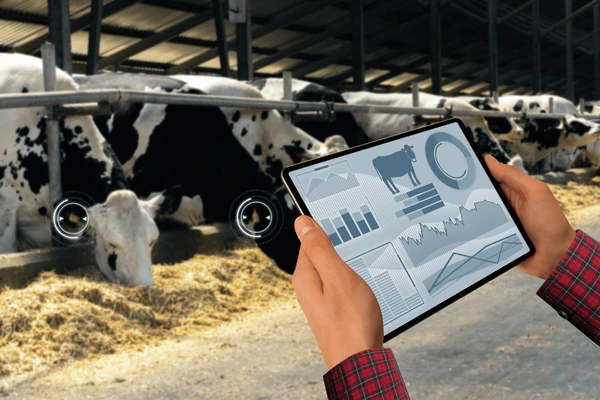
Complementing this is the widespread deployment of the Automatic Milk Collection System (AMCS), which digitises daily milk procurement at village collection centres. By recording quantity, quality and fat content in real time and automating payments directly to farmers, AMCS has significantly reduced information asymmetry and improved trust within cooperative networks. The system now covers more than 26,000 Dairy Cooperative Societies, benefiting over 17 lakh milk producers across multiple states.
Further upstream and downstream integration is enabled through NDDB Dairy ERP (NDERP), a comprehensive enterprise resource planning platform covering finance, inventory, manufacturing, sales, and human resources. Integrated with AMCS and accessible via mobile applications, NDERP allows cooperatives to manage operations from milk reception to consumer dispatch while reducing processing losses through mass-balancing tools.
Data-Led Animal Health and Breeding Management
Beyond procurement and processing, digitalisation is extending deep into animal productivity and breeding systems. Platforms such as the Information Network for Animal Productivity and Health (INAPH) capture real-time data on breeding, nutrition and veterinary interventions at the farmer’s doorstep. This allows authorities and cooperatives to assess programme effectiveness and refine interventions based on outcomes rather than estimates.
Similarly, the Semen Station Management System (SSMS) digitises the entire bull lifecycle, semen production, quality control and distribution of frozen semen doses. Linked with INAPH and the Information Network for Semen Production and Resource Management (INSPRM), the system ensures traceability, biosecurity and standardisation across semen stations critical for long-term genetic sustainability.
The Internet-based Dairy Information System (i-DIS) further aggregates data across milk unions and federations, creating a national cooperative dairy database that supports strategic planning and policy alignment.
Efficiency Gains Through Technology and GIS
Operational efficiency is also improving through technology-enabled logistics. NDDB’s GIS-based milk route optimisation tool helps cooperatives redesign collection and distribution routes, reducing fuel consumption, travel time and spoilage. While modest in isolation, such efficiencies become significant when scaled across India’s vast dairy network.
Context: India’s Dairy Sector at Scale
India remains the world’s largest milk producer, contributing around 25% of global output, with production reaching nearly 248 million tonnes in 2024–25. Per capita milk availability has risen sharply over the past decade, reflecting improved productivity and access. Dairy now accounts for roughly 40% of the total output value of agriculture and allied sectors, underlining its economic and nutritional importance.
However, structural challenges persist. Climate-induced heat stress, disease outbreaks such as lumpy skin disease, rising feed costs and low average milk yields continue to pressure farmer profitability. Moreover, over 70% of marketable milk still flows through the unorganised sector, limiting quality control and value realisation.
From White Revolution to White Revolution 2.0
India’s digital push builds on the cooperative foundations laid by Operation Flood, launched in 1970 under the leadership of Dr Verghese Kurien. While the original White Revolution focused on scale, self-sufficiency and market access, the newly launched White Revolution 2.0 seeks to address contemporary challenges such as productivity gaps, malnutrition, women’s participation and climate resilience.
Digital platforms are central to this ambition. By linking animals, farmers, cooperatives and markets through data, India is attempting to move from volume-led growth to quality- and efficiency-driven expansion.
Strategic Implications for the Dairy Industry
The digitalisation of India’s dairy sector has implications well beyond operational efficiency. For farmers, it promises better transparency, faster payments and targeted services. For cooperatives and processors, it enables tighter cost control, traceability and compliance with food safety and export standards. At a national level, it strengthens India’s ability to respond to disease outbreaks, manage emissions and engage more effectively in global dairy trade.
Yet, technology alone will not be sufficient. Success will depend on farmer training, last-mile connectivity, data governance and the integration of digital tools with genetic improvement, nutrition management and sustainable practices.
Outlook
India’s dairy sector is transitioning from a cooperative success story into a data-driven, farmer-centric ecosystem. If effectively implemented, NDDB’s digital initiatives could transform scale into a strategic advantage, ensuring that India’s global leadership in milk production translates into resilient growth, fairer farmer incomes and improved nutritional security in the years ahead.