The National Dairy Development Board (NDDB) has reinforced its commitment to expanding cooperative dairy development in India’s North-East, following the signing of a tripartite Memorandum of Understanding (MoU) with the Government of Mizoram and the Mizoram Milk Producers’ Cooperative Union Ltd. (MULCO).
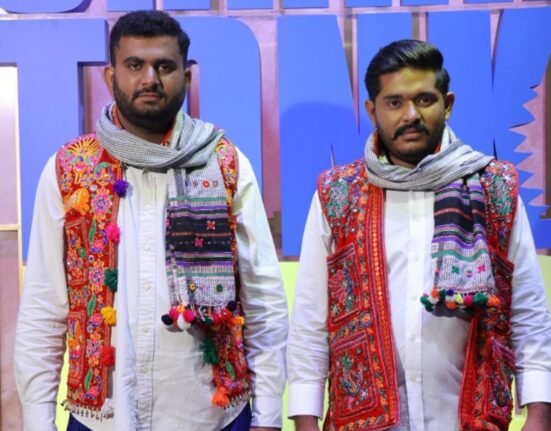
During his visit to Aizawl, NDDB Chairman Dr Meenesh Shah met with milk producers, Board of Directors members, and farmers associated with the Fodder Plus Farmer Producer Organisation (FPO). The interaction formed part of a broader effort to assess on-ground challenges and align future interventions with the specific needs of Mizoram’s dairy sector.
Focus on Structural Gaps in the Dairy Value Chain
Discussions with farmers highlighted several persistent bottlenecks affecting productivity and profitability. These included limited access to quality breeding services, constraints in year-round fodder availability, rising input costs, and concerns over remunerative milk pricing. Collectively, these issues reflect structural gaps that have historically limited the scale and efficiency of dairy operations in the region.
Dr Shah emphasised that NDDB’s approach in Mizoram would extend beyond incremental support to a comprehensive dairy development framework. This would integrate breed improvement, scientific fodder planning, input service delivery, and cooperative strengthening to enhance both production efficiency and farmer incomes.
Fodder Security as a Strategic Priority
The interaction with members of the Fodder Plus FPO underscored the strategic importance of fodder security in a region where land availability, terrain, and climatic variability influence feed systems. NDDB’s engagement signals a shift towards organised fodder production models and community-based fodder enterprises, which are expected to stabilise input costs and reduce dependence on external feed markets.
By linking fodder development with cooperative dairy expansion, NDDB aims to build a more resilient production base capable of sustaining higher milk yields without disproportionately increasing farmer expenditure.
Strengthening Cooperative Institutions
Dr Shah also stressed the importance of active farmer participation in cooperative structures. Institutional governance, member engagement, and professional management of unions such as MULCO are central to ensuring that productivity gains translate into improved returns at the producer level.
The Chairman of the Mizoram Milk Union acknowledged NDDB’s sustained technical and institutional support, expressing confidence that MULCO could evolve into a leading dairy cooperative in the North-East under structured guidance. This reflects a broader vision of positioning Mizoram not merely as a milk-deficient state but as an emerging participant in the regional dairy economy.
Regional Significance
NDDB’s deeper engagement in Mizoram aligns with national efforts to achieve more geographically balanced dairy growth. While India’s dairy expansion has historically been concentrated in western and northern states, the North-East presents untapped potential driven by rising local demand, supportive state policies, and growing interest among smallholder farmers.
The MoU and subsequent field visit signal a transition from exploratory interventions to long-term institutional development, aimed at creating sustainable, farmer-owned dairy systems in the region. As NDDB rolls out its development roadmap, Mizoram’s cooperative dairy sector could serve as a model for structured dairy transformation in other hill and frontier states.