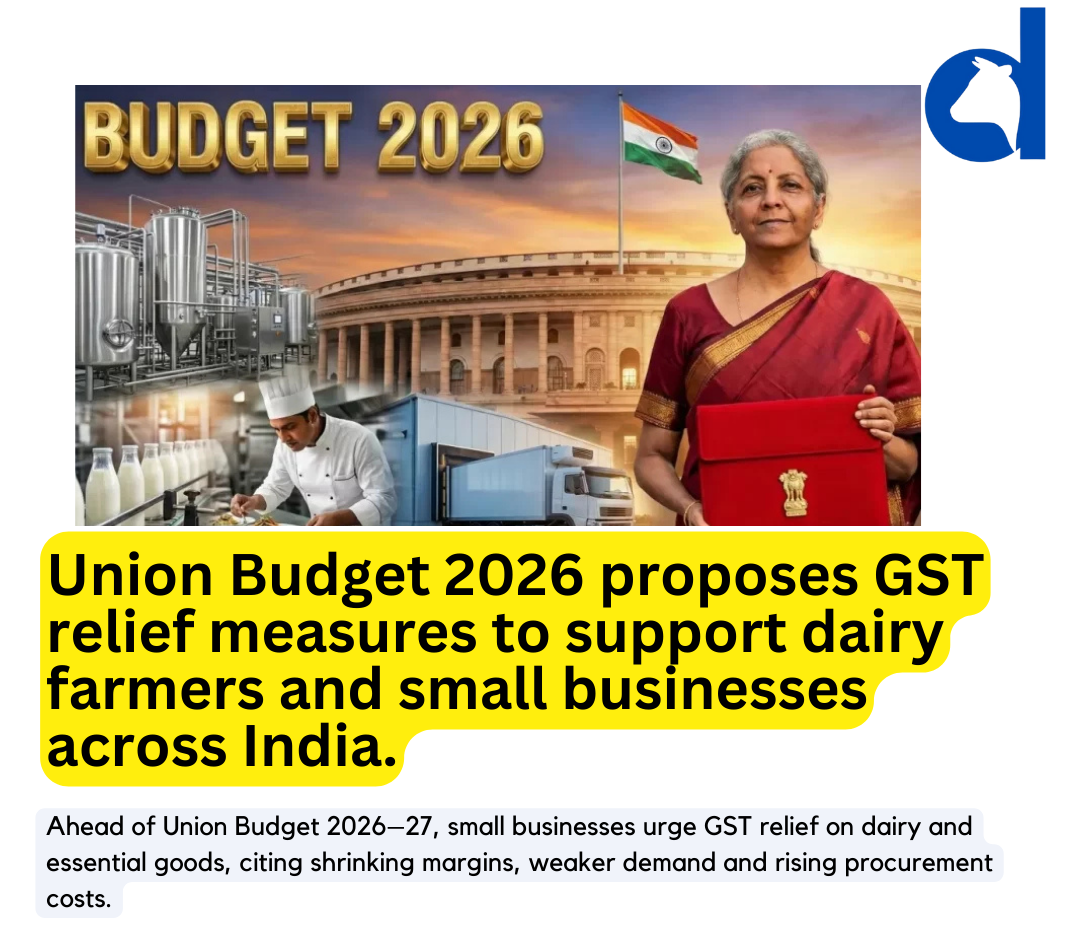
As India approaches the Union Budget 2026–27, small businesses and traders are intensifying calls for Goods and Services Tax (GST) relief on essential commodities, including dairy products. Retailers argue that persistent input cost pressures and slowing consumer demand are eroding already thin margins.
Traders across Hyderabad, including small dairy and grocery retailers, report that indirect taxes on everyday items such as milk and sugar have made it increasingly difficult to balance affordability for consumers with business sustainability. Frequent price increases in essential commodities have also reduced retailers’ ability to maintain adequate stock levels, affecting daily turnover.
Shrinking Margins and Softening Demand
Small retailers say the combination of rising procurement costs and stagnant consumer spending has created a challenging operating environment. With household budgets under pressure, consumers are prioritising essentials and cutting discretionary purchases, which in turn affects overall market sentiment.
For dairy in particular, while liquid milk remains a staple, value-added segments such as flavoured milk, paneer and packaged curd are more sensitive to price fluctuations. Retailers warn that higher tax incidence on processed dairy items can suppress demand in categories that are otherwise key growth drivers for the sector.
Industry Voices Highlight GST Concerns
Retailers and trade representatives have urged the government to reduce or waive GST on essential food and dairy products to ease pressure across the supply chain. They argue that such a move would not only support small traders but also help stabilise consumer demand at the grassroots level.
Some business owners have also called for a broader rationalisation of GST rates on essential household goods, stating that high tax slabs are dampening purchasing power. Lowering GST to more moderate levels, they suggest, could stimulate consumption, improve retail liquidity and support middle-class households.
Implications for the Dairy Value Chain
From a dairy sector perspective, GST policy has implications beyond retail pricing. Lower tax burdens on essential dairy products could:
- Support steady offtake in urban and semi-urban markets
- Improve cash flow for small retailers and distributors
- Encourage consumption of nutrient-rich dairy products
- Stabilise demand for cooperatives and processors dependent on consistent volumes
Given that dairy remains a critical source of income for millions of rural households, any demand-side slowdown can ripple back through procurement networks and farmgate realisations.
Budget Watch: Policy Signals Ahead
The Budget session of Parliament begins on 28 January, with the Union Budget scheduled for presentation on 1 February. As policymakers balance fiscal priorities with growth and inflation concerns, GST relief on essentials has emerged as a key expectation from small business communities.
For the dairy sector, the upcoming Budget will be closely watched not only for tax decisions but also for broader measures affecting consumer affordability, rural incomes and food supply chains. The outcome could influence both short-term retail demand and the longer-term trajectory of value-added dairy consumption in India.