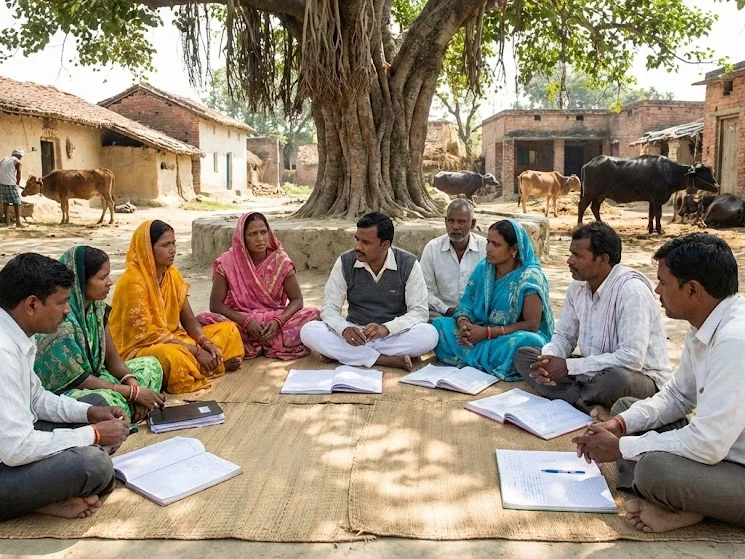
Bihar Chief Minister Nitish Kumar’s announcement to establish Milk Producers’ Committees (MPCs) in every village within two years marks a significant policy intervention aimed at restructuring the state’s fragmented dairy ecosystem. The move signals a shift from ad hoc procurement support to institutionalised village-level dairy governance, aligning Bihar more closely with cooperative-led dairy models seen in states such as Gujarat and Karnataka.
Bihar is India’s third-largest milk producer, yet the sector remains characterised by low farmer realisation, weak aggregation, and limited value addition. The proposed village-level committees are intended to act as the foundational units for milk pooling, quality assurance, transparent pricing, and direct linkage with federations and processors. If implemented effectively, MPCs could reduce farmers’ dependence on informal traders and middlemen, who currently dominate milk procurement in many districts.
From a policy perspective, the initiative also strengthens Bihar’s alignment with the broader national objective of doubling farmers’ incomes through allied agricultural activities, particularly livestock. Dairy offers daily cash flow, unlike seasonal crops, making it critical for small and marginal farmers, landless households, and women-led rural enterprises.
However, execution risks remain. The success of MPCs will depend on capacity building, digital record-keeping, chilling infrastructure, and assured market access. Without parallel investments in bulk milk coolers, veterinary services, and feed supply chains, committees may struggle to translate institutional presence into tangible income gains. Governance standards, democratic functioning, and insulation from political interference will also be key to maintaining farmer trust.
Strategically, Bihar’s plan could serve as a template for eastern India, where dairy potential remains underleveraged despite high cattle populations. If backed by professional management and integration with state milk federations, MPCs could gradually transform Bihar from a volume-driven producer into a value-oriented dairy economy, supporting nutritional security alongside rural livelihoods.