Banaskantha, Gujarat: Women are emerging as an increasingly influential force in Gujarat’s dairy economy, moving beyond traditional roles in milk production and collection to take up responsibilities in cooperative management, quality testing, financial administration and leadership.
The changing role of women is particularly visible across Gujarat’s cooperative dairy network, where the number of women-led dairy societies has grown significantly in recent years. Over the past five years, the number of women-led dairy societies in the state has increased by 21% to 4,562, creating greater opportunities for women in rural communities and strengthening their participation in the organised dairy sector.
The development highlights a broader transformation taking place within Gujarat’s dairy cooperatives, where women are increasingly becoming decision-makers rather than remaining limited to the production side of the value chain.
Women Taking Charge of Dairy Cooperatives
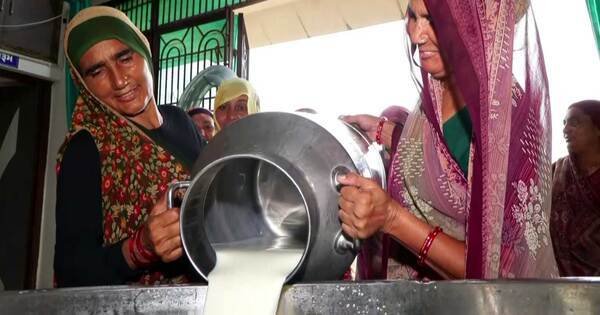
A notable example of this transformation can be seen in Banaskantha district, where the Harsiddhnagar Mahila Doodh Utpadak Sahakari Mandali is managed entirely by women.
The cooperative collects, tests and dispatches approximately 2,000 litres of milk every day to Banas Dairy. Its operations demonstrate how women-led institutions can manage essential parts of the dairy supply chain while providing farmers with a convenient and organised channel for milk marketing.
The cooperative’s activities extend beyond simply collecting milk. Members are involved in testing milk quality and handling computer-based processes associated with dairy operations. This growing familiarity with technology and administrative responsibilities is allowing women to participate in areas that were traditionally dominated by men.
Leelaben Chaudhary, Secretary of the cooperative, said timely payments from Banas Dairy have helped women meet household requirements and gain access to various facilities.
Regular and transparent payments are particularly important for smallholder dairy farmers because milk sales provide a frequent source of household income. Direct access to these earnings can give women greater financial participation in household decisions while reducing dependence on intermediaries.
Improving Access for Women Farmers
Women-led dairy cooperatives are also addressing practical barriers that have historically affected women’s participation in milk marketing.
Dairy farmer Madhuben Judal said the nearby women-run cooperative has made milk delivery considerably easier. Women in the area had previously been hesitant to travel to the Gaumod Dairy, but the establishment of a nearby collection centre has made the process more accessible.
The example demonstrates how the location and management of dairy collection centres can influence women’s participation in the cooperative system.
For rural women who are responsible for household activities alongside dairy farming, convenient access to milk collection facilities can reduce the time and effort required to market milk. This can encourage greater participation in formal dairy networks and help ensure that milk produced by women reaches organised collection systems.
Nearly 12 Lakh Women Among Gujarat’s Dairy Producers
The scale of women’s involvement becomes clearer when looking at Gujarat’s overall dairy sector.
Nearly 12 lakh women are among the state’s 36 lakh dairy producers, demonstrating that women already represent a substantial part of Gujarat’s dairy production base.
Their role is now expanding beyond production into cooperative management and administration.
Women-managed dairy cooperatives currently procure around 57 lakh litres of milk every day, marking a 39% increase over the past five years.
The growth in milk procurement indicates that greater participation by women is not only contributing to social and economic empowerment but is also strengthening the organised dairy supply chain.
As more women become involved in cooperative institutions, their ability to influence milk collection, quality management, payment systems and local decision-making is also increasing.
Growing Economic Contribution
The expansion of women-led dairy cooperatives is accompanied by a significant increase in economic activity.
Daily revenue generated through these cooperatives has increased from approximately ₹17 crore to ₹25 crore, while annual turnover has crossed ₹6,000 crore.
These figures highlight the growing commercial importance of women-managed dairy institutions within Gujarat’s cooperative economy.
The dairy sector has traditionally played an important role in providing rural households with regular income. The increasing involvement of women in cooperative operations means that a larger share of this economic activity is being connected directly with women’s participation in the formal dairy system.
In addition, nearly 80,000 women are involved in the management of primary dairy cooperatives, indicating that women’s participation is gradually moving into governance and institutional decision-making.
Direct Payments Strengthening Financial Participation
Another important development is the increasing use of direct bank payments for women dairy producers.
Ramilaben Chaudhary, a board member of Banas Dairy, highlighted the growing contribution of women to the region’s dairy sector. She said women’s leadership has played a significant role in increasing milk procurement in Banaskantha.
According to her, Banas Dairy’s milk procurement has crossed one crore litres, while 1.98 lakh women are receiving income and payments directly into their bank accounts.
Direct payment mechanisms can play an important role in improving financial transparency and ensuring that dairy farmers receive the income generated from their milk without unnecessary delays.
For women producers, having payments deposited directly into their own bank accounts can also strengthen their financial independence and provide greater control over the income generated from dairy farming.
From Milk Collection to Leadership
The changing role of women in Gujarat’s dairy sector represents a broader shift in the structure of rural cooperative institutions.
Women are increasingly participating in several stages of the dairy value chain, including:
- 🥛 Milk production and collection
- 🧪 Milk quality testing
- 💻 Computer-based dairy operations
- 💰 Payment and financial processes
- 🏢 Cooperative administration
- 👩💼 Institutional management and leadership
This transition is significant because dairy cooperatives are not simply milk collection centres. They connect farmers with processing facilities, markets, payment systems and technical services.
Greater participation by women in these institutions can therefore provide them with increased exposure to business management, technology, financial systems and collective decision-making.
Banaskantha Emerging as an Important Example
Banaskantha’s experience provides an example of how women’s participation can contribute to the development of a local dairy ecosystem.
The district has a strong dairy base, and Banas Dairy plays an important role in milk procurement from producers in the region. The emergence of women-managed cooperatives adds another dimension to this network by creating institutions where women can participate directly in the management of dairy operations.
The Harsiddhnagar cooperative illustrates how a women-led institution can combine traditional dairy activities with modern operational practices. From milk testing to computer-based processes, women members are taking responsibility for functions that are essential to maintaining an efficient and transparent collection system.
The model also demonstrates the importance of creating dairy infrastructure that is accessible to women farmers.
A Shift Towards Greater Financial Independence
For rural women, dairy farming often represents an important source of household income. However, their economic contribution can remain less visible when women have limited involvement in formal marketing and cooperative decision-making.
The increasing number of women-led societies could help change this dynamic.
When women participate directly in milk collection, cooperative management and financial transactions, they gain greater visibility within the formal dairy economy. This can strengthen their ability to participate in household financial decisions and increase their understanding of the commercial aspects of dairy farming.
The growth of women-led cooperatives also provides opportunities for developing skills in leadership, administration, technology and financial management.
Strengthening the Future of Gujarat’s Dairy Sector
Gujarat’s cooperative dairy model has long been an important part of India’s dairy industry. The growing involvement of women adds a new dimension to this model by expanding participation at the grassroots level.
The increase in women-led dairy societies, rising milk procurement and higher revenues indicate that women’s participation is becoming an increasingly important component of the sector’s growth.
The expansion is also taking place at a time when dairy farming is becoming more dependent on efficient milk collection, quality control, digital systems and transparent payment mechanisms. Women’s growing involvement in these areas could help cooperatives adapt to the changing requirements of the modern dairy industry.
The experience of Gujarat suggests that empowering women within dairy cooperatives is not limited to improving social outcomes. It can also contribute directly to the efficiency, scale and economic strength of the dairy value chain.
Looking Ahead
The rise of women-led dairy cooperatives in Gujarat reflects a gradual shift from women being primarily viewed as contributors to dairy production to becoming active participants in the management and governance of the industry.
With 4,562 women-led societies, nearly 12 lakh women dairy producers, 57 lakh litres of daily milk procurement through women-managed cooperatives and nearly 80,000 women participating in cooperative management, the scale of this transformation is significant.
The experience of Banaskantha further demonstrates how accessible collection centres, direct payments, technology adoption and women’s leadership can work together to strengthen rural dairy communities.
As women continue to take greater responsibility for milk collection, quality testing, administration and cooperative governance, their contribution is likely to become an increasingly important part of Gujarat’s dairy growth story.
The transformation is therefore not only about increasing women’s participation in dairy farming. It is about creating a more inclusive cooperative ecosystem in which women have greater access to income, technology, institutional decision-making and leadership opportunities.
For Gujarat’s dairy sector, the growing role of women could become an important driver of both rural economic development and the future growth of the cooperative dairy model.