Laboratory tests detect foreign vegetable fat and other quality violations, prompting an immediate Union Territory-wide prohibition
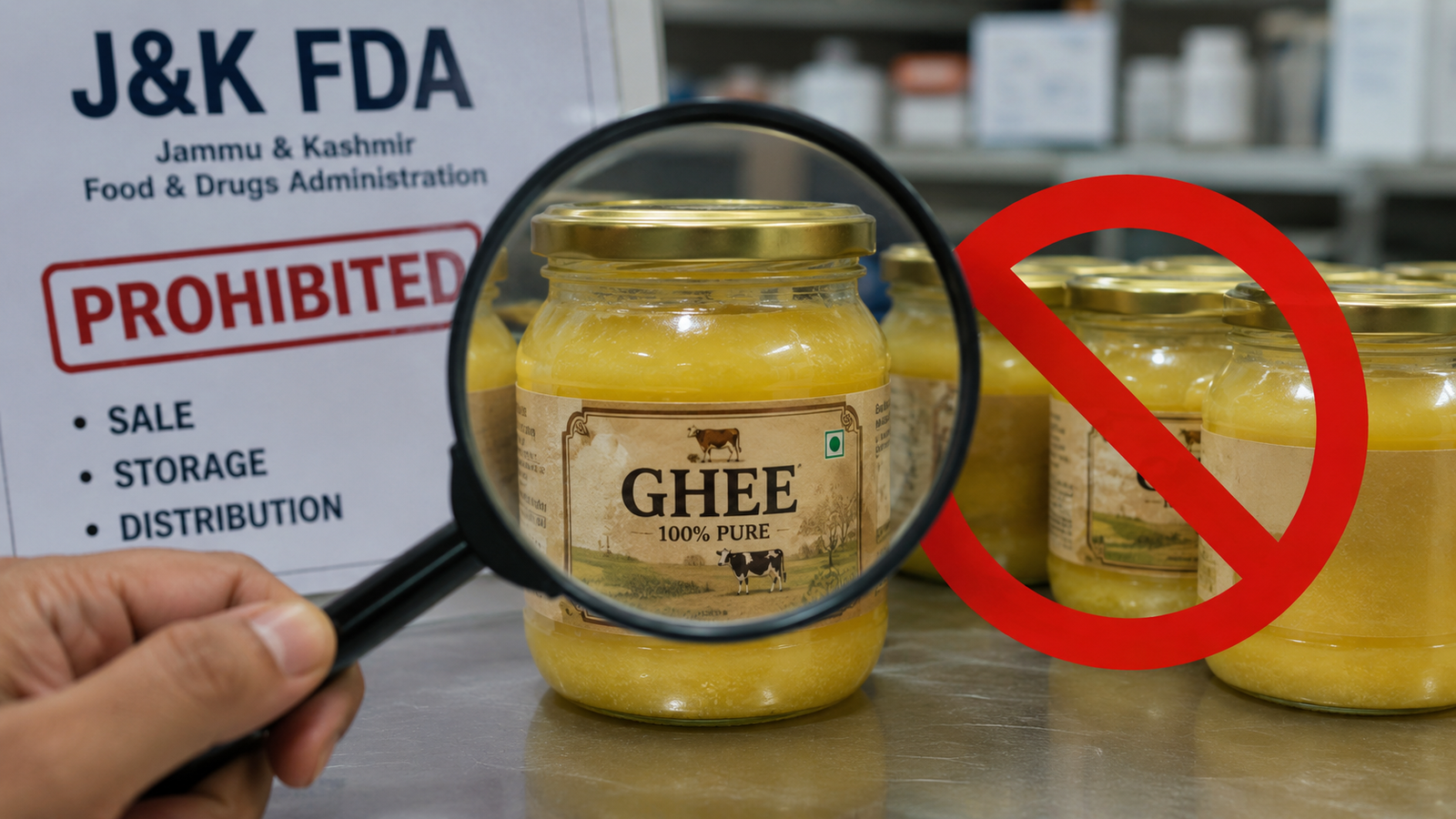
The Jammu and Kashmir Food and Drugs Administration (FDA) has prohibited the sale, storage, distribution and display of 10 identified ghee brands and batches after laboratory testing found the products to be sub-standard, unsafe or misbranded.
The action has been taken under the Food Safety and Standards Act, 2006, following analysis of samples by the Notified Food Analyst at the National Food Laboratory in Ghaziabad and the Food Testing Laboratory in Kashmir.
The affected products were manufactured under brands including Dairy Mohan, Apna Dairy Milk, Milk Bite, Nandni, Shahi Taj, Daawat Fresh, Nand Krishna, Vandu, Dairy Milk and Mohan Dairy.
Samples were collected from several locations across Jammu and Kashmir, including Anantnag, Shangus, Larnoo, Bijbehara, Samba, Kathua, Jammu, Tral and Pampore.
Foreign vegetable fat detected in samples
Laboratory analysis identified several concerns in the affected ghee samples. These included the presence of beta-sitosterol or foreign vegetable fat, positive Baudouin tests, abnormal fatty-acid profiles and deviations from prescribed physicochemical parameters.
The findings raise concerns because ghee sold under applicable food safety standards must be derived exclusively from milk or milk products. The addition of matter that is not derived exclusively from milk fat is not permitted for sale as ghee.
The detection of foreign vegetable fat can indicate adulteration, making laboratory testing and regulatory surveillance important tools for protecting consumers and maintaining food-quality standards.
| Regulatory Action | Details |
|---|---|
| Authority | Jammu and Kashmir Food and Drugs Administration |
| Products affected | 10 identified ghee brands/batches |
| Action | Sale, storage, distribution and display prohibited |
| Legal framework | Food Safety and Standards Act, 2006 |
| Key findings | Foreign vegetable fat/beta-sitosterol, positive Baudouin tests and abnormal fatty-acid profiles |
| Testing facilities | National Food Laboratory, Ghaziabad; Food Testing Laboratory, Kashmir |
| Scope | Across Jammu and Kashmir |
| Effective date | Immediately |
Immediate withdrawal ordered
Following the laboratory findings, the FDA has directed food business operators, wholesalers, distributors and retailers to immediately stop selling and distributing the affected batches.
Businesses holding the prohibited products have also been instructed to remove them from circulation and submit details of their available stock to the respective Designated Officer within 48 hours.
Enforcement authorities have been directed to maintain close surveillance to ensure that the affected products do not re-enter the market.
The measure applies across the Union Territory and has been introduced as a precautionary step in the interest of public health and consumer safety.
Consumers urged to check ghee labels
The FDA has advised consumers to remain vigilant when purchasing ghee and to carefully check the brand name, batch number and date of packing.
Consumers and retailers who encounter any of the prohibited batches have been encouraged to report their availability or sale to the relevant Food Safety authorities.
The incident also highlights the importance of traceability in the dairy supply chain. Accurate batch identification allows regulators and businesses to quickly isolate potentially non-compliant products and reduce consumer exposure.
Food businesses retain re-analysis rights
While the prohibition has taken immediate effect, the FDA has clarified that the concerned food business operators retain their statutory right to seek re-analysis through an FSSAI-notified Referral Laboratory.
This provision is available under the Food Safety and Standards Act, 2006, and the rules framed under the legislation.
Therefore, while the affected batches remain prohibited from sale and distribution during the regulatory process, the concerned businesses have a formal mechanism to challenge laboratory findings through the prescribed re-analysis procedure.
Broader implications for dairy quality
The action underscores the growing importance of food testing, regulatory enforcement and quality assurance in India’s dairy sector.
Ghee is a high-value dairy product and consumer trust depends heavily on authenticity and compliance with prescribed standards. Detecting adulteration or non-compliant ingredients through laboratory testing can help regulators protect consumers while encouraging food businesses to strengthen sourcing, processing and quality-control systems.
For dairy manufacturers and retailers, the development reinforces the need for robust batch-level traceability, ingredient controls and regular quality testing throughout the supply chain.
The Jammu and Kashmir FDA’s intervention demonstrates how targeted laboratory surveillance can trigger rapid regulatory action when products fail prescribed food-safety requirements.