From a small family dairy to a 350-animal enterprise
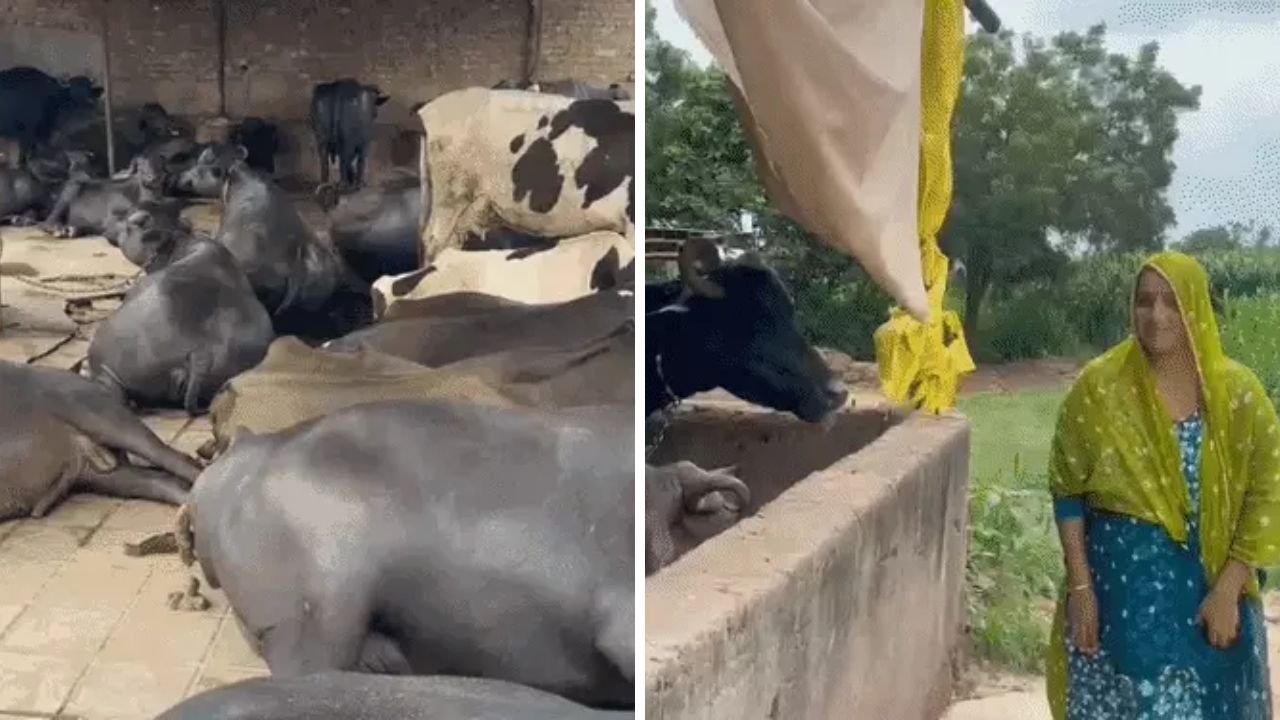
BANASKANTHA, GUJARAT: Taslimben Asifkhan Zaveri, a Class 12 pass cattle farmer from Basu village in Vadgam taluka, has emerged as the highest milk supplier to Banas Dairy among women farmers, supplying milk worth nearly ₹2.94 crore in a year.
Her achievement highlights how careful planning, livestock management and sustained effort can transform a modest family dairy into a substantial rural enterprise.
A family business that grew through systematic expansion
The dairy business was started around 1990 by Taslimben’s father-in-law with just four to five buffaloes. When she joined the family after marriage, the herd had grown to approximately 15 to 20 animals.
From 2010, Taslimben began expanding the enterprise more systematically. Today, the farm has more than 350 animals, including Jafrabadi, Kathiawadi and Murrah buffaloes.
The operation produces approximately 2,200 to 2,300 litres of milk every day, with the entire production supplied to Banas Dairy.
Large-scale operations require significant investment
The farm’s daily expenditure is estimated at ₹1.40 lakh to ₹1.45 lakh, covering feed, medicines, labour and other operational requirements. A team of 17 to 18 workers manages the dairy around the clock.
The family also operates two tractors and five pickup vehicles to transport fodder, milk and other materials.
Despite owning 18 to 20 bighas of land, the family purchases dry fodder from outside to support the herd. According to the family’s estimates, around 70% of milk income is spent on fodder, medicines and labour.
|
Farm indicator |
Reported figure |
|---|---|
|
Herd size |
More than 350 animals |
|
Daily milk production |
2,200–2,300 litres |
|
Annual milk value |
Nearly ₹2.94 crore |
|
Daily operating expenditure |
₹1.40–1.45 lakh |
|
Annual estimated net profit |
₹82–83 lakh |
|
Workers |
17–18 |
|
Tractors |
2 |
|
Pickup vehicles |
5 |
From a near-top supplier to the leading woman farmer
Taslimben had ranked second or third in milk supply during Banas Dairy meetings over the past few years. Determined to reach the top position, she intensified her efforts during 2025–26.
Her goal was ultimately achieved, making her the highest milk supplier among women farmers associated with the dairy.
The family now estimates its annual net profit at around ₹82–83 lakh, after accounting for operating expenses.
A bigger target for the years ahead
Taslimben’s next ambition is to expand the herd to 500 buffaloes and generate milk worth ₹6 crore.
“Animal husbandry is better than doing other jobs if it is managed with proper planning and hard work,” she told Bhaskar.
Her journey demonstrates that dairy farming can become a major business when livestock care, labour management, feed planning and market access are handled effectively.
A model of women-led rural entrepreneurship
Taslimben’s success offers an inspiring example of women-led entrepreneurship in Gujarat’s dairy sector. Her experience also challenges the idea that farming success depends only on owning large areas of land or holding advanced educational qualifications.
The enterprise’s growth from a handful of buffaloes to a large-scale dairy operation reflects the value of persistence, business planning and family involvement.
As the family works toward its next expansion target, Taslimben’s story stands as a reminder that traditional rural businesses can evolve into major enterprises through disciplined management and long-term vision.