Cambodian dairy leaders are looking to Wisconsin for technology, genetics, nutrition and farm-management ideas as they seek to expand domestic milk production. The exchange took place during World Dairy Expo, held in Madison from September 29 to October 2, where international dairy visitors connected with U.S. producers, suppliers and agricultural organisations.
The Cambodian delegation was brought to Wisconsin through efforts led by the World Initiative for Soy in Human Health (WISHH), a programme of the American Soybean Association. The initiative aims to strengthen connections between emerging dairy markets and U.S. suppliers while creating opportunities for increased demand for American soybean meal as livestock feed.
World Dairy Expo Offers Access to the Dairy Supply Chain
For international visitors, World Dairy Expo provides an opportunity to examine developments across multiple areas of dairy production. Visitors can explore animal genetics, farm equipment, nutrition, animal health and management practices while meeting suppliers and producers.
Mark Hanzel, senior director of WISHH’s Asia Division, said the event provides a concentrated opportunity to connect dairy operators with companies involved in genetics, equipment and other areas of the industry.
Wisconsin officials also highlighted the state’s position in the international dairy industry. Wisconsin Department of Agriculture, Trade and Consumer Protection Secretary Randy Romanski said international visitors can see the relationship between quality feed, healthy animals, improved production and dairy products.
Cambodia Dairy Sector at a Glance
| Particular | Details |
|---|---|
| Estimated dairy cattle | Fewer than 10,000 |
| Local share of milk consumption | Around 10% |
| Imported share | Around 90% |
| Kirisu Farm current herd | About 1,700 cows |
| Kirisu Farm expansion target | 3,000 milking cows, then 5,000+ |
| Major areas of interest | Genetics, equipment, nutrition, management |
Cambodia Seeks to Increase Domestic Milk Production
Cambodia’s dairy sector remains relatively small, with fewer than 10,000 dairy cattle nationwide. Much of the country’s milk production comes from small family-owned farms, while a significant portion of dairy products consumed domestically is imported.
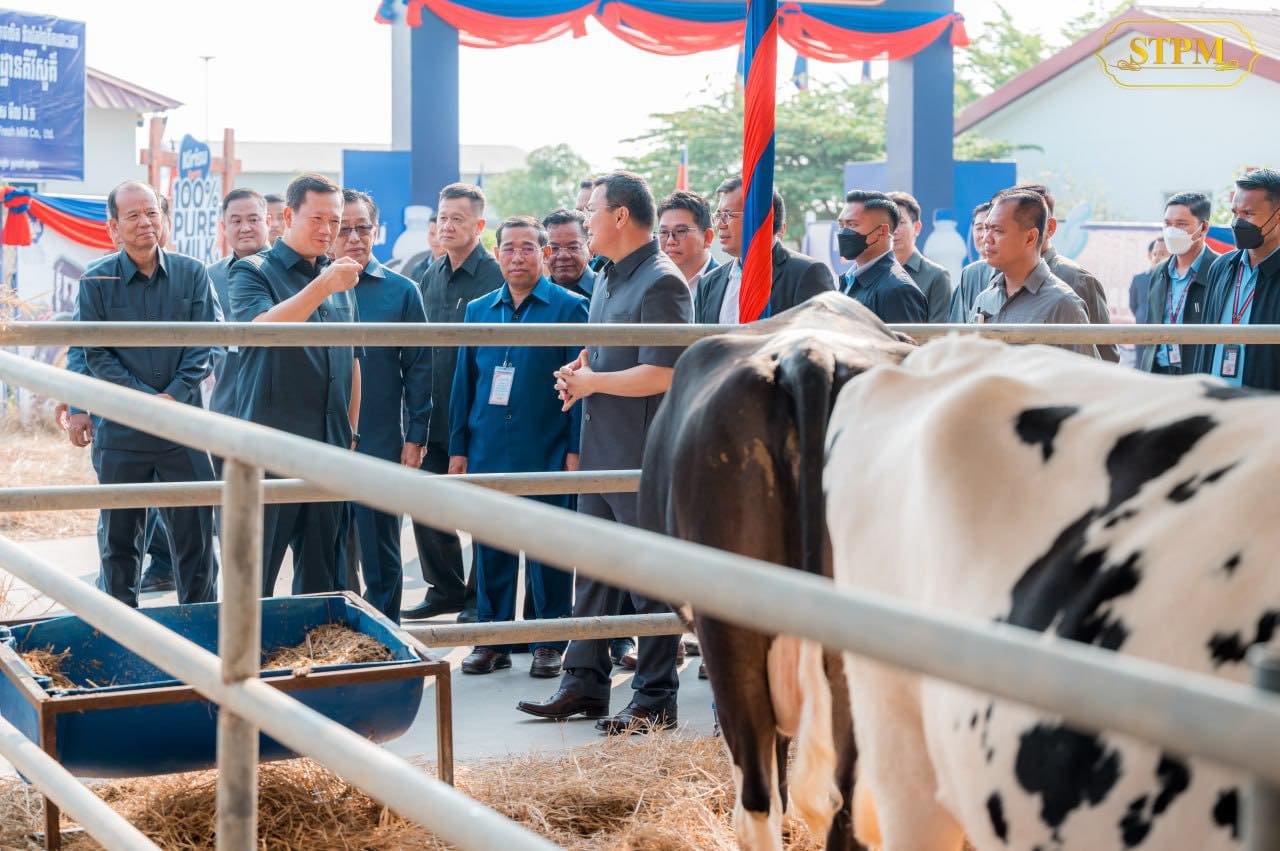
Ziv Sar, owner of Kirisu Farm, one of Cambodia’s largest modern dairy operations, said the country’s milk consumption is currently supplied predominantly by imports. He expressed the hope that local production could gradually increase its share of domestic consumption.
Sar travelled to Wisconsin to examine technologies, genetics and management practices that could support the expansion of his operation and contribute to broader dairy development in Cambodia.
Kirisu Farm Plans Rapid Herd Expansion
Kirisu Farm has expanded its herd through imported cattle from Australia and is now exploring U.S. genetics. The farm currently manages approximately 1,700 cows and has plans to significantly increase its milking herd.
Sar said the farm’s immediate goal is to reach 3,000 milking cows, followed by an expansion to more than 5,000 cows within two to three years.
The farm has already imported a second group of Holstein cows and pregnant heifers from Australia. It is also considering U.S. genetics through embryos and sexed semen.
For Wisconsin’s genetics companies, growing dairy operations such as Kirisu Farm represent potential customers for breeding technology and genetic material. WISHH is working to connect the Cambodian operation with U.S. companies that can provide these solutions.
Soybean Meal and Dairy Growth
The Wisconsin visit also highlights the connection between dairy expansion and feed demand. As dairy farms increase herd sizes and milk production, reliable supplies of high-quality feed become increasingly important.
WISHH’s involvement reflects the potential for U.S. soybean farmers to benefit from expanding livestock sectors overseas. Soybean meal is widely used as a protein source in livestock feed, making developing dairy industries potential future markets.
Hanzel said establishing relationships with major dairy operators in emerging markets is important because these businesses can influence production standards and contribute to developing local supply chains.
Building Long-Term International Connections
The Wisconsin visit comes as international dairy trade continues to face challenges related to logistics and market access. However, industry representatives believe direct engagement can help establish commercial relationships that support longer-term trade.
International visitors also toured dairy farms, soybean farms, genetics suppliers and other agricultural businesses during their Wisconsin visit. These activities provided exposure to the broader agricultural ecosystem supporting modern dairy production.
For Wisconsin, the international engagement could create opportunities to expand exports of dairy genetics, equipment, agricultural expertise and soybean products.
For Cambodian dairy businesses, meanwhile, the exposure provides access to production models and technologies that could support the country’s efforts to increase domestic milk production and reduce reliance on imported dairy products.
The interaction at World Dairy Expo therefore extends beyond a single industry event. It demonstrates how international dairy development can connect producers, technology providers, genetics companies and feed suppliers across markets, with emerging dairy regions such as Cambodia seeking solutions to expand their production capacity.